

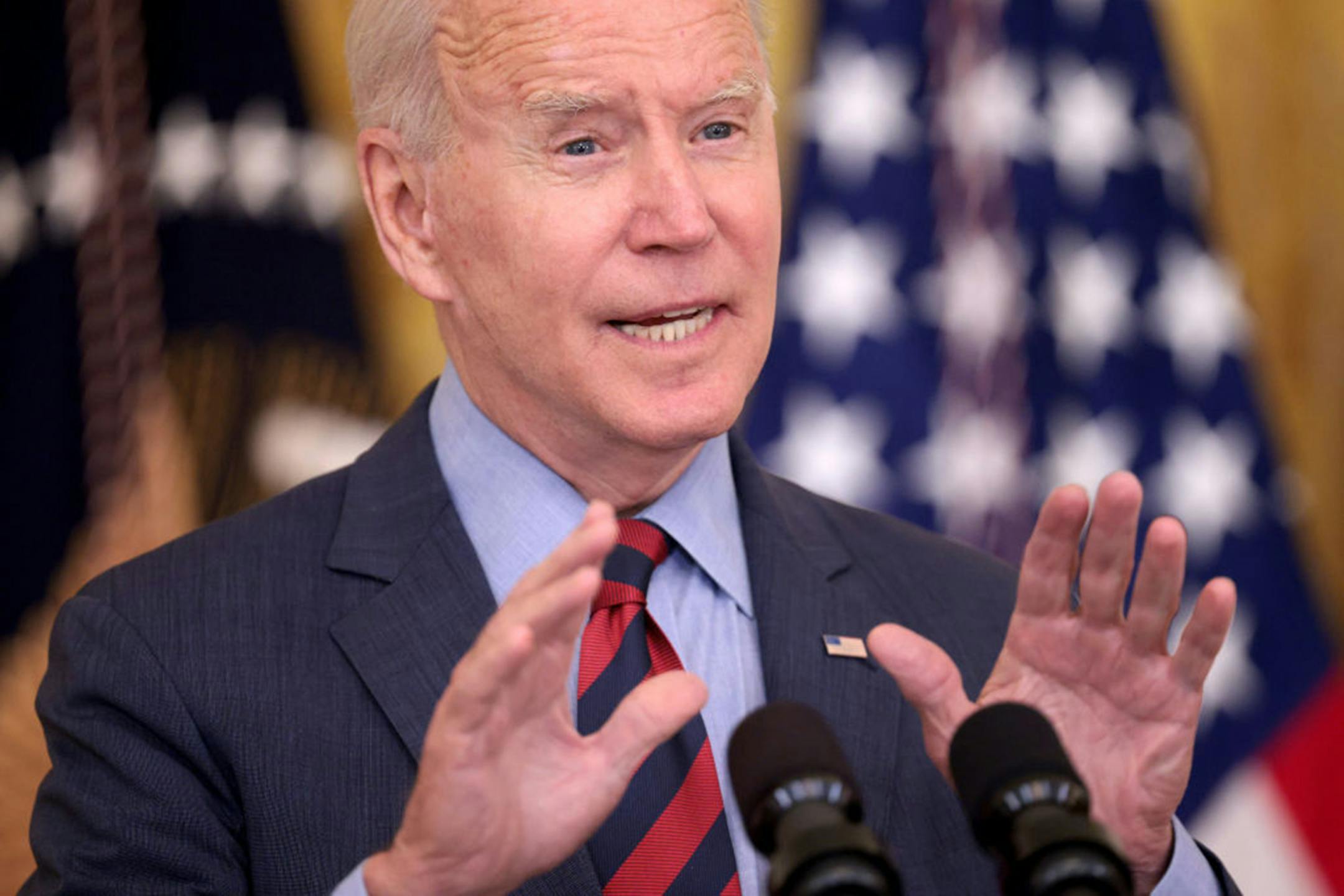
President Joe Biden may have humanitarian motives for extending the Centers for Disease Control eviction ban that the Supreme Court has already deemed unlawful. But it is both bad constitutional law and bad constitutional politics to flout the court's judgment — especially because Justice Brett Kavanaugh had already cast a compromise vote intended to allow the ban to stay in place until Congress could extend it.
The justices will rapidly reject the extension, and its enduring symbolism won't be that of helping people but of alienating the court and its new swing justice, Brett Kavanaugh. If Donald Trump had done something like this, liberals would be justifiably worried that he was undermining the rule of law.
The legal background to the extension is that in late June, the Supreme Court issued an emergency decision after it was asked block the moratorium on evictions that was in any event scheduled to expire on July 31. Four conservative justices voted to end the moratorium early, agreeing with a federal district court that the moratorium exceeded the lawful authority of the CDC.
Chief Justice John Roberts indicated that he would have left the order in place. As a result, the key vote was Kavanaugh's.
In a one-paragraph statement, Kavanaugh said that because the moratorium was set to end in "only a few weeks," he would vote to leave it in place. But he explained in no uncertain terms that "in my view, clear and specific congressional authorization (via new legislation) would be necessary for the CDC to extend the moratorium past July 31."
In other words, Kavanaugh technically voted with the liberals and Roberts, while substantively siding with the conservatives.
The fact that Kavanaugh was offering both pragmatism and a compromise deserves recognition and acknowledgment. The authority of the CDC to issue a moratorium on a social policy issue with an indirect connection to preventing disease was always in question, and reasonable people could differ on it. By allowing the moratorium to expire and inviting Congress to act, Kavanaugh was making an entirely sensible judgment.
Congress could and should have acted. For it to create such a moratorium on evictions would be lawful; and Kavanaugh, in his statement, foreshadowed that he would vote to uphold such a ban, whatever his more conservative colleagues might do. There was a simple solution available, and Kavanaugh laid it out.


