

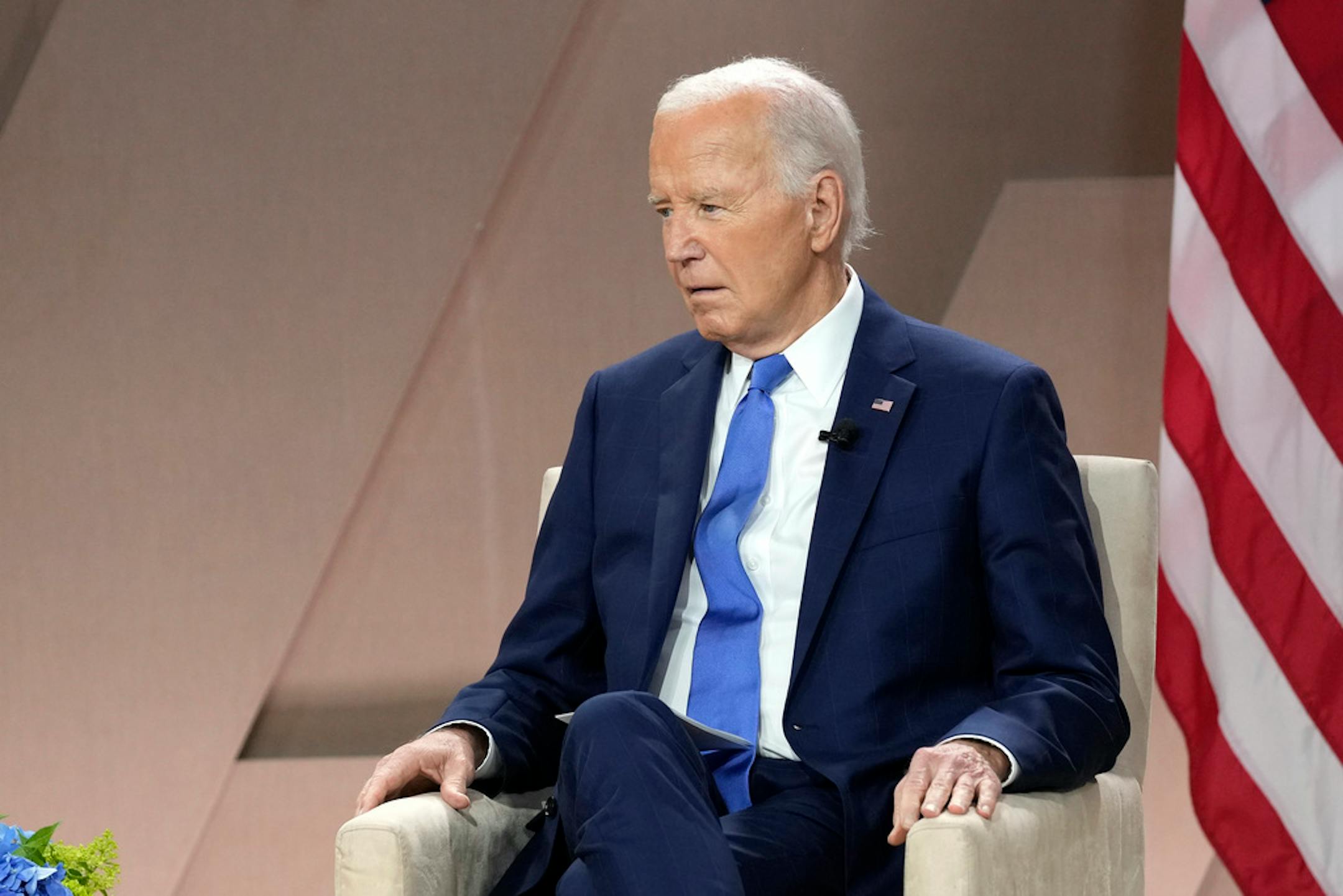
WASHINGTON — President Joe Biden has a fresh opportunity Thursday to try to prove to the American public that he’s capable of serving another four years after his shocking debate flop threw the future of his presidency into doubt. But Biden is not known as a master of the big rhetorical moment and his recent cleanup efforts have proved inadequate.
Biden, 81, will close out the NATO summit in Washington — an event meant to showcase his leadership on the world stage — with a rare solo press conference. His stamina and effectiveness are under the microscope like never before and he's struggling to quell the Democratic Party's panic about his chances this November.
By many metrics, from job growth and major legislation to the expanded transatlantic alliance, Biden can point to successes during his tenure in office. But where he has sometimes failed — spectacularly, in the case of the debate — is at a defining part of the role that isn't in the official job description: delivering inspiring oratory that commands the attention and respect of the nation.
Biden has tried to step up his performance since the debate but his follow-up interview on ABC last week was disappointing. Nothing he's tried seems to be stopping the bleeding, with more lawmakers calling for him to bow out in the face of concerns that he could hand the White House back to Republican former President Donald Trump.
Americans tend to regard their leaders less for what they do than how they make them feel, and Biden's debate disaster has shaken his party to its core.
''The debate was a reminder that you can have as many policies as you want, but what the public sees and hears might matter more,'' said Julian Zelizer, a Princeton presidential historian.
Rhetoric is intertwined with the modern presidency, from Franklin D. Roosevelt's ''The only thing we have to fear is fear itself'' to Ronald Reagan's ''Mr. Gorbachev, tear down this wall!''
It can inspire in the wake of tragedy, like George W. Bush's bullhorn speech on the smoky rubble at ground zero after the Sept. 11, 2001, terrorist attacks and help a war- and recession-weary country recover its sense of self, like Barack Obama's ''Yes we can!'' Even Donald Trump's ''Make America Great Again'' cry echoed the temperament of the agitated nation.


