

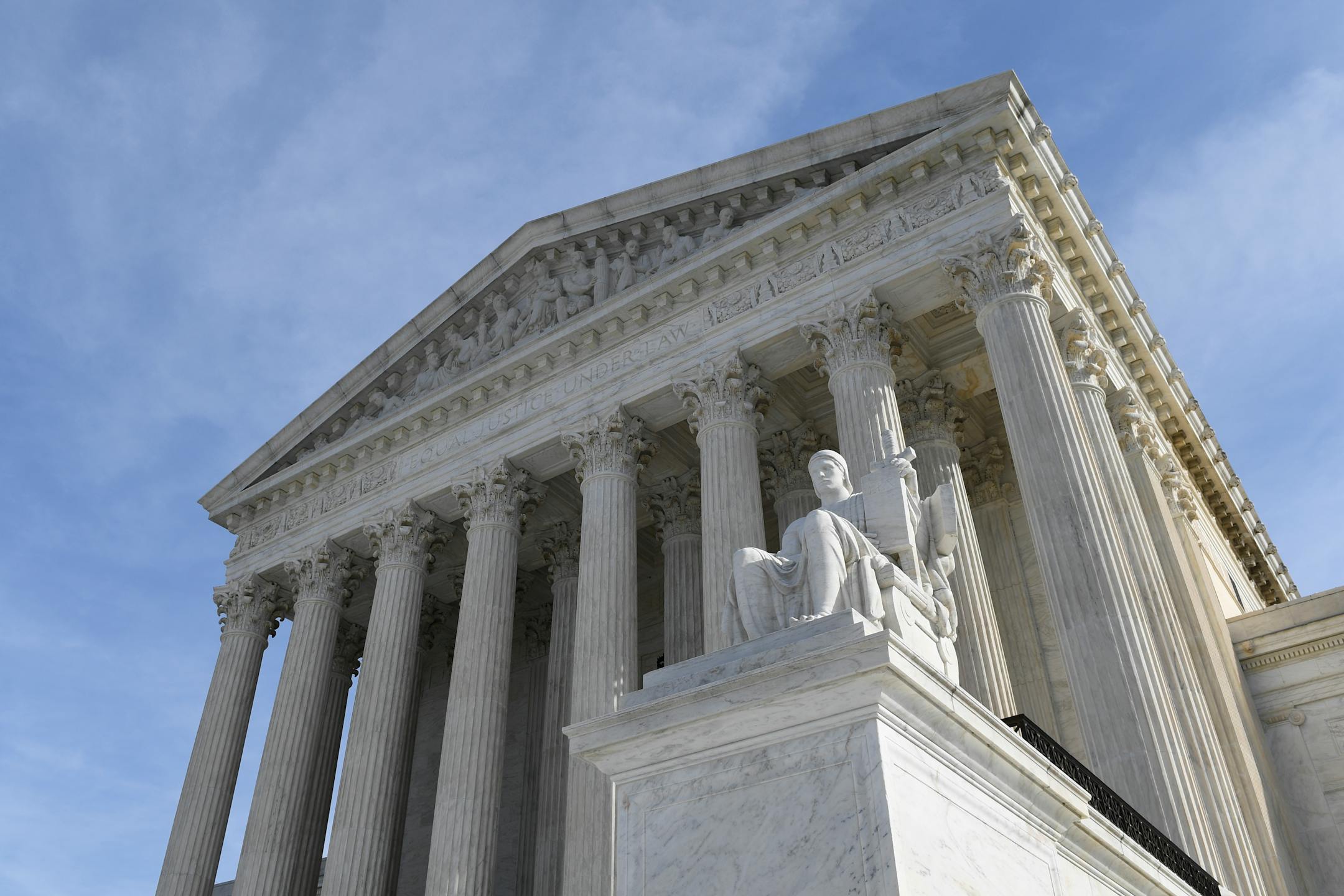
Last week, the Presidential Commission on the Supreme Court of the United States sat for its third public meeting. Formed in April by executive order, the 36-member commission exists to hear arguments for and against Supreme Court reform and to analyze and appraise the merits of specific proposals.
President Joe Biden did not run on court reform and rejected "court packing" during the 2020 campaign. But after Donald Trump and Mitch McConnell pushed Amy Coney Barrett through the Senate in a harried bid to replace Ruth Bader Ginsburg before the presidential election, he could not resist calls from within the Democratic Party to do something.
The commission is Biden's something, and it isn't much to look at. Not only is it not meant to make recommendations or suggest a course of action, but its members come from the upper echelon of the legal elite — exactly the people most comfortable with the institutional status quo on the Supreme Court.
But this doesn't mean the commission is worthless. It may not offer needed reforms, but in its three meetings so far it has already served as a valuable platform for scholars with a cleareyed view of the court and a powerful critique of its current role within the nation's constitutional order. If nothing else, the commission has helped elevate important ideas and perspectives the broader public needs to hear. It is interesting, illuminating and worthy of your attention.
In his written testimony, for example, Nikolas Bowie, an assistant professor of law at Harvard, takes aim at the idea of the Supreme Court as a defender of the rights of vulnerable minorities. That, he says, is a comforting myth. The truth is much uglier. "As a matter of historical practice," Bowie writes, "the Court has wielded an antidemocratic influence on American law, one that has undermined federal attempts to eliminate hierarchies of race, wealth and status."
This is most apparent, Bowie notes, in the court's relationship to America's racial caste system. The 1857 case Dred Scott v. Sandford was one of the first decisions to invalidate a federal law and circumscribe Congress' ability to act, in this case asserting that the Constitution forbade the nation's representatives from restricting the spread of slavery or giving Black Americans the rights of citizenship.
"We think they are not, and that they are not included, and were not intended to be included, under the word 'citizens' in the Constitution," read the opinion of the court, "and can therefore claim none of the rights and privileges which that instrument provides for and secures to citizens of the United States."
In the 1876 cases, United States v. Cruikshank and United States v. Reese, the Supreme Court forbade Congress from protecting the voting rights of Black Americans in the face of violent mobs and state disenfranchisement. In the Civil Rights Cases of 1883, it forbade Congress from outlawing discrimination in public accommodations, and in the infamous Plessy v. Ferguson in 1896, the court upheld the doctrine of "separate but equal."


