

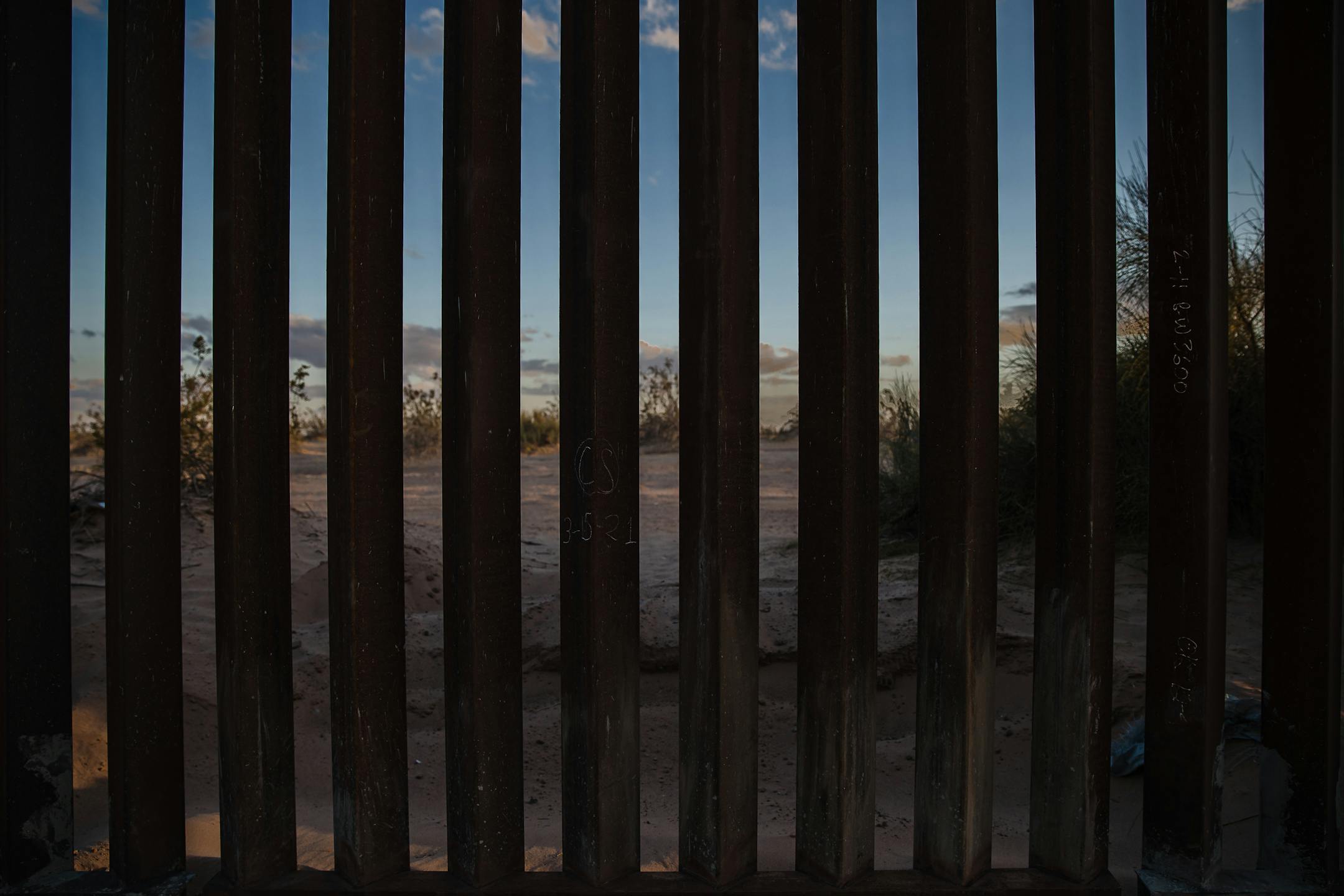
The most harrowing story I've read in the New York Times in recent days was Miriam Jordan's account of a car crash last month in Southern California involving a Ford Expedition that had come from Mexico, straight through a breach in the border wall. The Ford was crammed with 25 people when it hit a tractor-trailer rig on Route 115, 110 miles east of San Diego.
"Few of the survivors have been able to describe what happened next," Jordan writes. "The crunch of metal and glass, the bodies flung dozens of feet across the pavement. Twelve people died on the spot, a 13th at a nearby hospital."
Jordan follows the stories of the victims and survivors, and there's a heartbreaking sameness to them: people who have been driven by fear or want from their homes in Mexico and Central America, and who are willing to take grave risks and pay exorbitant sums to make it to the United States. These are not terrorists, gang members, lowlifes, benefit seekers or — except in their willingness to violate U.S. immigration laws — lawbreakers. They are seekers of the American dream, worthy of our compassion and respect.
Yet those 13 people — along with others who have recently lost their lives in dangerous crossings — might not have met their grisly fate if the Biden administration's concept of compassion wasn't also an inducement to recklessness.
And they would not have been killed if a wall had been standing in their way.
That's a conclusion I've come to reluctantly, and not because I've abandoned my disgust with Donald Trump. Walls are ugly things: symbols of defensive, suspicious, often closed-minded civilizations. Walls are, invariably, permeable: Whatever else a border wall will do, it will not seal off America from unwanted visitors or undocumented workers — roughly half of whom arrive legally and overstay their visas.
Walls also cannot address the root cause of our immigration crisis, which stems from a combination of social collapse south of the border and the pull of American life north of it.
But a well-built wall should still be a central part of an overall immigration fix. It's an imperfect but functional deterrent against the most reckless forms of border crossing. It's a barrier against sudden future surges of mass migration.


