

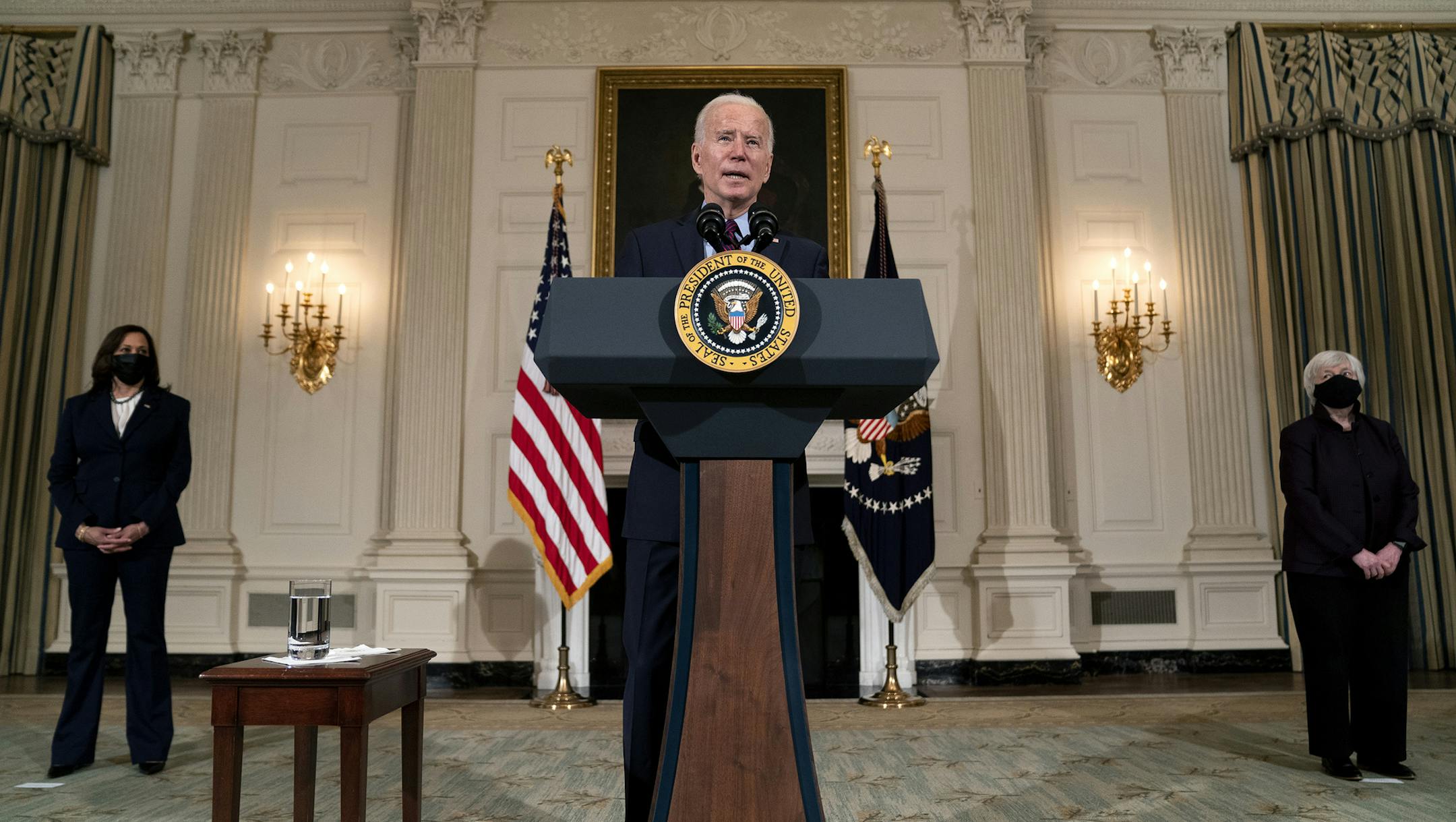
President Joe Biden's plan to flood Americans with nearly $2 trillion in coronavirus aid could come to a House vote early this week. Odds are decent it will also pass in the Senate.
Nearly $2 trillion. Holy Hannah. The macroeconomic term for this plan is a freaking windfall.
"Now is the time we should be spending," Biden said Feb. 16 at a CNN town hall in Milwaukee. "Now is the time to go big."
In the current pandemic and economic downturn, a going-big windfall comes as excellent news. But it's also puzzling. We can just let Daddy Warbucks, the U.S. Mint, rev the printers and make it rain? Has the government been holding out on us?
Well, not exactly. But sort of. To wit: Many economists now believe the government has been too miserly for decades because of an unfounded fear of inflation.
As Treasury Secretary Janet Yellen said earlier this month, "I have spent many years ... worrying about inflation. ... But we face a huge economic challenge here and tremendous suffering in the country. We have got to address that. That's the biggest risk."
If the eye-popping $1.9 trillion stimulus plan indeed passes, the Bidenian largesse could signal a sea change in the government's approach to spending.
The old approach has a history that begins — as so much economic theory does — in trauma. In the 1970s, just after the gold standard was ended for good, architects of monetary policy grew concerned that inflation would afflict our untethered currency. They proposed reducing deficits and government spending to keep money in shorter supply. Inflation surged anyway. Then the energy crisis hit. Americans who were denied raises at work and faced with larcenous prices at filling stations "felt it at the pump," and boy, it did not feel good.


