

"The American carnage stops right here, right now."
—Donald Trump, Jan. 20, 2017
Promise made, promise to be kept … by the next guy.
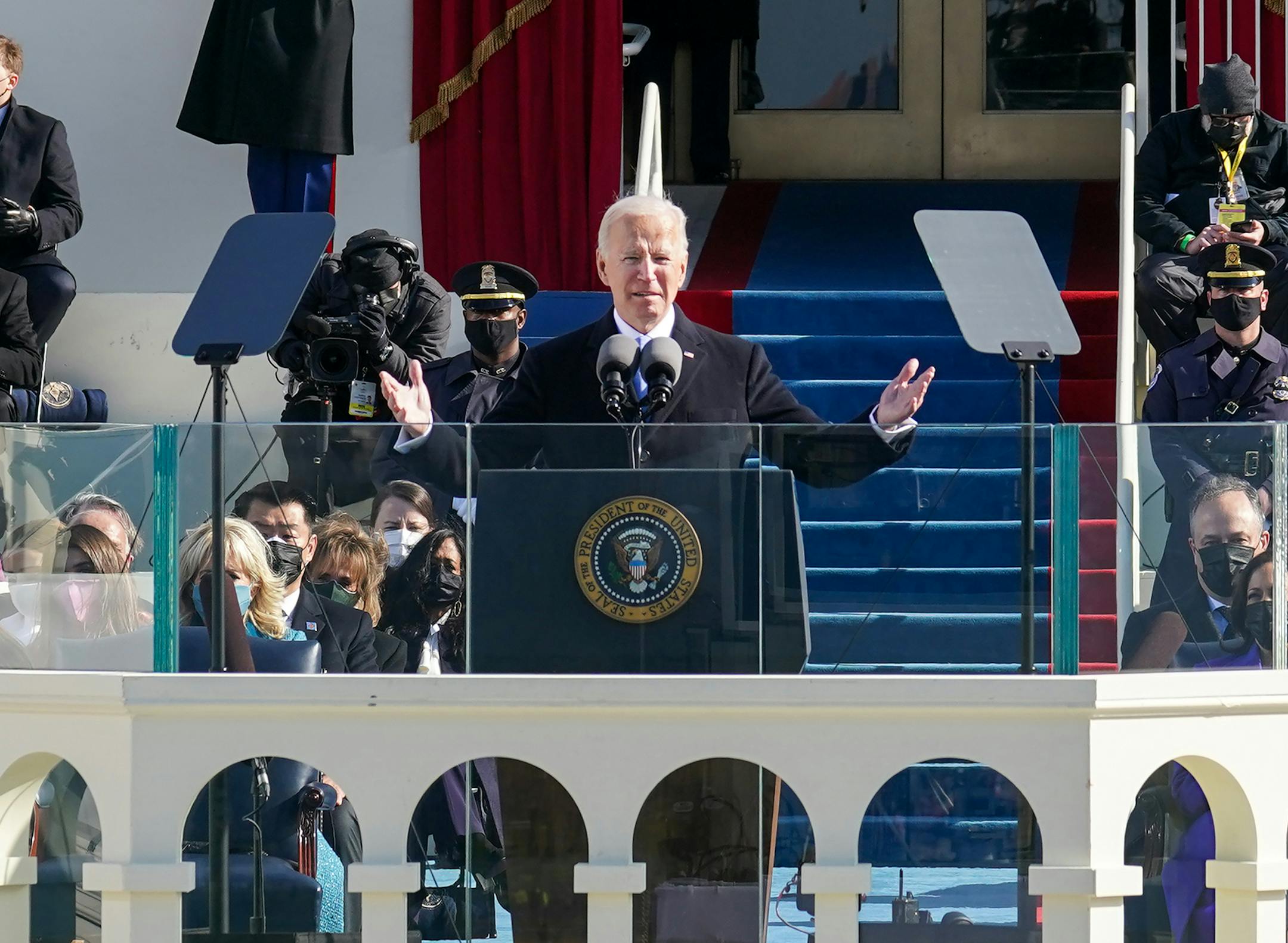
Joe Biden became the 46th president of the United States at 11:48 a.m. on Wednesday, 12 minutes before the time spelled out in a U.S. Constitution that was mutilated by his predecessor but still stands. As Biden raised his 78-year-old right arm to take the oath of office, he stood just yards from the broken windows and impromptu plywood of the U.S. Capitol where just 14 days earlier a violent mob killed a police officer in its quest to stop this moment from happening.
For the 45th time in the last 225 years, the flickering torch of democracy was passed to a new American president, but no one should call this transition peaceful. The aura of normalcy as Biden repeated the familiar oath from Chief Justice John Roberts with his wife, Jill Biden, by his side contrasted with the unprecedented force of 25,000 troops in and around a hastily constructed, Baghdad-style "green zone" in the nation's capital, and with the palpable absence of his 82 million voters told to stay home, replaced on the National Mall by 200,000 American flags that didn't have to socially distance from a deadly virus.
As the noon hour that so many Americans had been awaiting for four years finally arrived and snow flurries gave way to bright sunshine, Biden — occasionally punctuated by the "folks" or "look" of his down-home Joe-from-Scranton persona — promised a deeply divided nation that it will somehow come together once again, even after the failed insurrection and amid the overlapping crises of a pandemic, ongoing unemployment and hunger, climate change and racial reckoning.
"We must end this uncivil war that pits red against blue," Biden said, in what quickly became the most quoted phrase in his roughly 20-minute address. And — as anyone who watched his methodical march on the White House in 2015 and 2016 would fully expect — the speech was drenched in pleas for national unity.
But the most hopeful turn was the new president's realization — forged in the blood-soaked aftermath of the Jan. 6 assault — that a common purpose won't be possible without the difficult work of pushing Americans toward a common truth.


