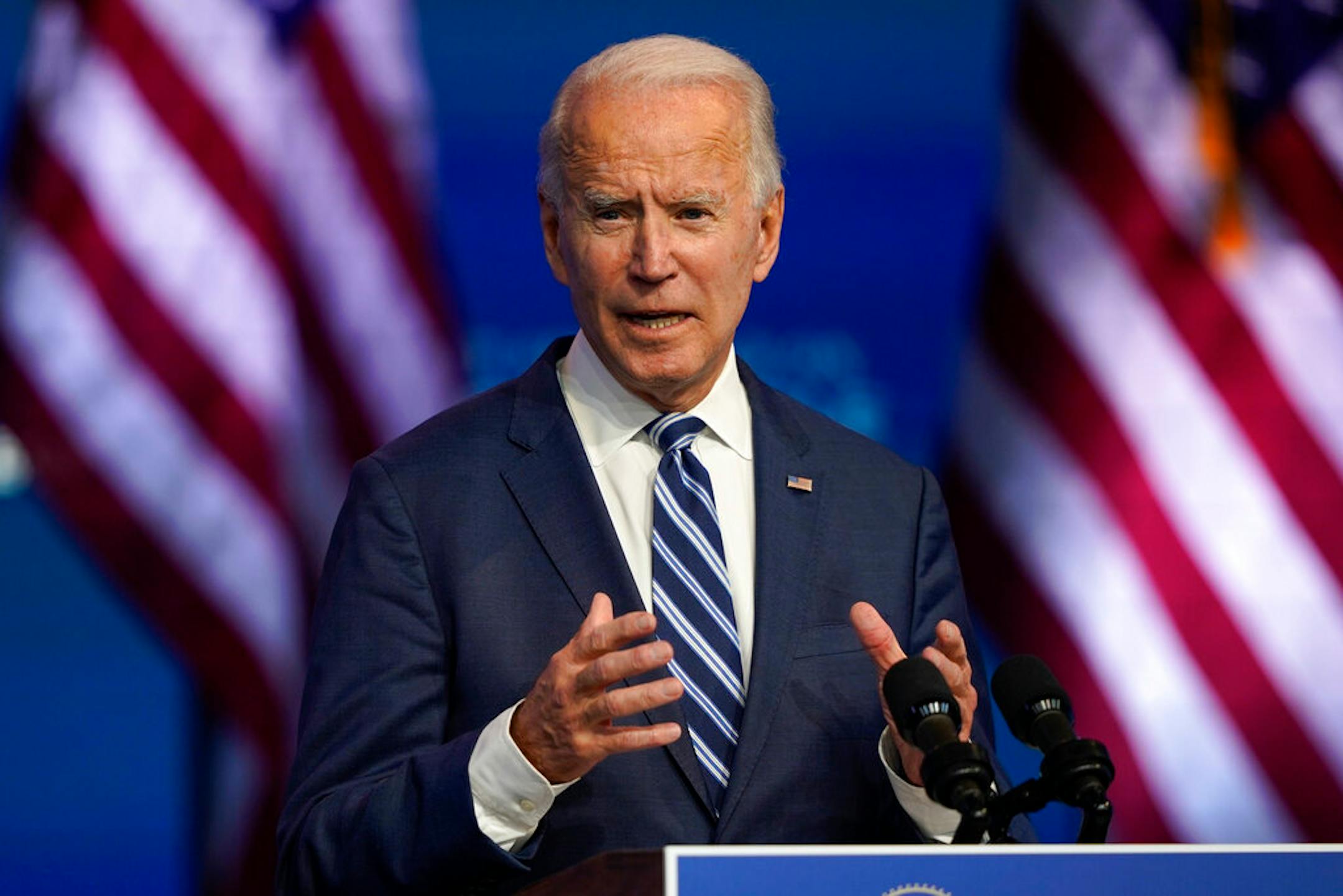
PHILADELPHIA — President-elect Joe Biden quietly pushed forward with the business of preparing to become America's next commander in chief on Wednesday, ignoring President Donald Trump's unprecedented push to block his Democratic rival's transition.
Biden stepped away from his closed-door planning only to honor the nation's fallen soldiers for a Veterans Day tribute at the Korean War Memorial in Philadelphia. The president-elect, whose late son, Beau, served in the Delaware Army National Guard, made no public remarks at the small ceremony.
Biden continues to shrug off Trump's refusal to accept the election outcome, even as officials in both parties warn that the Republican president's actions could be dangerous.
Raising unsupported claims of voter fraud, Trump has blocked the incoming president from receiving intelligence briefings and has withheld federal funding intended to help facilitate the transfer of power. Trump's resistance, backed by senior Republicans in Washington and across the country, could also prevent background investigations and security clearances for prospective staff and access to federal agencies to discuss transition planning.
Biden was not expected to deliver public remarks on Wednesday, but he sought to lower the national temperature the previous day as he addressed reporters from his makeshift transition headquarters near his home in downtown Wilmington.
He described Trump's position as more of an "embarrassing" mark on the outgoing president's legacy than a genuine hindrance, predicting that Republicans on Capitol Hill would eventually accept the reality of Biden's victory. The Republican resistance, Biden said, "does not change the dynamic at all in what we're able to do."
Additional intelligence briefings "would be useful," Biden added, but "we don't see anything slowing us down."
The measured comments come as Biden prepared to confront national crises that threaten the health, safety and economic security of millions of Americans irrespective of the political debate. Coronavirus infections, hospitalizations and deaths are surging, the economy faces the prospect of long-term damage and the nation confronts political and cultural divides.