

A year ago, before any COVID vaccine had been authorized for use, former President Donald Trump all but promised that a shot would be available before Election Day. When Food and Drug Administration regulators suggested that he was mistaken, he accused them of deliberately slow-walking their authorizations in an attempt to influence the coming election — and threatened to override them.
At least some segments of the public were outraged: It was not the first time Trump had interfered with the agency, and health officials warned that his careless remarks would undermine vaccine confidence. The FDA responded forcefully, tightening its review criteria and communicating directly with the public about the changes. The agency's commissioner, Dr. Stephen Hahn, engaged in a standoff with the president who appointed him, and in the end, public safety was placed above political expedience.
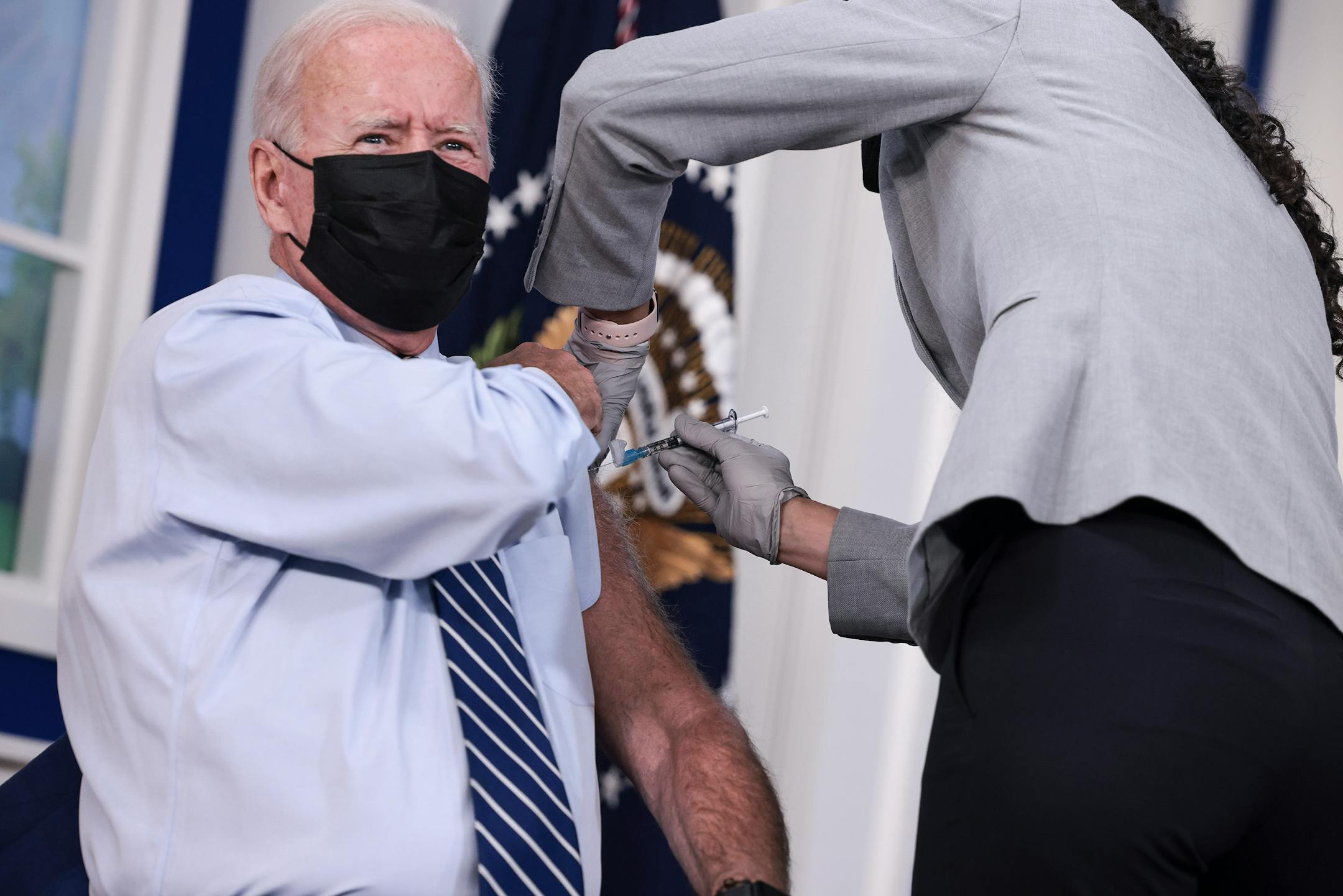
This year, it's President Joe Biden who has gotten ahead of the FDA, announcing a plan to make COVID booster shots available to all vaccinated Americans long before the agency finished its evaluations of the nation's three authorized vaccines. Rather than push back against this maneuver, acting FDA Commissioner Dr. Janet Woodcock endorsed it. Two of the agency's top vaccine regulators resigned in protest, taking with them a wealth of knowledge and experience that will be both urgently needed and difficult to replace in the months ahead.
The kerfuffle has once again undermined an agency that is supposed to be the regulatory gold standard not just in the United States but around the world.
To be sure, the FDA is not the only entity grappling with confusion and contradiction. The world's largest vaccine makers say they will soon have enough shots to inoculate just about the entire global population, but they can't seem to get those doses to the lower-income countries that need them most. The leaders of the world's richest countries, including the United States, say they are committed to global vaccine equity and have collectively pledged to donate hundreds of millions of doses to lower-income countries. But it is not entirely clear how those countries' current or projected supplies measure up against their promises to share.
It would be good to know the extent to which any booster initiative will undermine the quest for global vaccine equity, but critics say it's almost impossible to determine how many more doses could immediately go to lower-income nations. "That's an important question," says Dr. Jen Kates, a vaccine policy expert at the Kaiser Family Foundation. "There's very little transparency around it, though."
Ending the pandemic will require a string of carefully calibrated trade-offs: between vaccinating children in one country and higher-risk groups everywhere else, between giving boosters in wealthy nations and spreading vaccine abundance, between stockpiling and sharing. Most of those trade-offs will require a more functional regulatory apparatus than we've seen so far.
The FDA has determined that for the Pfizer vaccine, at least, boosters are warranted only for people older than 65, the immunocompromised and those whose work or living arrangements place them at higher risk of exposure. Biden and his team, including Dr. Woodcock, softened their booster messaging in response, agreeing to offer the extra shots only to people for whom the FDA has authorized them and insisting its plans were always contingent upon agency approval.


