

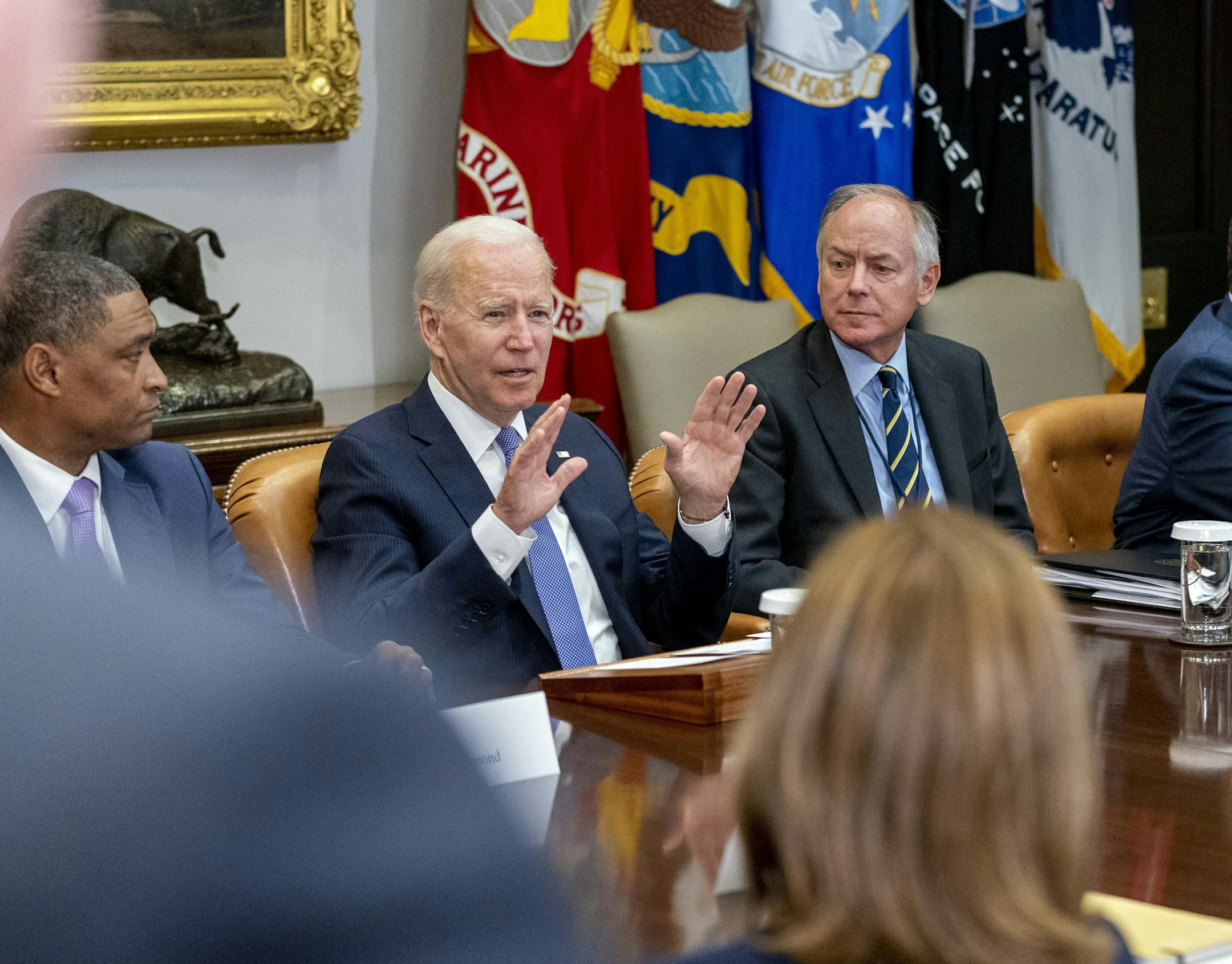
President Joe Biden's hope of seeing a bipartisan infrastructure bill land on his desk is facing the stops and starts of trying to make progress in Congress.
For all the attention that came from the White House when Biden first championed a bipartisan framework with a group of senators in June, last week underlined the challenges that persist.
"I remain optimistic that we will get it done," U.S. Sen. Tina Smith, a Democrat, said in an interview Friday. "But the time has come. We need to resolve our outstanding issues and move forward."
Neither Smith nor fellow Democratic Sen. Amy Klobuchar are members of the bipartisan group leading that plan. An attempt in the Senate to jump-start the debate publicly failed in a procedural vote last week. With no bill text to vote on from the bipartisan group, lawmakers instead voted on whether to publicly start debate. Republicans voted against that move.
But the bipartisan group that rolled out the framework with the White House said in a statement the day of the failed vote that they were "close to a final agreement" and added that "we will continue working hard to ensure we get this critical legislation right." Whether this will result in a bill that can pass the Senate is unclear.
How the bipartisan plan will be welcomed by Minnesota's four House Republicans once bill text is available is also a question. GOP Rep. Jim Hagedorn named off the kind of infrastructure he supports that includes roads, bridges, broadband, locks, dams, airports, rail, pipelines and sewers. "But we don't need $600 billion for green energy mandates, Green New Deal, all sorts of excess," Hagedorn said.
This all comes as Democratic leaders have announced a broad plan for a separate $3.5 trillion slate of spending. They intend to try to pass that plan using what's known as the reconciliation process, which can get around the Senate's legislative filibuster, avoiding the expected GOP opposition. The two bills have been described as part of a two-track approach.
"We have two important pieces of legislation, the bipartisan legislation and the Democratic legislation," Smith said, adding that together she believes those efforts "will invest in our infrastructure, create more jobs, do tax cuts, the biggest tax cut for working families in decades, and lower costs for working families," Smith said.


