

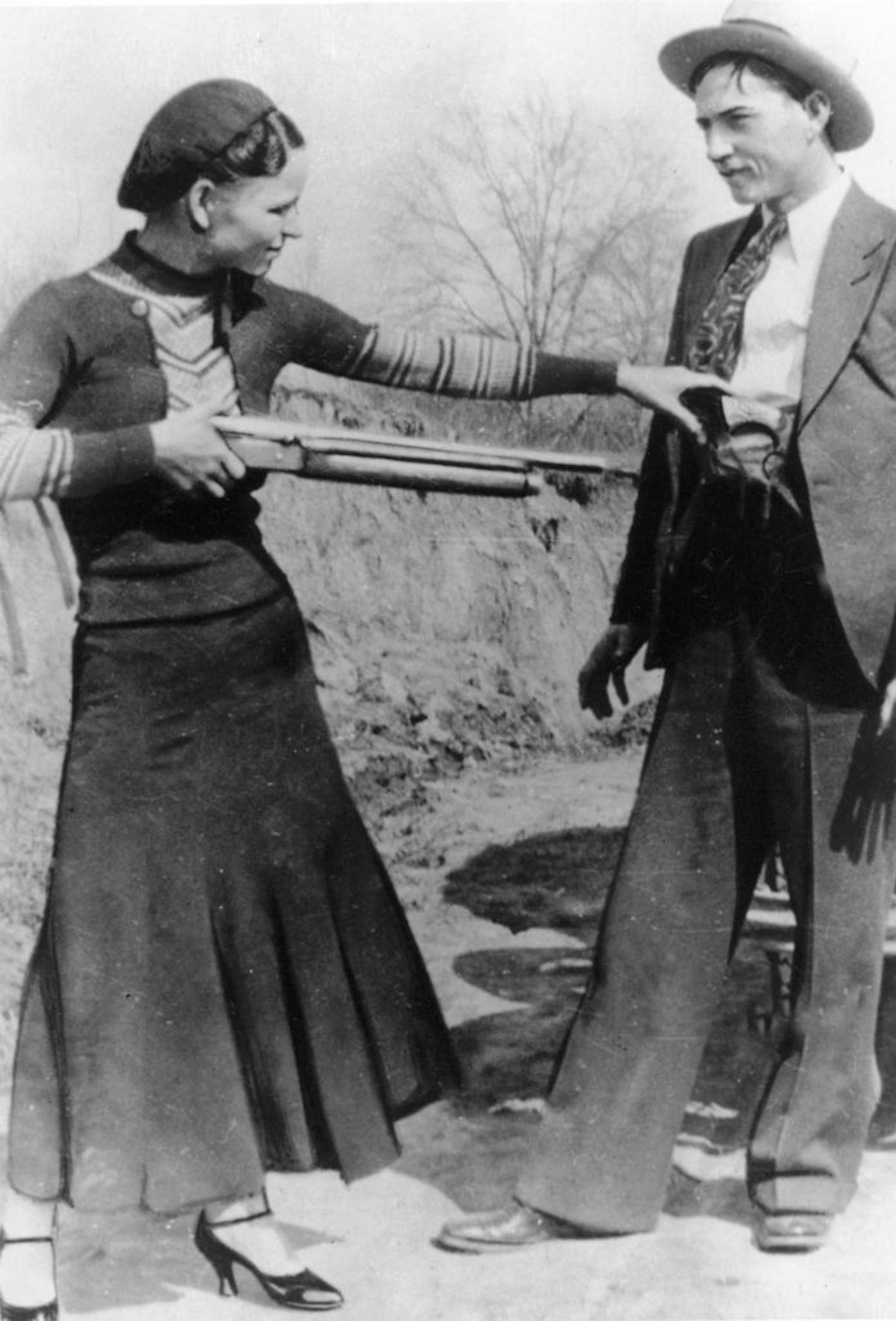
On the morning of May 23, 1934, Clyde Barrow stopped his stolen Ford V-8 on a rural road near Gibsland, La. Inside were an arsenal of stolen automatic rifles, sawed-off semi-automatic shotguns, assorted handguns and several thousand rounds of ammunition and, of course, the love of his life, Bonnie Parker.
It was 9:15 a.m., and Barrow was carrying his Elgin pocket watch with a Wadsworth 10-karat, gold-filled screw-back case. That was when his time finally ran out. A posse of six fired off 130 rounds, led by Frank Hamer, who had more than 50 kills notched on his belt and was seen as the personification of the macho Texas law enforcement code: "One riot, one ranger." When the smoke cleared, both Bonnie and Clyde were dead.
The watch, however, survived (in a manner of speaking) -- and is on the market: It's being auctioned Sept. 30 in New Hampshire. Officials hope to get $50,000 to $100,000 for the watch, although the "sky's the limit," said Bobby Livingston, vice president of RR Auction in Amherst, N.H.
Also up for bid is the Colt .38-caliber revolver that Parker had pasted to her inner thigh and the .45-caliber pistol that Barrow kept in his waistband. Each weapon could bring as much as $200,000, Livingston said. Parker's cosmetics case is also on the block.
"Their story still resonates. All those Depression-era gangsters perceived by the public fighting against big banks and the corruption of government. That resonates today," Livingston said.
In the '30s, some gangsters were the rock stars of their day -- such as John Dillinger and Pretty Boy Floyd -- and were celebrated in word and song and later in Hollywood movies. Bonnie and Clyde were part of that tradition, too, their star wattage amplified by the idea that love and glamour conquer all. They similarly received the Hollywood treatment, glorified in the 1967 film starring Warren Beatty and Faye Dunaway.
During the crime spree between 1931 and 1934, their gang was said to have robbed a dozen or so banks in several states in the Midwest and the South, but the usual target was more often rural stores and gas stations. The numbers vary depending on the reports, but 13 killings have been blamed on the gang.

