

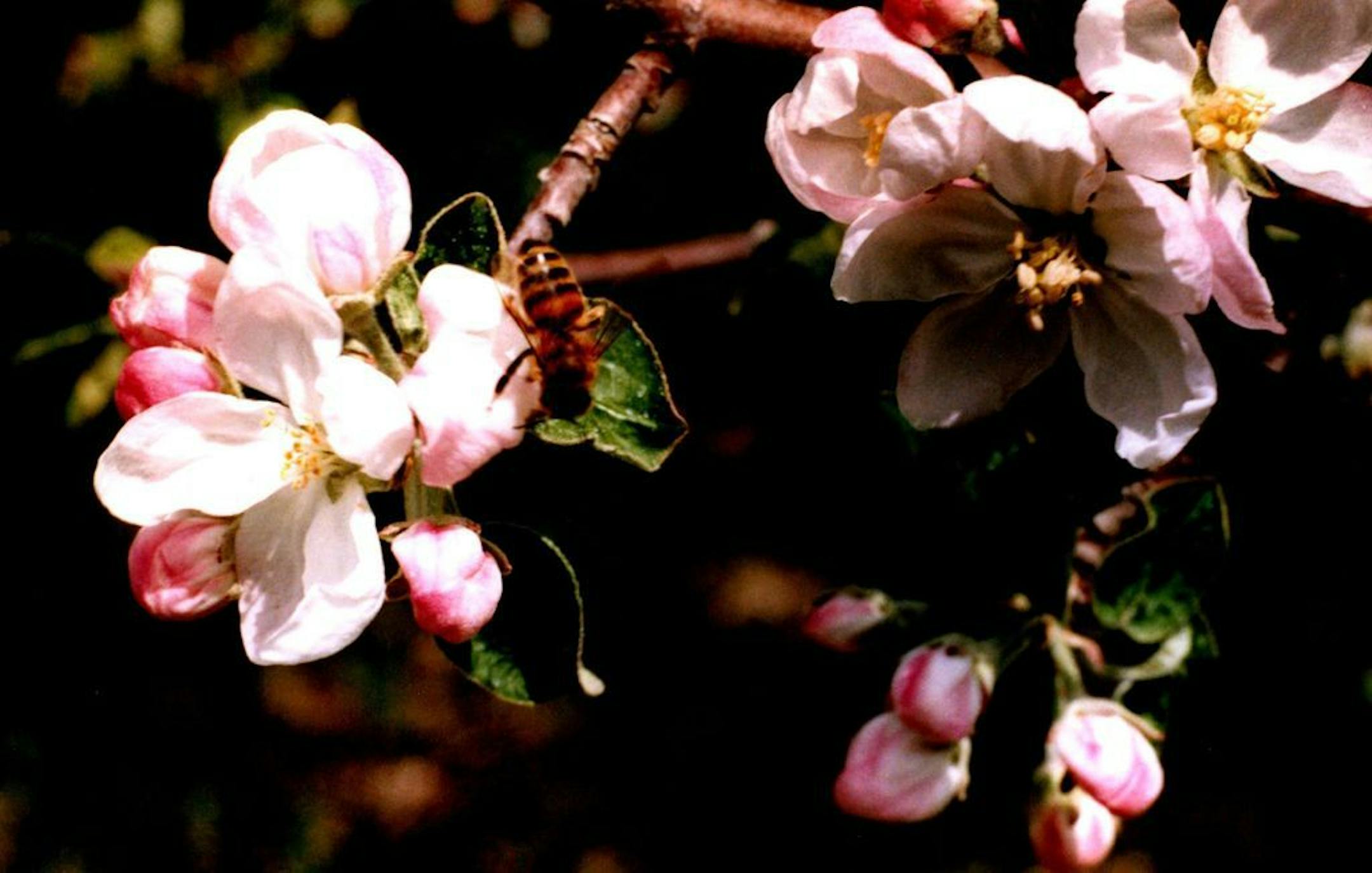
September has its share of silly holidays, such as International Talk Like a Pirate Day and National Butterscotch Pudding Day. While I love pudding, arrr, I think it might be a better idea to celebrate National Honey Month while there's still time. It's a real thing, brought about to honor and support beekeeping, and reminding us of the importance of the tiny insects that produce that sweet treat and so much of the other food we eat.
Planting for pollinators is more than just the pretty flowers in our perennial borders; I like to encourage folks to consider all of what I call "flower opportunities" in our gardens. Flowers equal food for bees, and they also occur on trees, shrubs, fruits and vegetables, herbs, grasses and ground cover. So think beyond the flower bed when it comes to feeding bees.
Planting trees for bees is one of the best gifts you can offer beekeepers and their hardworking hives. But no need to wait until Arbor Day next spring; it just so happens that early fall is also a great time to plant trees. Summer's heat has eased, rain is plentiful and the beginning of beautiful fall color offers inspiration.
Many of the same trees that display stunning autumnal shades provide much needed sustenance for pollinators in early spring as they emerge. A trip to garden centers, local parks or the Minnesota Landscape Arboretum can provide plenty of real-life examples of well-known flowering trees, as well as some of the more unusual specimens. Visits to arboretums and other botanical gardens also help you visualize the size range of various types of trees once they reach maturity.
According to the Arbor Day Foundation, "Trees' flowers are a critical source of forage for bees, providing nutrient-rich pollen and nectar that bees use for food and to make honey."
Bee-friendly blooms
Crabapples, with their explosion of flowers in May, are an obvious choice for bee-friendly blooms, in addition to their color, fragrance and fruit. They come in different sizes, too.
Fruit trees such as apple, plum, pear and cherry produce prolific flowers as well.
These floriferous trees contribute greatly to what is called the "nectar flow" or "honey flow" in spring. This is the time when two important factors — the combination of an abundance of blooms and suitable weather — create the perfect conditions for honeybees to gather the ingredients that sustain their hives and produce honey for humans, too.

