

Opinion editor's note: Editorials represent the opinions of the Star Tribune Editorial Board, which operates independently from the newsroom.
•••
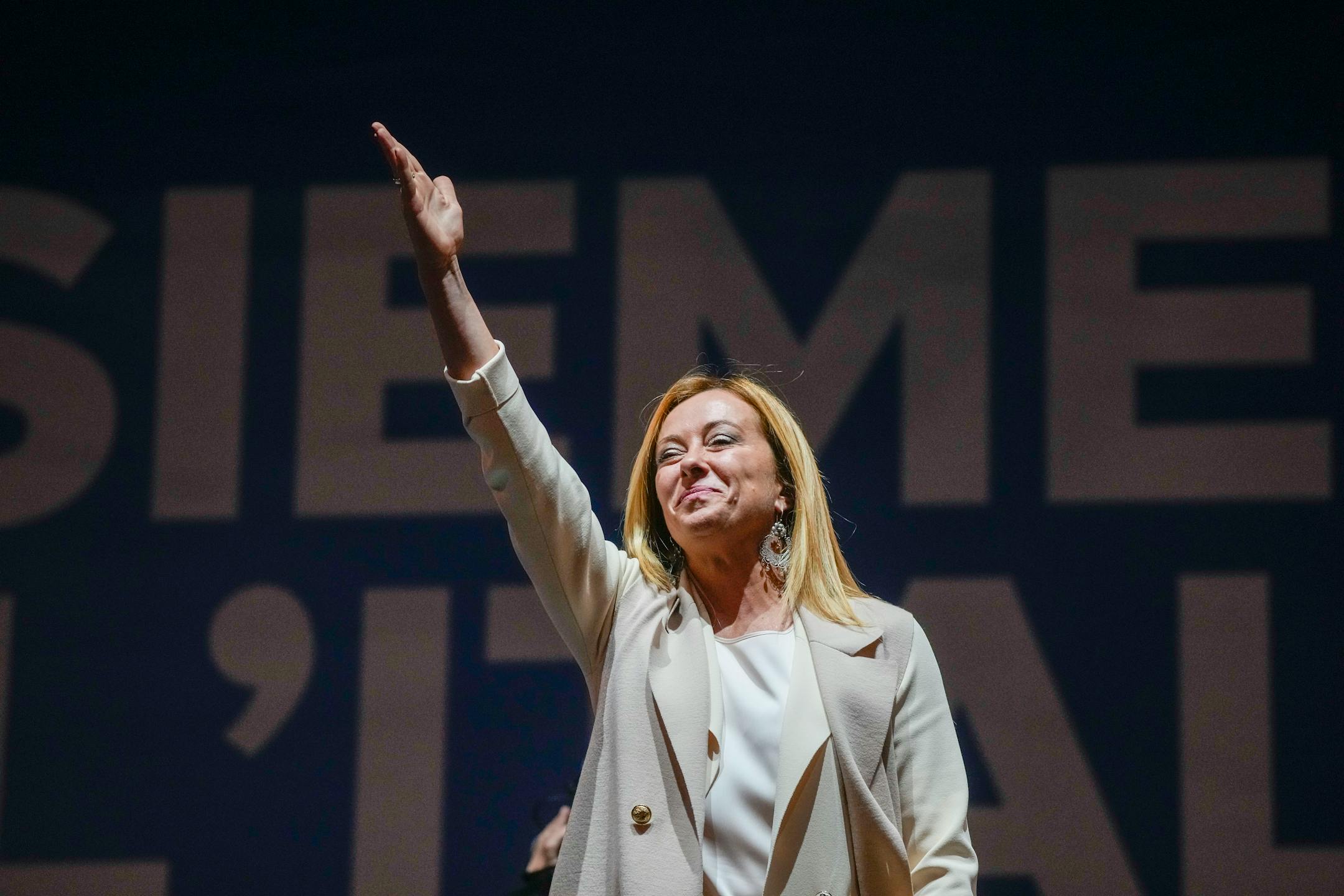
The message on campaign posters for Giorgia Meloni read "Pronti"— "Ready." It was meant to signal that the Italian candidate — whose party, Brothers of Italy, won the most votes in the Sept. 25 election — was prepared to be prime minister.
But it also sparks a question: Is Italy — and the European Union and the U.S. — ready for a leader in Rome whose party descended from fascist roots?
While a youthful Meloni expressed admiration for Benito Mussolini, Italy's ill-fated fascist dictator during the World War II years, today she condemns the era. The Brothers of Italy have "handed fascism to history" and "unambiguously condemns the suppression of democracy" that allowed Mussolini to take over Italy in the 1920s, Meloni, 45, said while campaigning.
Italians, Europeans and Americans may be reassured, but they should scrutinize Meloni's deeds and her words. Her coalition partners, Matteo Salvini and former Prime Minister Silvio Berlusconi, aren't so convincing, especially in their rhetoric regarding Russia.
Meloni, conversely, has sent reassuring signals on Italy's support for Ukraine's righteous fight against Russian aggression. With Italy a vital member of the European Union and NATO, such consistency is crucial, especially as Russian President Vladimir Putin weaponizes energy and economic and migration challenges in his quest to sap Western unity on sanctioning Russia and arming Ukraine.
Meloni hasn't been as reassuring on refugees. In fact, like other populists throughout the West — including here at home — she's based her rise partly on nativism, a negative framework at any time but particularly during an era when increased conflict and climate change have resulted in a postwar high of displaced people worldwide. What's needed now are cohesive European solutions, not parties rising to power in opposition to them, as recently happened in Swedish elections.


