

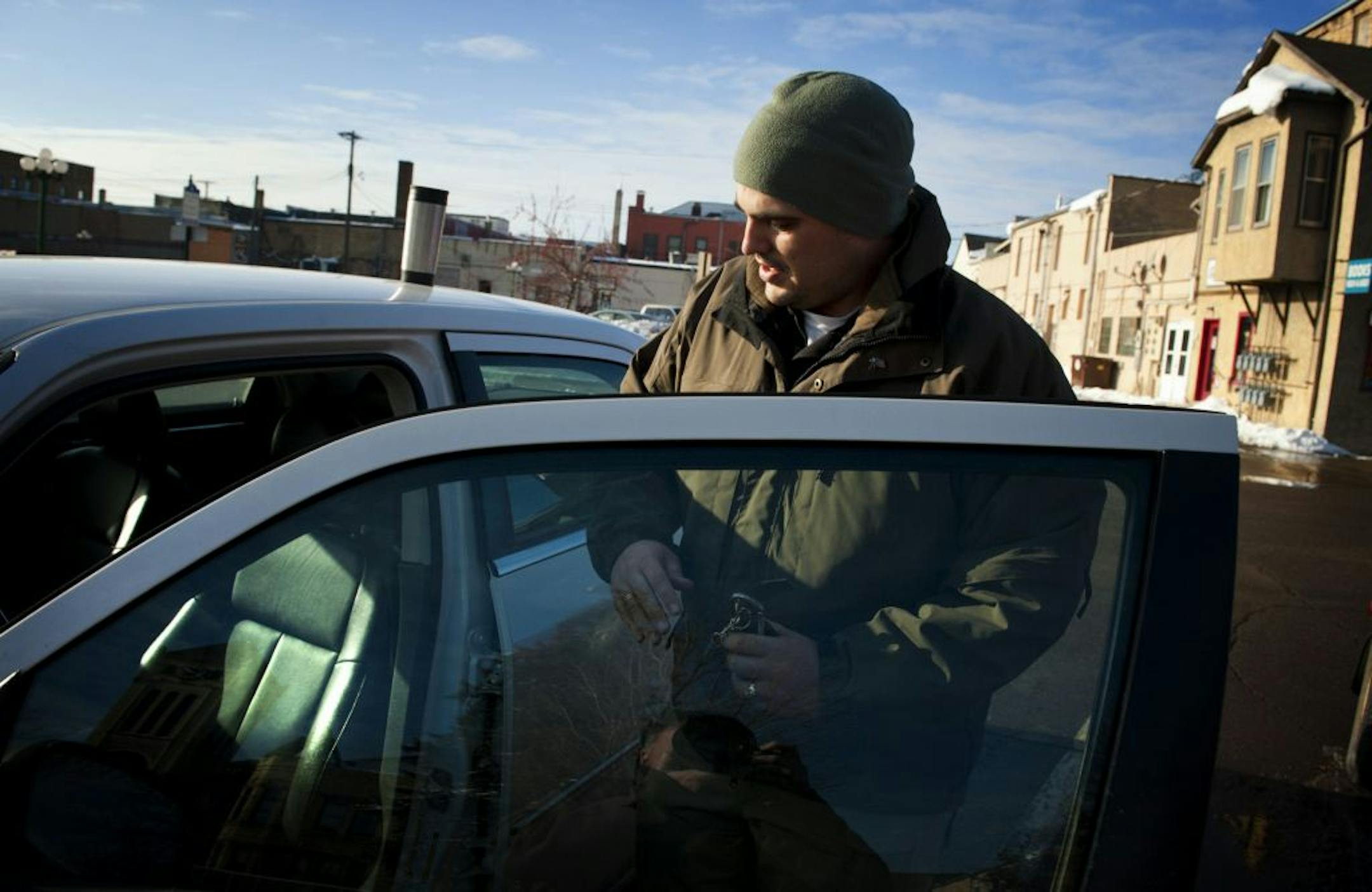
LITTLE FALLS, MINN. - Kevin Brown knew he needed help.
The 11-year Army veteran with tours in Iraq and Afghanistan was suffering from PTSD, a brain injury, a back injury causing arthritis in his elbows and knees and a chronic skin ailment contracted in the desert of Iraq. But his calls to the county's veterans service office in his hometown of Duluth proved more frustrating than helpful.
"Calling them and saying, 'Hey, I'd like to make an appointment,' they said, 'OK, we'll see you in about two months when we can fit you in,'" Brown said. "That was a huge deterrent."
After moving to tiny Morrison County in central Minnesota, it was less than a week from the time he stopped by the county veterans service office to when he was getting his initial physical in St. Cloud. About five months later, disability checks began arriving.
Brown's experience reflects the quiet reality for disabled veterans in Minnesota: getting the benefits they deserve often simply comes down to where they live. A veteran in Little Falls or Royalton, for example, is more likely to be receiving disability benefits than a veteran living in Minneapolis or St. Paul, even if they fought in the same war and have the same injury.
A Star Tribune analysis of VA disability payments in Minnesota found wide geographic disparities in benefits paid to disabled veterans, with rural areas generally more effective at getting veterans aid.
The issue of who gets benefits and how much they receive will take on added importance as the wars in Iraq and Afghanistan come to a close and a flood of new veterans with war injuries return home seeking help.
An Iraq era veteran in Little Falls with the hearing ailment tinnitus, for instance, is nine times more likely to be getting benefits than an Iraq veteran in the Lynhurst neighborhood of south Minneapolis. An Iraq era veteran with a back strain injury in Royalton is four times more likely to be receiving compensation than an Iraq veteran in the Payne-Phalen neighborhood of St. Paul, according to the analysis of payments to veterans in 858 ZIP codes in the state.


