
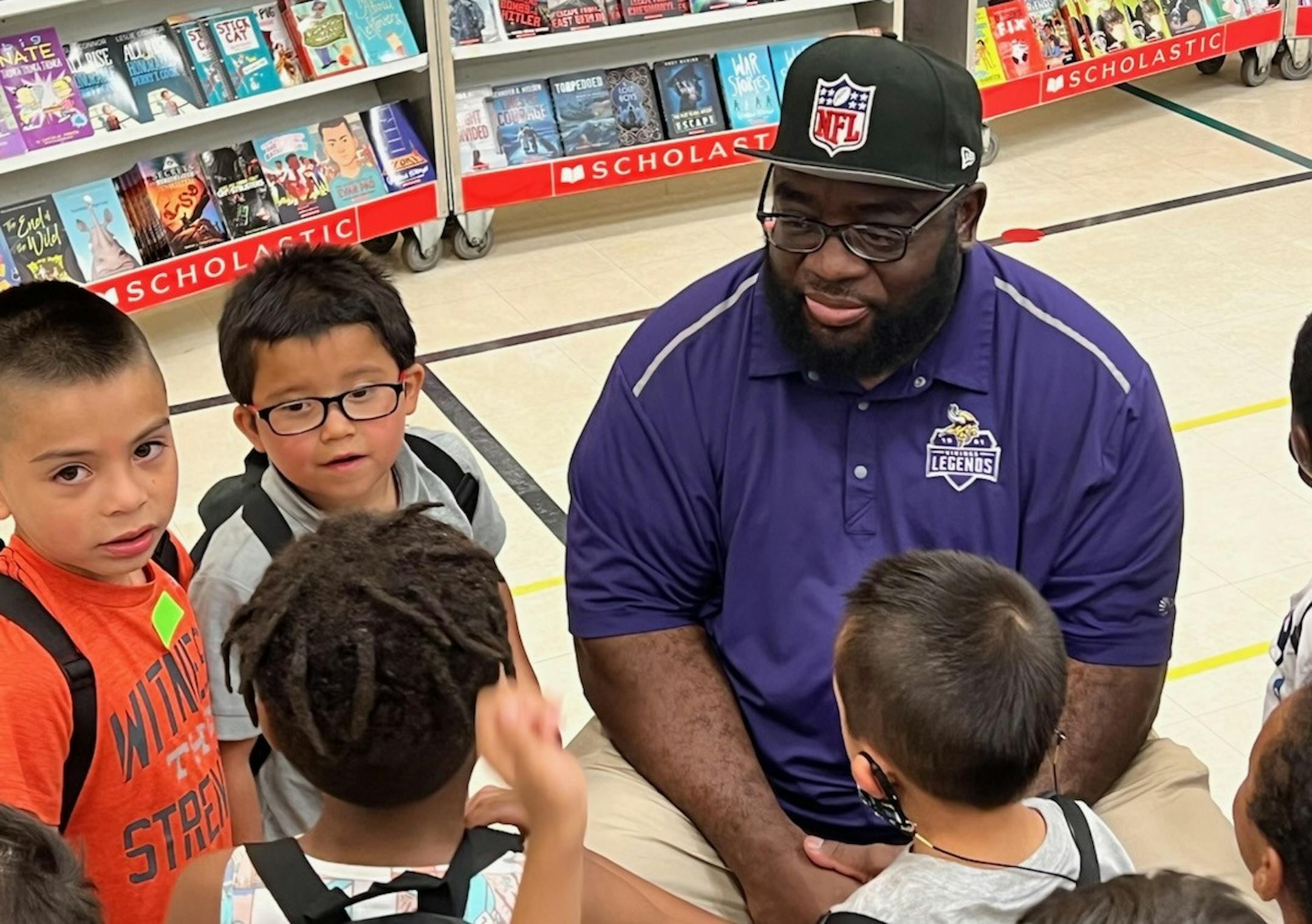
Souhan: Somebody else’s kidney gave Ben Williams life. The former Gophers and Vikings player is giving back.

Ben Williams, with his foundation, is working to bring solutions to underserved communities.

Columnist Icon
The Minnesota Star Tribune
August 24, 2025 at 10:00AM
Ben Williams, with his Ben Williams Foundation, aims to lift underserved communities. (Provided)

Ben Williams grew up in Belzoni, Miss. “Catfish capital of the world,” he said.

As a standout high school football player, he visited the University of Minnesota on a summer recruiting trip. “The campus was beautiful,” he said. “Everybody’s laying out on this green grass. They don’t tell you it gets to 40 below in the winter. This was before the transfer portal and NIL, so you’re stuck.”

A defensive tackle, Williams earned second-team All-Big Ten honors as a senior, then played in the CFL, World League and NFL. He later earned his MBA and law degree. “I love football,” he said. “I got to play all over the place, and I’m fairly satisfied with my career.”

He was on the 1998 Vikings team that went 15-1 and lost in a major upset to Atlanta in the NFC Championship Game. “That will haunt me for the rest of my life,” he said.

These days, Williams lives in Minneapolis, is the president of the Minnesota chapter of the NFLPA, runs the Ben Williams Foundation and speaks with his friend John Randle, a Vikings Hall of Famer, almost every day.

The conversations have become more lighthearted in recent years.

In 2010, Williams underwent a physical. An hour later, five doctors walked in. “I was like, what is this, a coaching session?” he said.

They told him he had end-stage chronic kidney disease. “I went to Mexico, I tried stem cell, I tried everything,” he said. “Until you’re in a dire medical situation, you don’t have any idea what you’ll do to get help.

ADVERTISEMENT

“I remember the final two years, before I really got sick, in the fall of ’19. My nephrologists were more friends than doctors. I asked, ‘Are there no more pills you can give me?’ They were out of options.”

In August of 2019, doctors inserted a fistula, connecting a vein and artery. His arm filled with blood. He learned he would be spending most of his time undergoing dialysis and recovering from dialysis.

“I asked myself, ‘Is this my life now?’ ” he said. “Dialysis strips the toxins from your blood, so I thought I would feel great. They don’t tell you that it also strips the nutrients. I couldn’t get out of bed.”

Williams had heard stories about the difficulty of receiving a donated kidney — the long wait lists, the unlikelihood of finding the right donor.

Then his doctor called. Williams got to the hospital at 7 p.m. Eight hours later, “about 30 people came into my room. It’s like a NASCAR pit crew. Suddenly I’ve got tubes sticking out of my body, everywhere. You feel like you’re in a spaceship. Everything is metal and cold.”

He woke up six hours later. “What they don’t tell you is that at the point of dialysis and kidney failure, you stop urinating,” he said. “I wake up and tell them I have to urinate. The doc says, ‘Then go.’

“I’m a Diet Coke freak, and you can’t drink Diet Coke when you have kidney failure. That was the best feeling, to be able to drink an ice-cold Diet Coke.”

The organ donor was an 18-year-old who had died in a car wreck. “It’s a tale of two emotions,” Williams said. “I’m happy as hell, and down on the seventh floor, there are parents crying because they’re going to take their child off life support and donate his organs. I’m thankful that somebody made that sacrifice, so I’ve made it my mission to try to do outreach to underserved communities.”

Williams wants to provide dialysis centers and encourage organ donation. He also wants to educate people on the root causes of kidney problems. “One major problem in underserved communities is hypertension,” he said. “If you went eight months with uncontrolled high blood pressure, it could kill about 60 percent of your kidney function. It’s not reversible, and you wouldn’t know unless you went in for blood work.

“When I say ‘underserved communities,’ what I mean is that the people who bear the brunt of how bad life is in our communities are the communities without funds and access. The state I’m from, Mississippi, is No. 1 in every mile marker that will give you a short life span.

“I’m not hoping to wake up one day and get a reward for the things I do. I’m doing what I think is right, because someone decided to give me life.”

He did receive an award. On Aug. 9, Williams was honored with the President’s Lifetime Achievement Award for combining athletic achievement with “lifelong service and the power of purpose-driven leadership.”

Our state is lucky that Williams, on his recruiting visit, didn’t realize just how cold Minnesota winters can get.

about the writer

about the writer

Jim Souhan

Columnist

Jim Souhan is a sports columnist for the Minnesota Star Tribune. He has worked at the paper since 1990, previously covering the Twins and Vikings.

See Moreicon

More from Sports

See More
card image
Jeff McIntosh/The Canadian Press

The Flames scored two goals less than three minutes apart early in the third to take control in the Wild’s first regulation loss in nearly a month.

card image
card image