

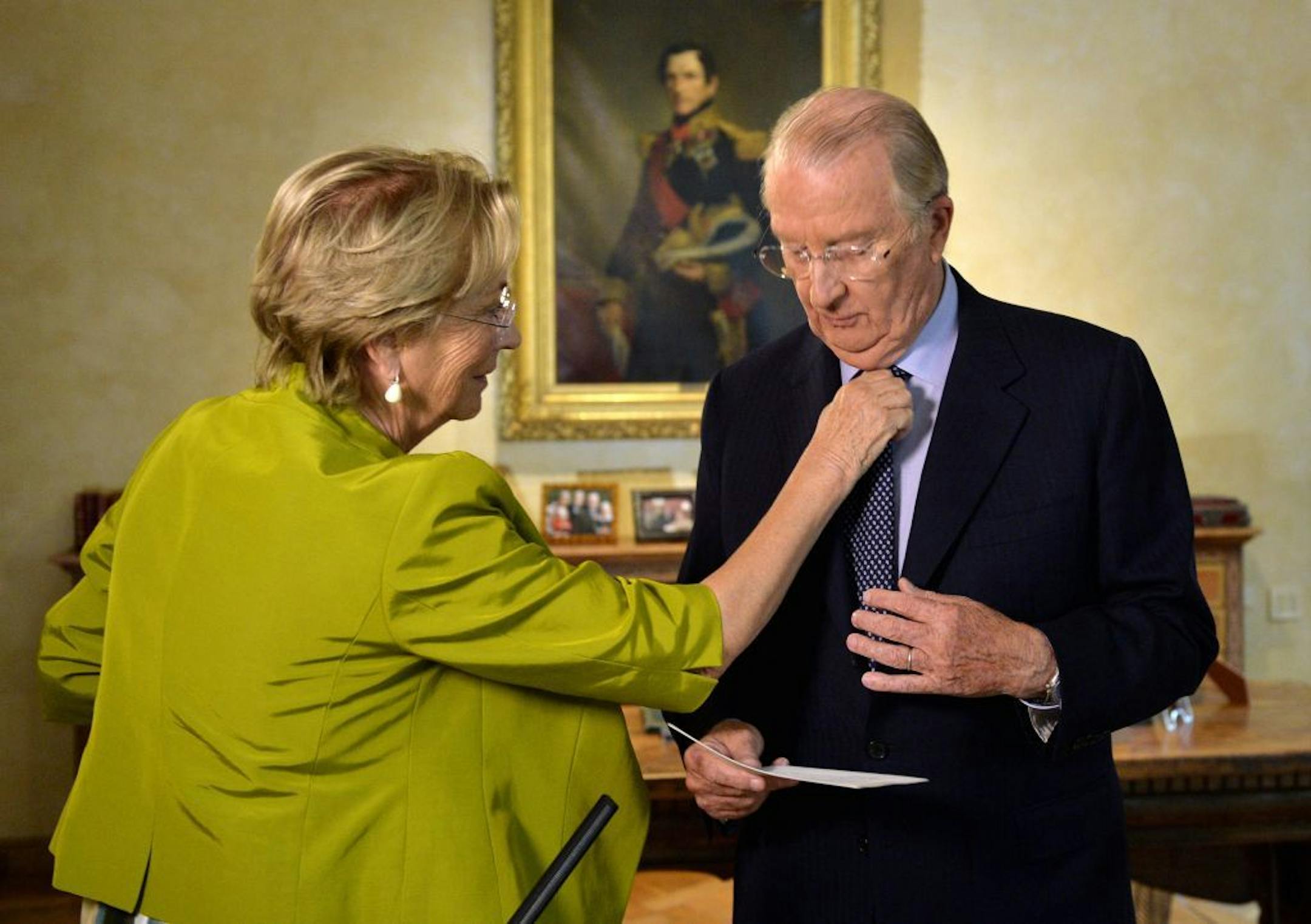
BRUSSELS — Weighed down by the years, Belgium's King Albert announced Wednesday that he will hand the throne of his fractious kingdom to his son, Crown Prince Philippe, on the country's national holiday, July 21.
The move had been rumored for weeks and will end nearly two decades of steady reign over a country increasingly torn apart by political strife between northern Dutch-speaking Flanders and French-speaking southern Wallonia.
Belying his frailty and 79 years of age, Albert stood upright and confident as he delivered the nationwide message to the cameras. Behind him, a massive portrait of Leopold I, the nation's first king in 1831, sternly looking down on him.
Albert said his age and health no longer allowed him to carry out his functions as he'd want to. "I would not fulfill my duties," he said, "if I clung at all cost to my position in these circumstances."
Belgium has had six kings since independence and Albert is the first to voluntarily abdicate the throne.
But he was the second European monarch to do so in barely two months. Beatrix of the Netherlands stepped down in April after a 33-year reign in favor of her eldest son, who was appointed King Willem-Alexander.
"After a reign of 20 years I believe the moment is here to hand over the torch to the next generation," Albert said in a nationwide address carried by all of Belgium's major broadcasters. "Prince Philippe is well prepared to succeed me."
That has long been an issue of deep contention. When Albert's brother, the devoutly Roman Catholic king Baudouin, died in 1993, it was widely expected that Philippe would take the throne instead of his father.


