

Opinion editor's note: Editorials represent the opinions of the Star Tribune Editorial Board, which operates independently from the newsroom.
•••
In the 1997 film "Contact," Jodie Foster plays a scientist who gets an opportunity to travel across the cosmos. Her conveyance is a capsule that makes multiple stops on its way to a distant star. At one such stop, a gobsmacked Foster gazes at the beauty of a celestial object and murmurs, "They should have sent a poet."
Her point, we understand, is that a background in unsentimental science has left her with an impaired ability to express awe and wonder. There is some irony in the realization, 25 years after "Contact," that an instrument of pure science — the James Webb Space Telescope — can deliver all the awe and wonder we sentimental humans can handle.
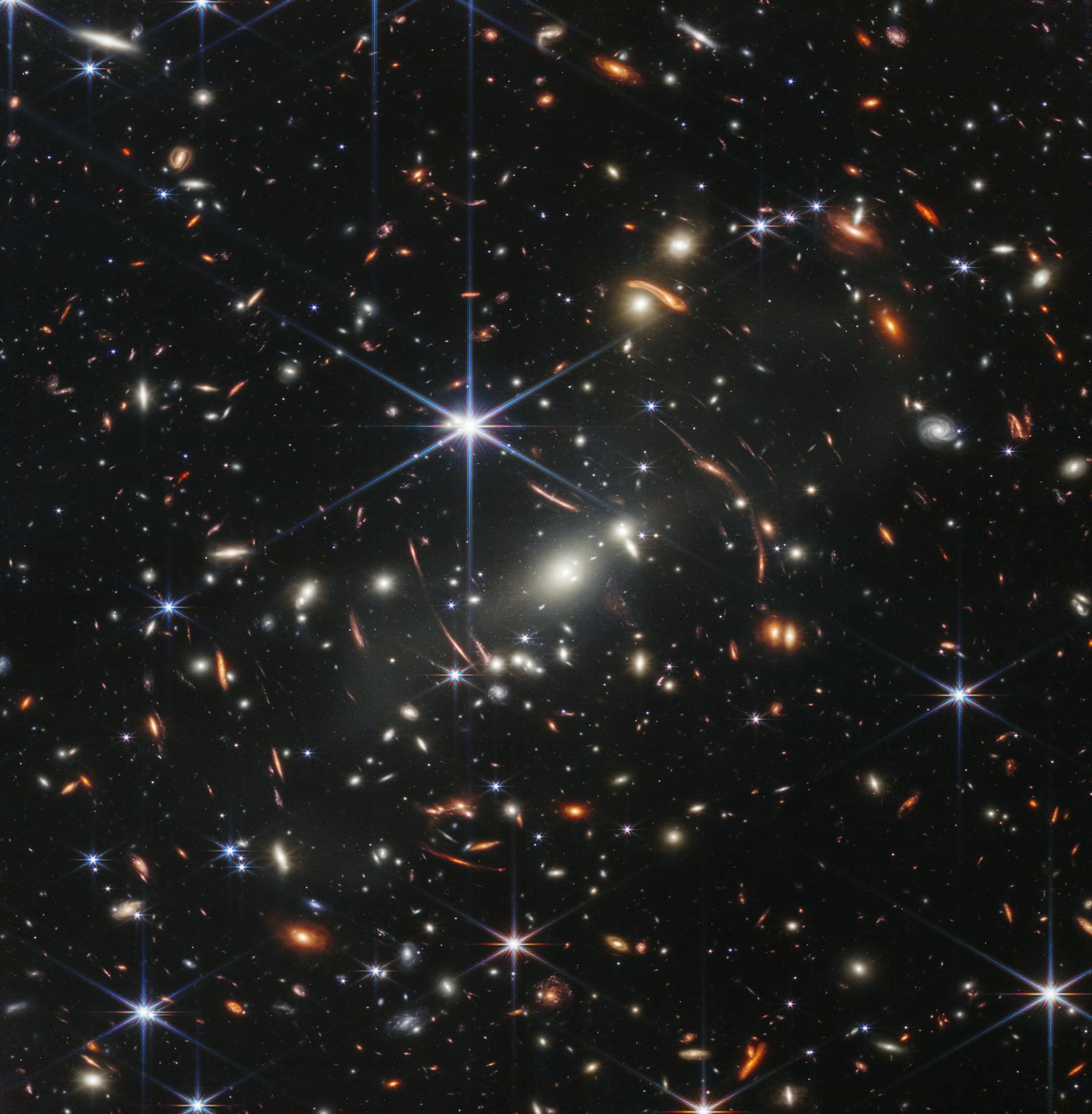
The first few images from the Webb telescope invite viewers to contemplate many big and incomprehensible things all at once: time. Gravity. Relativity. Light. We look at an image of galaxies as they appeared 4.6 billion years ago — because that is how long it took their light to reach us — and discover how their gravity distorts the image of other galaxies even farther away.
And there are other distortions at work, ones that improve our perception even as they trick our senses.
When we see one of Webb's images — for example, the picture christened Webb's First Deep Field, showing an area seemingly packed with multicolored galaxies — we are tempted to imagine that we are seeing it as would have appeared to Jodie Foster's character, or to us if we were lucky enough to travel out into space with her.
But it isn't so. Everything we see in that photo is real, but we couldn't see most of it without an instrument like the Webb that can stare at one spot for a long time, collecting light that is impossibly faint, allowing for the images of all those galaxies to emerge. If we were floating there with Foster in her capsule, we would mostly see stars.


