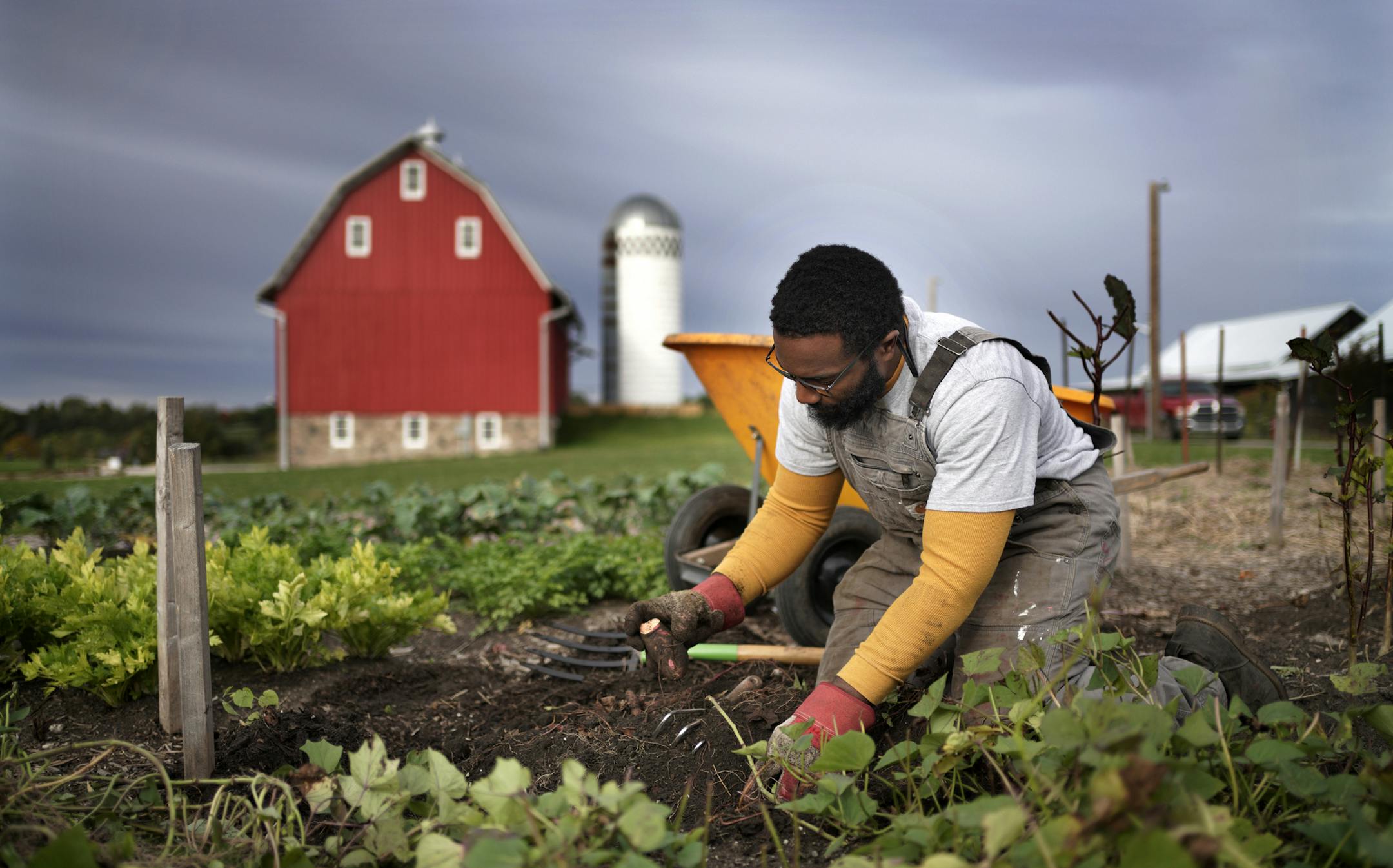
After several hours of digging, David Williams sat next to the pile of sweet potatoes he'd pulled from the soil and explained why he, a Ph.D. philosophy student, had signed up for a course in beginning agriculture.
"I'm really freaked out by the extent to which the supply chain is sort of out of sight, out of mind," said Williams, 28, of Minneapolis, who has worked in a high-end restaurant and taught introductory courses in the philosophy of food.
Though not yet sure where he'd be involved, "I wanted to see if this is the kind of work I can do with integrity and satisfaction."
So Williams signed up for the Sustainable Horticulture Training Program for Beginning Growers, a new course offered at Farm at the Arb at the University of Minnesota Landscape Arboretum in Chaska.
Farm at the Arb, a 28-acre interpretive farm, opened on the arboretum grounds last fall. It's based in a bright-red, century-old barn that has been restored but retains elements of its former functions.
The Horticultural Training Program, unlike the short and primarily recreational community classes the arboretum regularly offers, is an intensive nine-month course designed to prepare students to run their own farms or work in the food industry.
"Some have land already, some have zero experience, others are gardeners," said Tim Wilson, the arboretum's farm education manager and coordinator of the course. "There's a huge shortage of skilled labor in agriculture. This is a way we can start people on a career path."
The course began in February with 400 hours of classroom training, taught by a team of instructors with established horticulture careers. When the pandemic hit, the classes were taught partly remote and partly socially distanced in the cavernous barn. In May, students began 500 hours of hands-on training in the field, with the number working at any one time limited to allow for social distancing.