

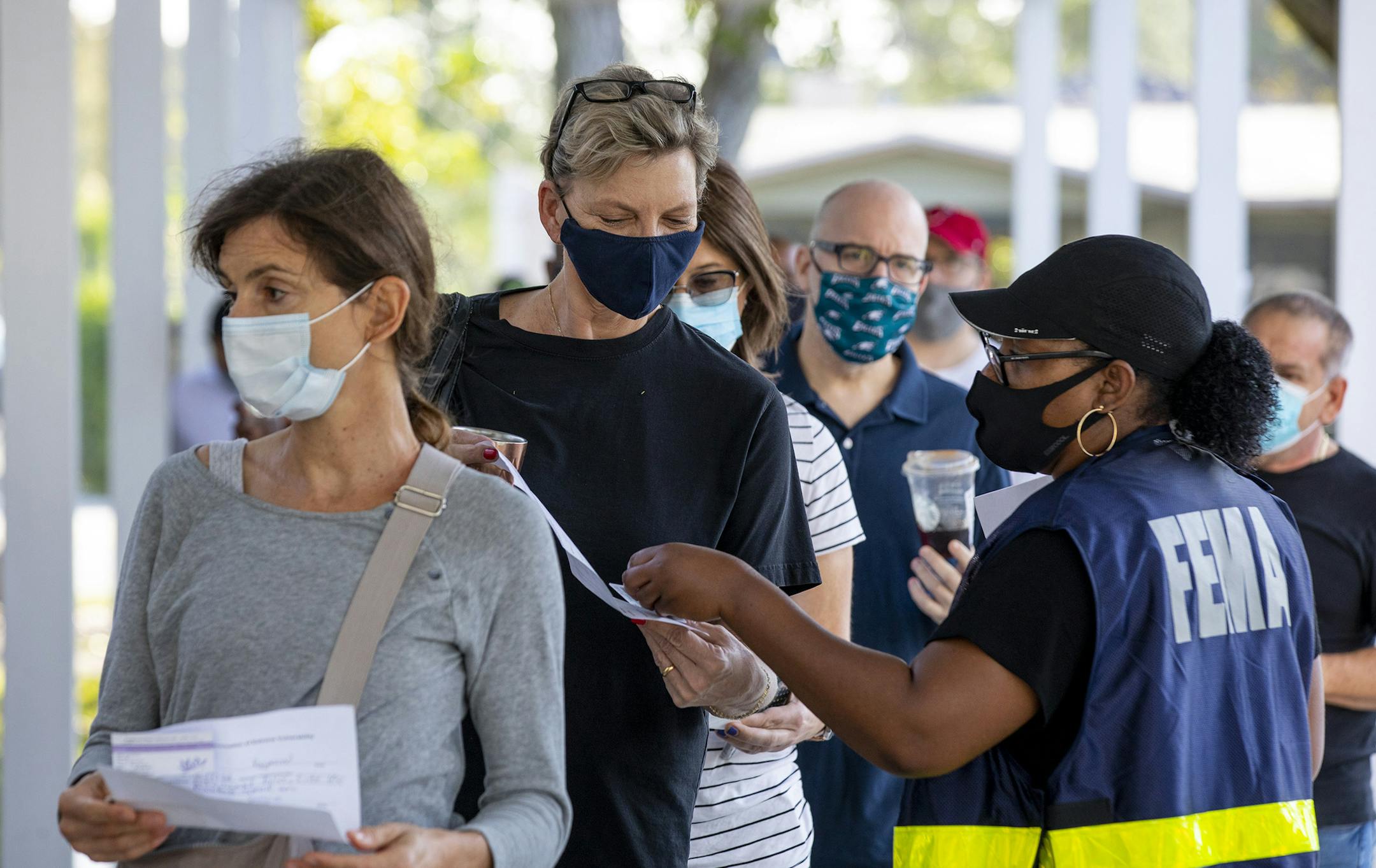
WASHINGTON – Workers from the Federal Emergency Management Agency have been scouting shelters for the migrant children flooding across the southern border. They've been running coronavirus vaccination sites. And they are still managing the recovery from a string of record disasters starting with Hurricane Harvey in 2017.
On the cusp of what experts say will be an unusually destructive season of hurricanes and wildfires, just 3,800 of the agency's 13,700 emergency workers are available right now to respond to a new disaster. That's 29% fewer than were ready to deploy at the start of last year's hurricane period. Federal scientists on Thursday forecast that an above-normal hurricane season in 2021 "is most likely."
FEMA has seldom been in greater demand — becoming a kind of 911 hotline for some of President Joe Biden's most pressing policy challenges. And the men and women who have become the nation's first responders are tired.
Deanne Criswell, Biden's pick to run the agency, identified employee burnout as a major issue during her first all-hands FEMA meeting, according to Steve Reaves, president of the union local that represents employees.
"FEMA is like the car engine that's been redlining since 2017 when Harvey hit," said Brock Long, who ran the agency under former President Donald Trump. "It is taking a toll."
"As we prepare for hurricane and wildfire seasons, or whatever nature brings us, I am committed that FEMA employees will have the tools needed to continue our support of ongoing missions while ensuring that our deployed workforce has time to rest and train to be ready for what comes next," Criswell said in a statement.
One problem FEMA doesn't have is money. The federal fund that pays for its disaster work has about $50 billion on hand. It's human resources that are in short supply.
Part of the strain reflects the large number of disaster-recovery operations that FEMA is still handling, from last year's record-breaking 30 named storms that pummeled states like Louisiana and Texas to the wildfires that blazed through California. Those disasters, which take years to recover from, have translated into an escalating workload for the agency's staff.

