

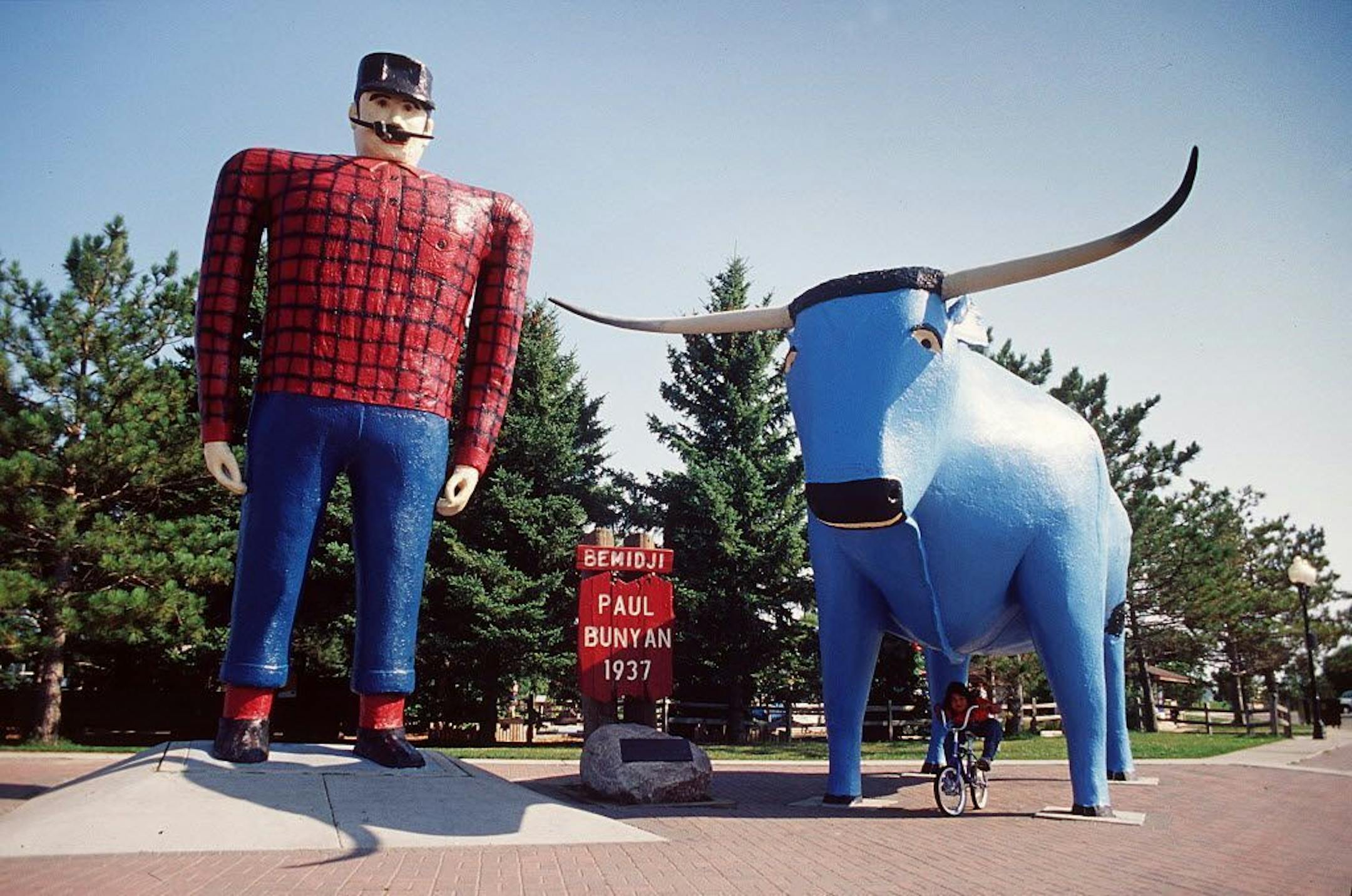
My eyes were opened at age 8 by a 26-foot-tall talking lumberjack who lifted his enormous limbs and guessed all the kids' names, which scared the pants off of us. Just ignore the man behind the curtain of the animatronic Paul Bunyan in Brainerd, with the microphone and ropes and pulleys to move his massive arms.
That same year, I saw a photo of a man posing next to a giant ball of twine in "The Guinness Book of Records." He lived just an hour west of where I grew up in Minnetonka. He had made the big time. Another homegrown hero.
These local wonders were just the beginning. Ever since then, I've researched and snapped photos of every attraction I've seen along the roadside to compile my book, "The Impossible Road Trip." Most travel guides ignore this essence of Americana, but these one-of-a-kind marvels are the fruit of the creativity of individuals who refuse to succumb to the ubiquitous monoculture of suburban sprawl and strip malls.
Beyond the wonder inspired by yet another bizarre sight, I'm always stumped by the perennial artistic question of "Why?" The best roadside attractions are the result of a practical joke, inspired boredom or a burning desire by an obsessed individual to create a giant monument to prove that "I Was Here." This is not normal behavior, and the United States is full of it — thank heavens!
The superior roadside sights date back decades and required the gumption of a creative (some would say delusional) visionary who wanted to leave something for all future generations to scratch their heads over. These unusual icons inspire heartfelt pride in residents who rally around their endangered idols and restore them into beloved hometown symbols. Why else would Darwin's Twine Ball have its own mailbox? Besides, who wants to see a stoic statue of some self-important town founder when they can look at a giant, leaping muskie like the one in Hayward, Wis.?
Here are some of my favorite roadside attractions in the Midwest and beyond.
Monuments to beer
Years before architect Frank Gehry covered his museums in stainless steel to make gigantic reflecting mirrors, John Milkovisch put his beer-drinking hobby to use. He regularly kept eight cases of cheap beer on reserve in the garage for emergencies. Why squander his money on new siding for his house when he had the answer in his hands? "Waste not, want not," he thought, and flattened his cans to cover his entire home, now known as the Beer Can House in Houston.
Closer to home, La Crosse, Wis., once had the most bars per capita, and the World's Largest Six Pack proved that they could hold their liquor. Six silos are packed with enough suds for 22,200 barrels of beer, or 7,340,796 cans. This Wisconsinite's dream-come-true holds enough beer to provide one person a six pack a day for 3,352 years, or at least keep the whole city happily tipsy for a month or so.

