(National Weather Service/The Minnesota Star Tribune)
(National Weather Service/The Minnesota Star Tribune)
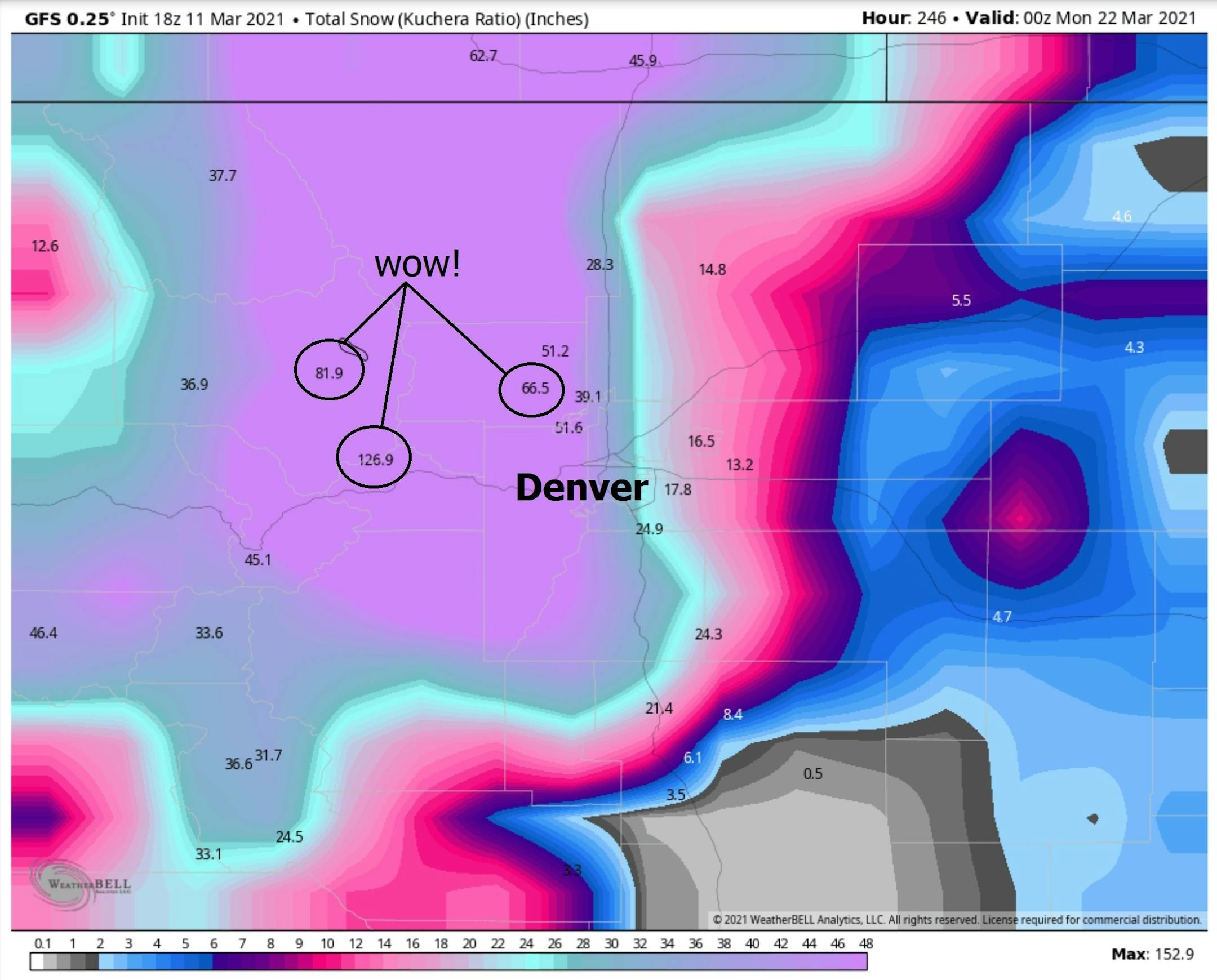
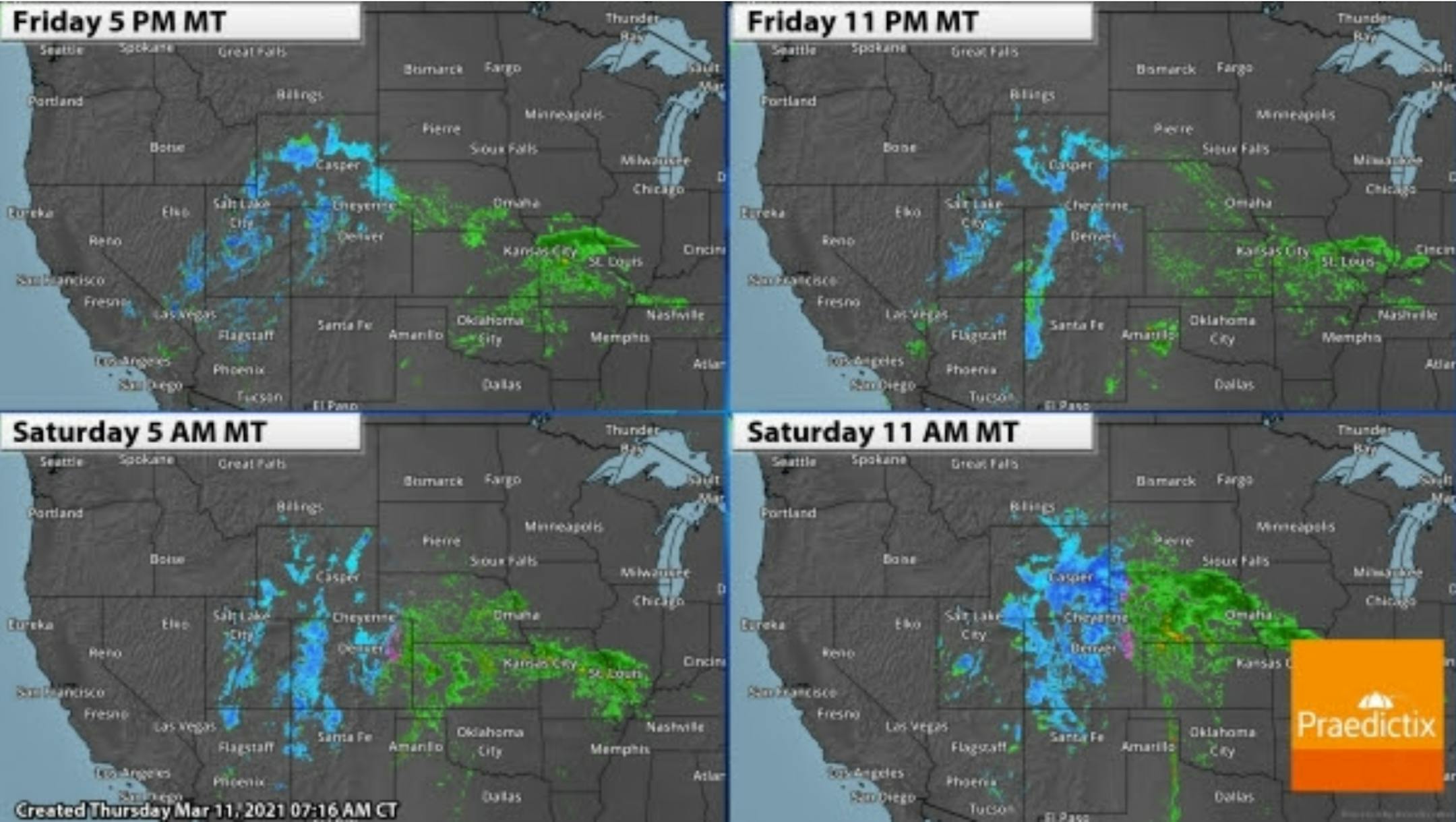
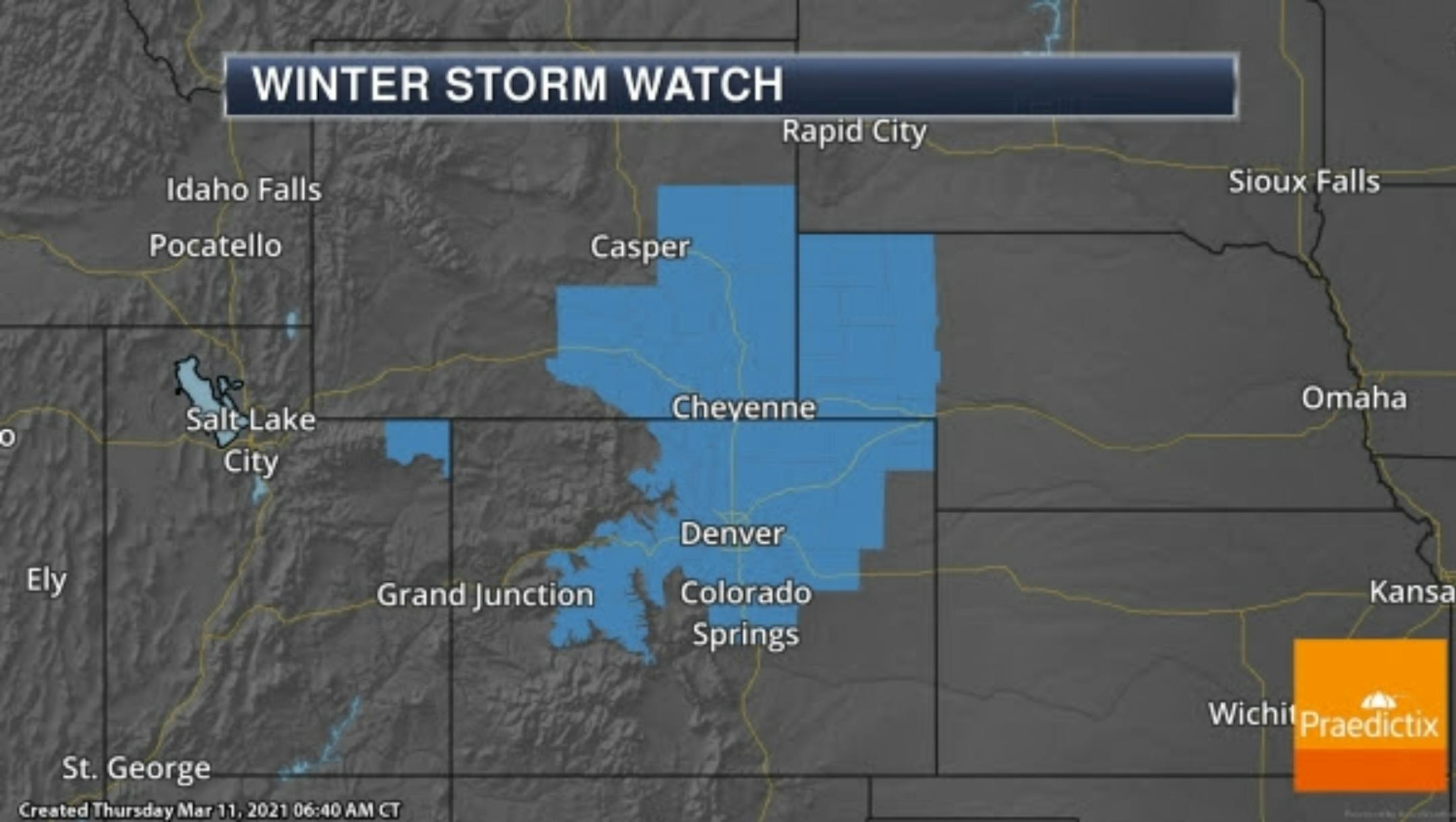
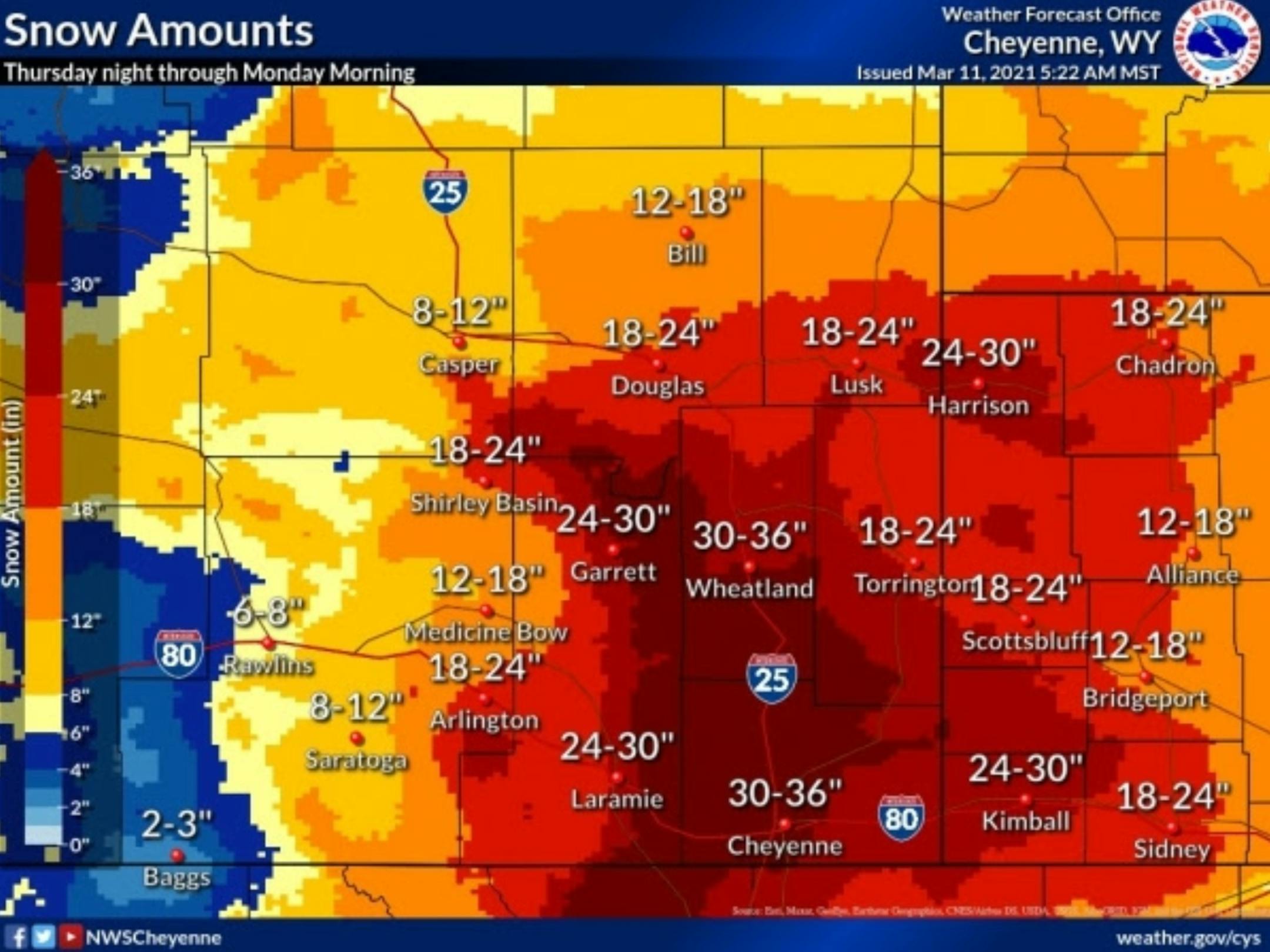
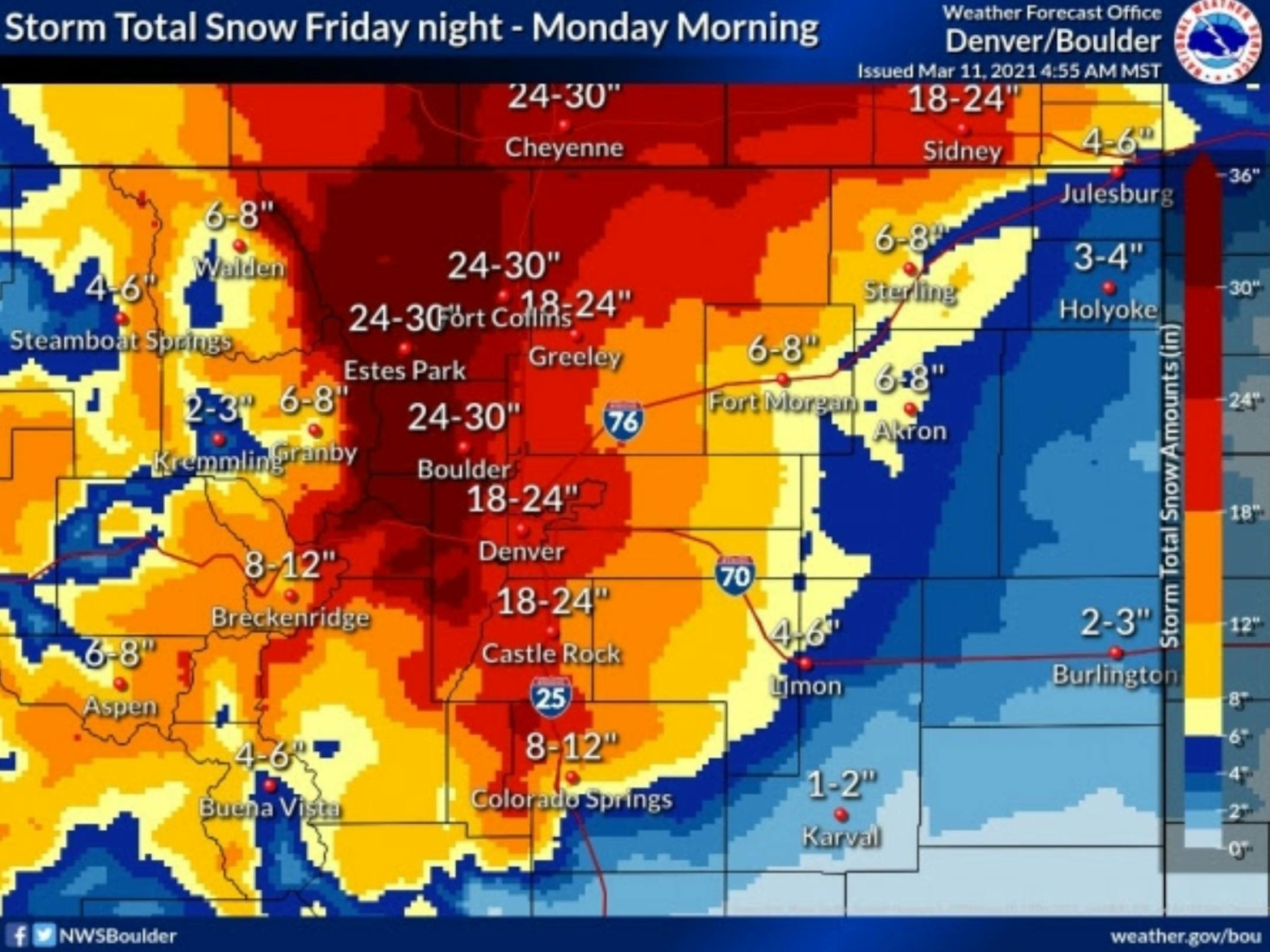
Blockbuster Snow Totals Expected. Major snowfall totals are expected across the Front Range, Laramie Range, and the High Plains Friday through Sunday. Snow totals will easily be more than 2 feet in some locations, including areas like Boulder, Estes Park, Fort Collins, Cheyenne, and Laramie. Snow totals in Denver are currently expected to be between 18-24", with 8-12" for Colorado Springs. This snow will lead to interrupted travel across the region, with the Colorado DOT already advising people to stay off the roads during the storm with road closures likely (https://www.codot.gov/news/2021/march-2021/statewide-winter-storm-warning). This heavy, wet snow will also lead to the potential of power outages, could bring down tree branches, and will be hard to shovel or even plow as it continues to accumulate on surfaces.
(The Minnesota Star Tribune)
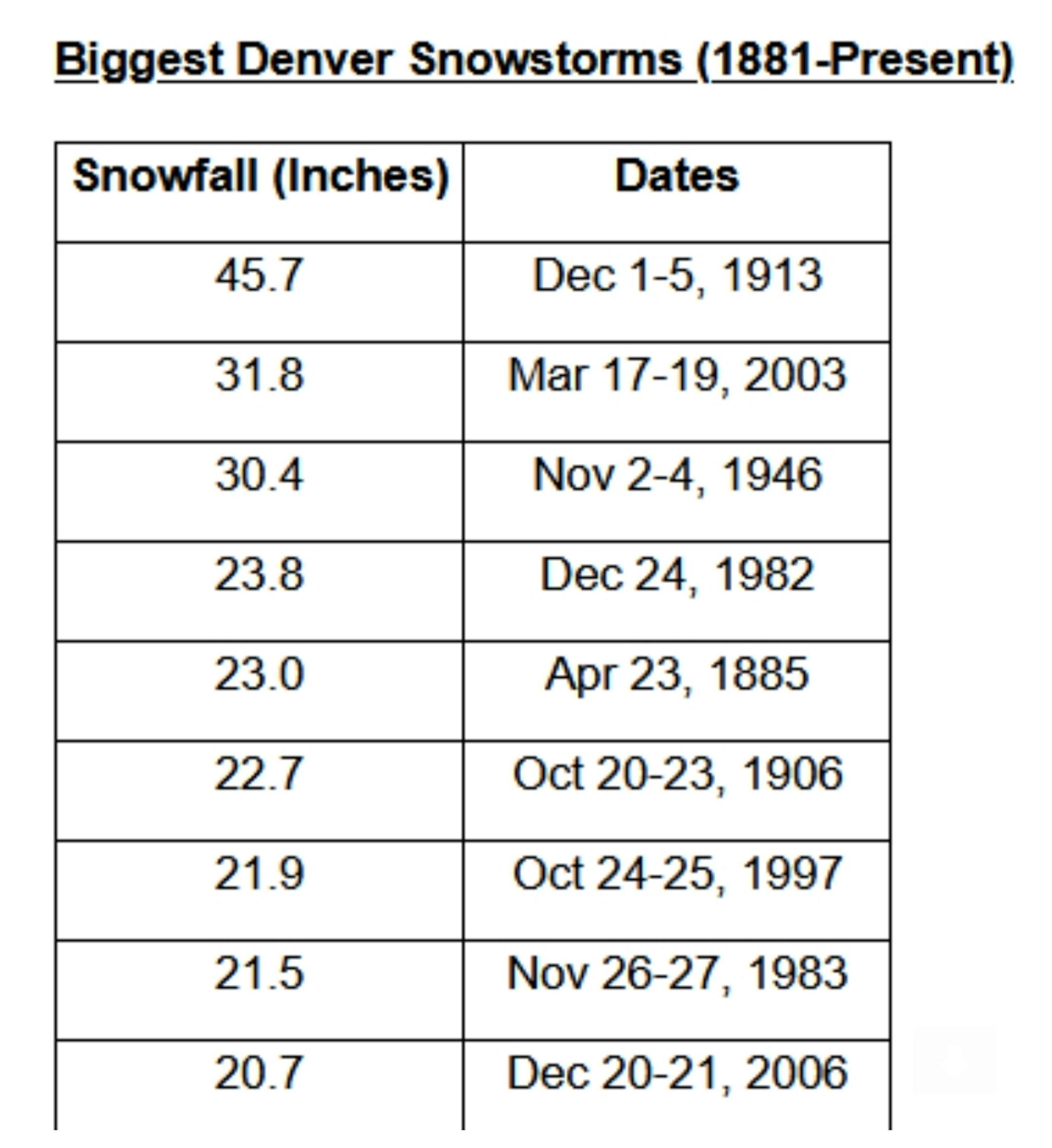
Denver Historical Perspective. Looking at recent years of heavy March snowfall in the Denver area, they had a one-day snowfall total of 13.1" back on March 23, 2016, which looks like it could be surpassed at the moment (that is NOT the top one day March snowfall on record, though). The National Weather Server in Denver/Boulder says that there is currently a low potential that this system could reach the heights of the March 2003 snowstorm, which between March 17th and 19th saw 31.8" fell.
D.J. Kayser, Meteorologist, Praedictix.
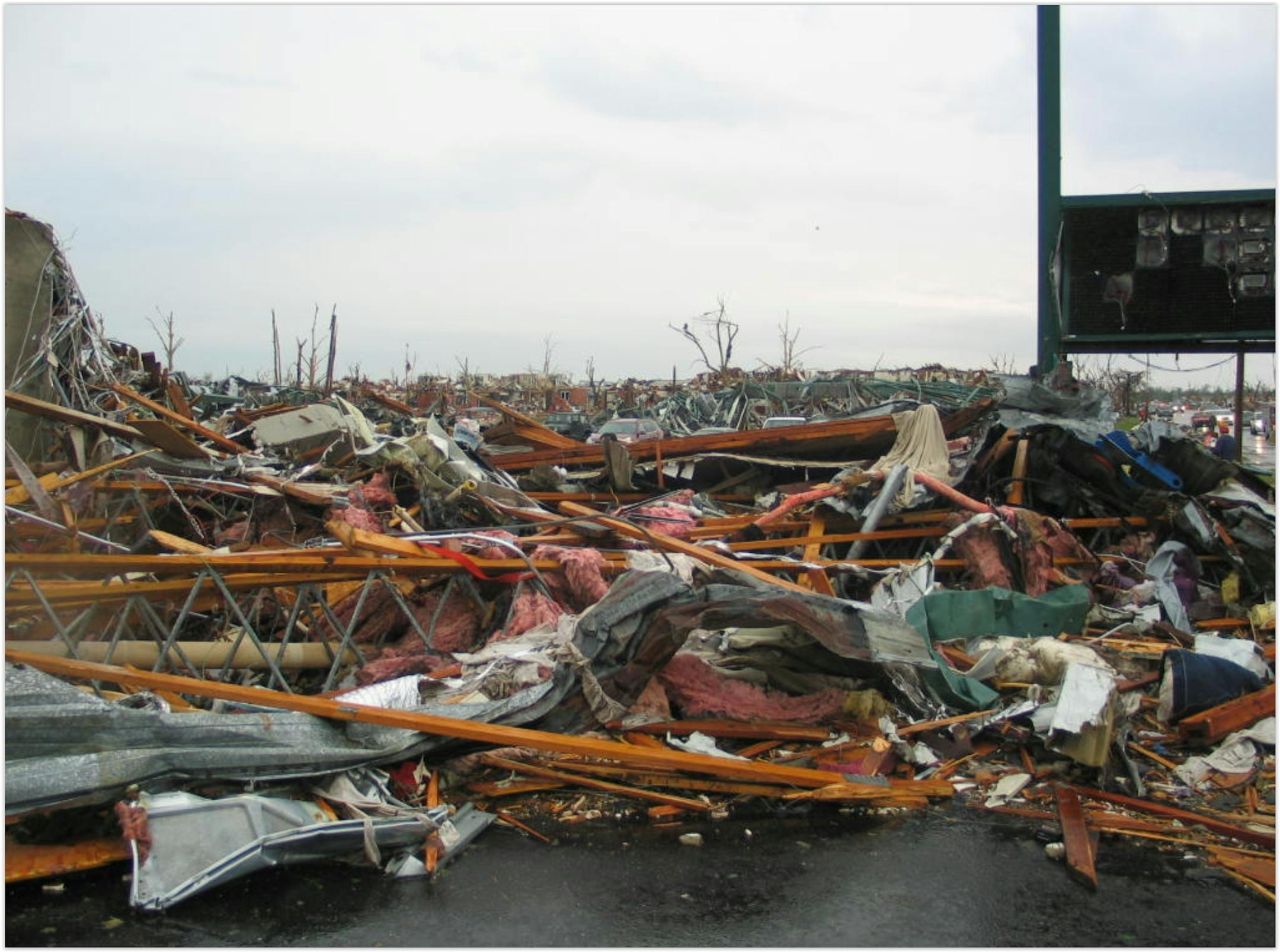
File: May 22, 2011, aftermath of EF-5 tornado that hit Joplin, Missouri (NOAA/The Minnesota Star Tribune)
La Nina Could Supercharge This Year's Tornado Season, Just Like It Did to Deadly Effect in 2011. CNN.com has perspective on what may shape up to be a busier-than-normal tornado season: "...Similar to this year, a moderate La Niña was the main feature in 2011. La Niña, and its counterpart, El Niño, can play a significant role in the position of the jet stream, temperature and precipitation patterns over the US, which all play a role in the formation of severe weather. The El Niño or La Niña conditions in winter months can be used to help pinpoint the tornado frequency during the peak of severe storm season in the spring, recent studies have found. "The flow of warm, humid air from the Gulf of Mexico increases in strength during springs that follow La Niña, which produces the fuel needed to form storms," Jason Furtado, assistant professor of meteorology at the University of Oklahoma, said. "The stronger flow increases the low-level wind shear that also favors the formation of tornadoes and hailstorms." The past several months have featured the strongest La Niña since 2011..."
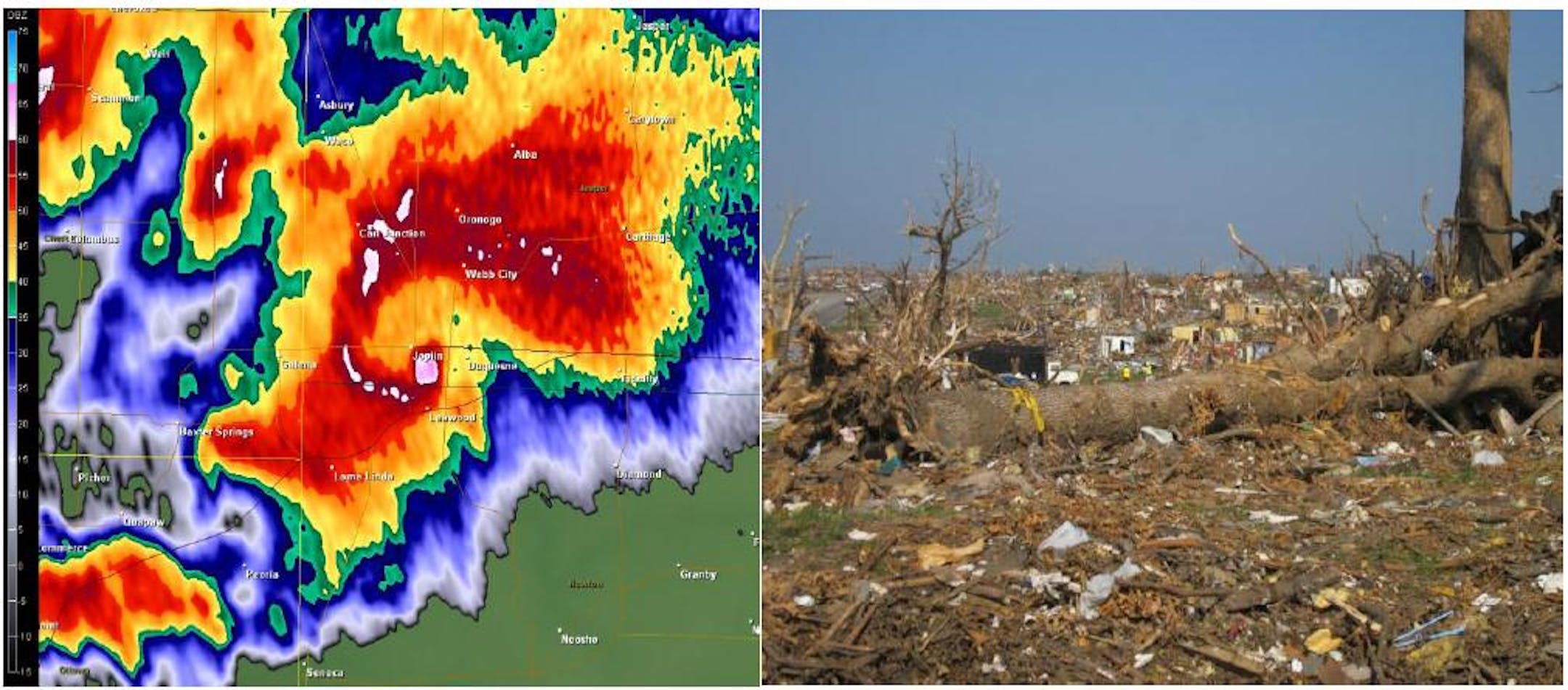
Joplin tornado radar signature and damage (NOAA/The Minnesota Star Tribune)
Rating Tornado Warnings Charts a New Path to Improve Forecasts. Yes, there is always room for improvement, according to a post at phys.org: "...A study from the University of Washington and the National Oceanic and Atmospheric Administration describes a new way to rate and possibly improve tornado warnings. It finds that nighttime twisters, summer tornadoes and smaller events remain the biggest challenges for the forecasting community. "This new method lets us measure how forecast skill is improving, decreasing or staying the same in different situations," said Alex Anderson-Frey, a UW assistant professor of atmospheric sciences. "The tornado forecasting community needs to know what we're doing best at, and where we can focus training and research in the future..."
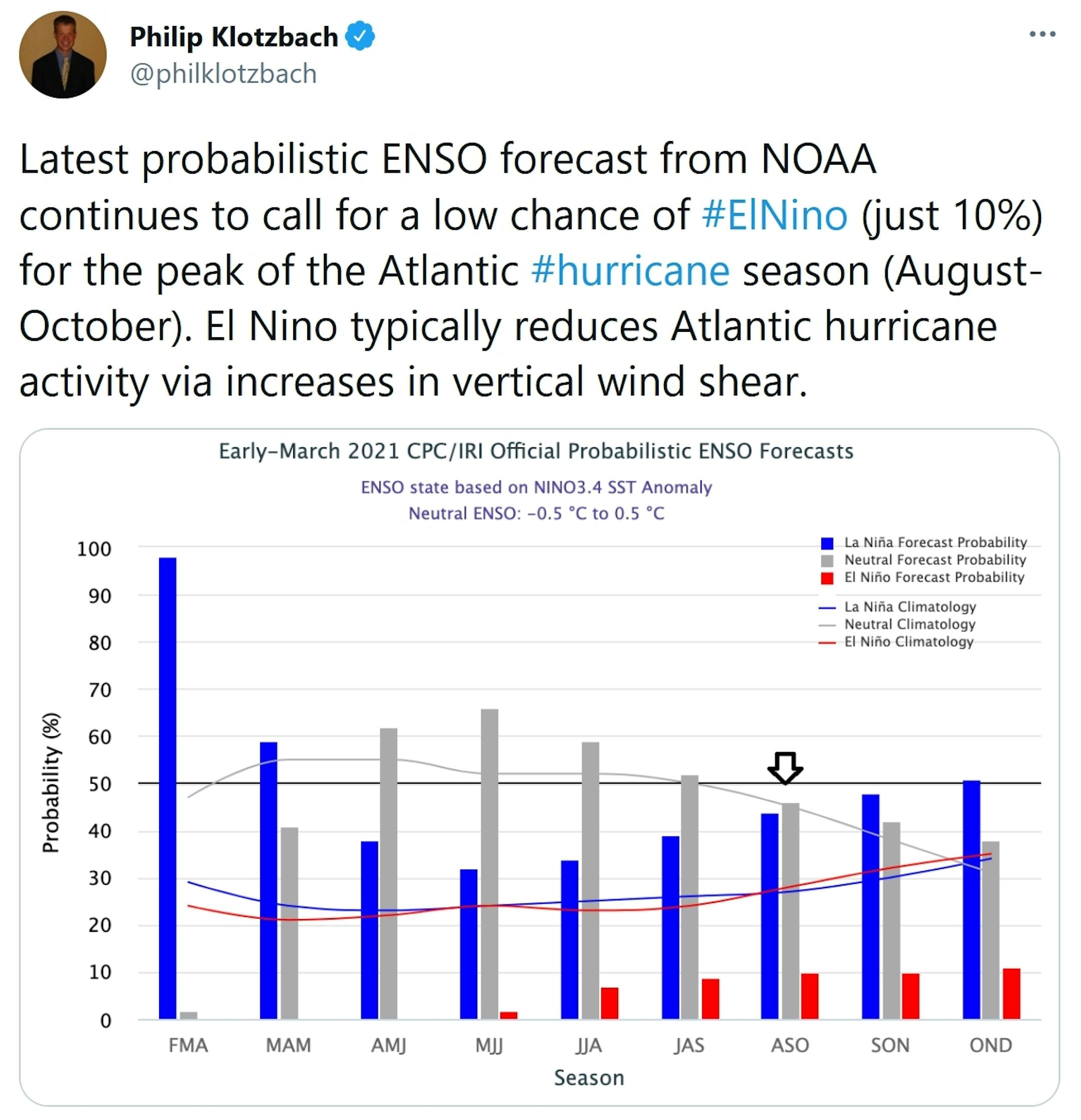
(Philip Klotzbach, Twitter/The Minnesota Star Tribune)
(The Minnesota Star Tribune)
15 Ways Life Has Changed Since the Onset of the Covid-19 Pandemic. Fortune has a very good overview here: "...Now, a year on, it seems possible that office life might never be the same again. For millions, working from home has come to signify higher-end employment. Indeed, the gulf is now starkly visible on the streets between those able to perform their jobs remotely, and lower-paid transport, health, or retail workers who have no WFH option. With offices shut, large numbers of canteen and lunch-hour restaurant workers, janitors, and others have lost their jobs altogether. It is a "ticking time bomb for inequality," says Stanford economist Nicholas Bloom. Despite such wrenching dislocations, most remote employees say that when the pandemic finally ends, they will want the choice of where they work, with many preferring a flexible mix of office and home..."