

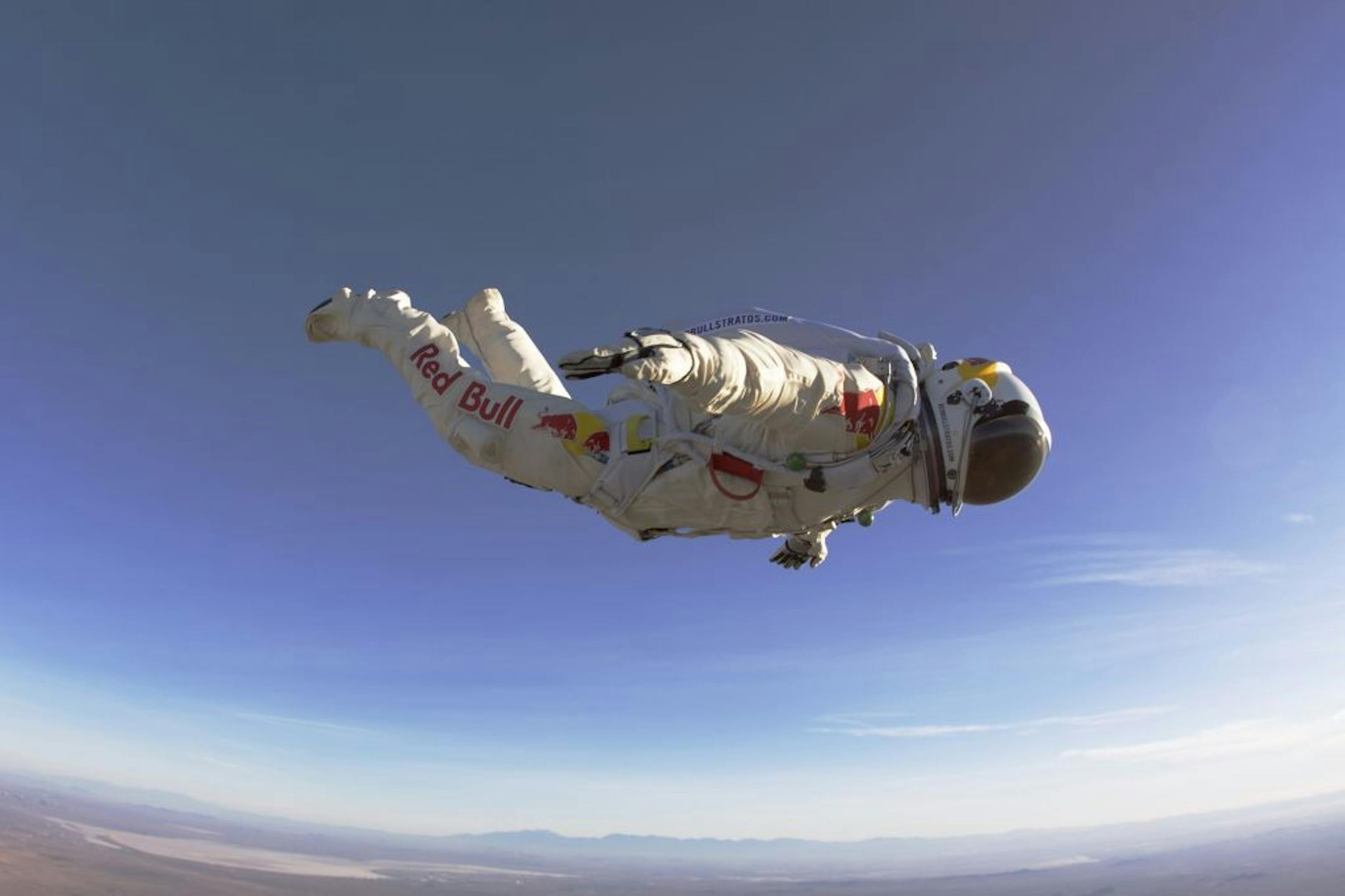
Teetering 23 miles above the New Mexico desert, Felix Baumgartner plans to leap head first into the abyss and become the first free-falling human to break the sound barrier as he plummets to the ground.
The feat will put his life on the line and push his body to the limit as when he falls from 120,000 feet in the air.
Wearing a newly designed pressurized suit and helmet, the Austria native will test the threshold of his equipment as scientists, aerospace engineers, the Air Force and NASA study what it shows about the limits and capabilities of the human body bailing out from aircraft at ultra-high altitudes. After several years of preparation and test jumps, Baumgartner, 43, is ready. "I feel like a tiger in a cage waiting to get out," he said.
The jump -- which could be made as early as Tuesday, depending on a cold front -- is an effort to break a free-fall world record of more than 19 miles, or 102,800 feet, set in 1960 by Air Force test pilot Joe Kittinger, who is serving as an adviser on this mission. The endeavor, called Stratos, is funded by the energy drink company Red Bull.
'This is beyond extreme'
Clearly, Red Bull has things in mind besides scientific breakthroughs. The mission involves two dozen cameras, including a helmet cam, to catch the action and to deliver live Web streams.
This jump is "unprecedented" and risky, said Kelly O'Keefe, a marketing professor at Virginia Commonwealth University. "This is beyond extreme. The risk of failure is so high."
The company and mission organizers reject talk of the event being done solely for publicity.


