

When you drive down Main Street in a small town, you can always spot the building that used to be the bank.
It has columns and a pediment (that's the triangular wedge over the door). The architecture was supposed to tie the institution back to Rome, suggesting permanence and solidity.
Unfortunately, many of the banks were neither permanent nor solid.
When the Great Depression struck, many of the banks in small towns hit the canvas, leaving dead bank buildings. After that, construction of small-town banks seemed to shudder to a halt.
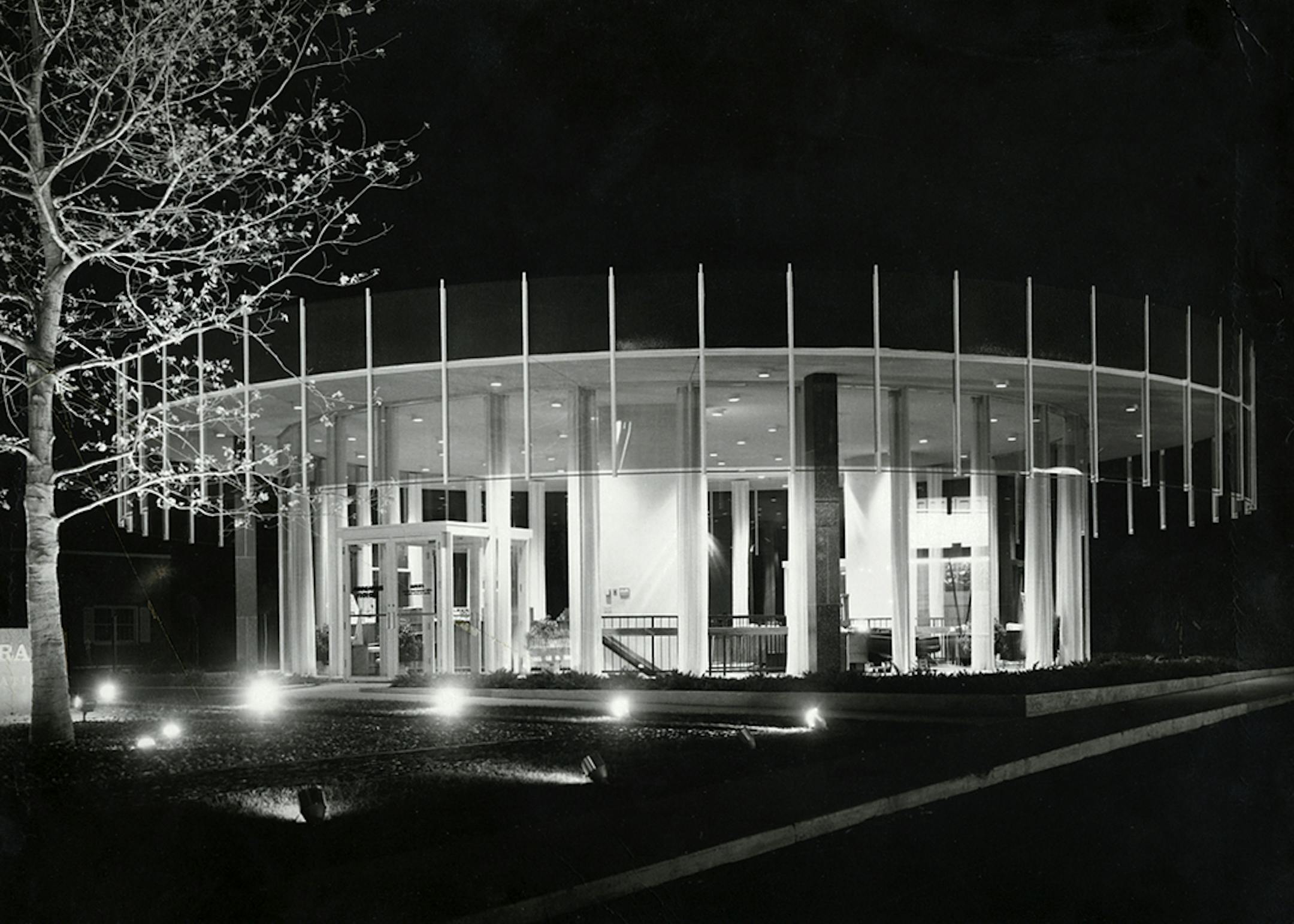
It wasn't until the go-go 1960s that banks started building again. The reasons are complex, and unimportant here (unless you really want to dive into the McFadden Act of 1927 or the Banking Act of 1933). The result was that the look of small-town banks changed.
The first banks in greater Minnesota tended to be late-19th-century Romanesque buildings — rough stone, perhaps a polished marble pillar on the corner by the angled entryway, a single carved word over the door: BANK.
It's the type of structure you see in old photos, with merchants standing outside looking serious and civic-minded. It's the type of building usually lost in the inevitable fire.
In the teens and '20s, the newly built banks were neoclassical in style, a midblock building, narrow, grave, with columns flanking a small door into which the depositor entered like a commoner petitioning Caesar.


