

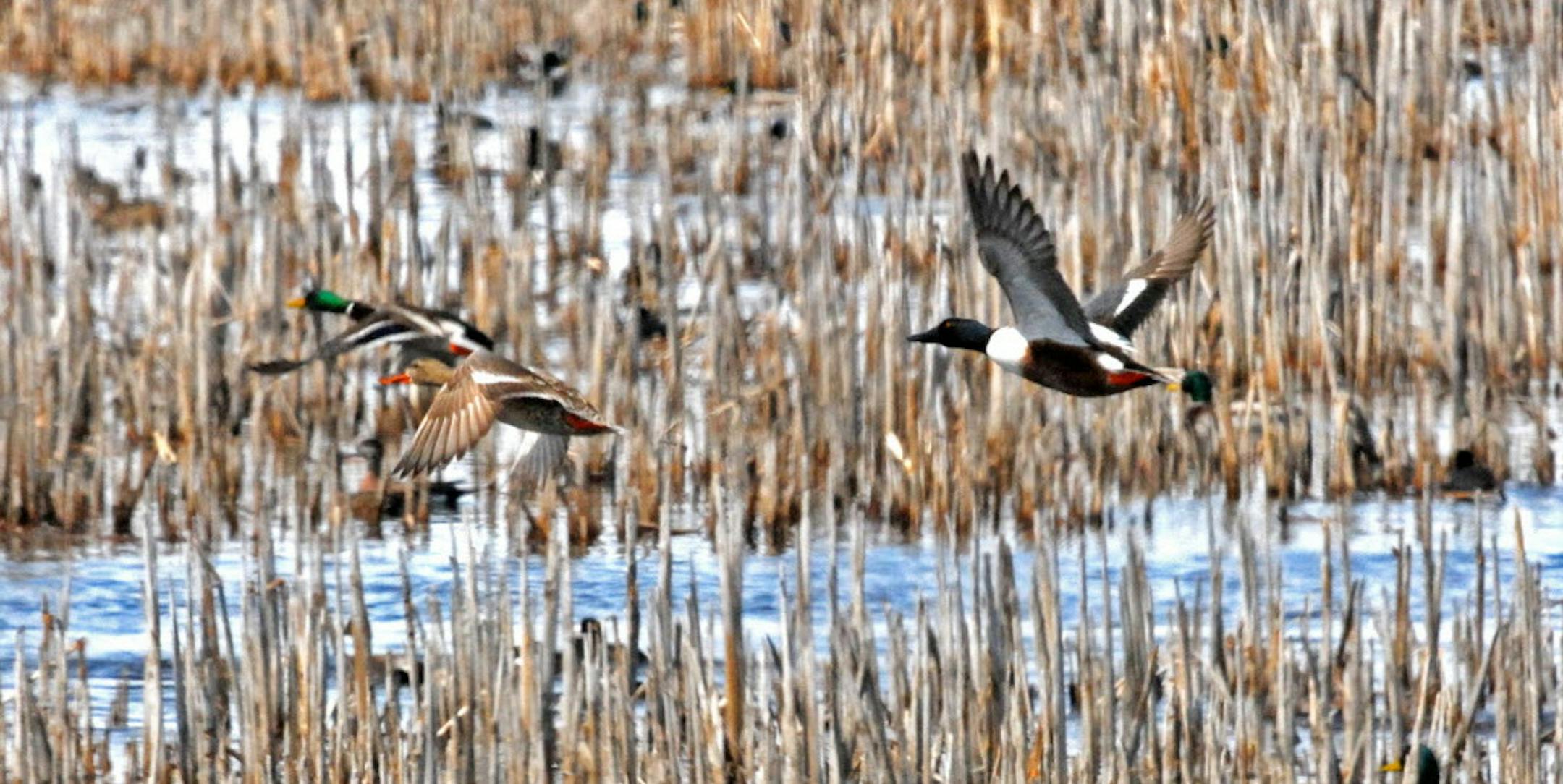
In 2017, fewer Minnesota duck-hunting licenses were sold than at any time in recent history. The falloff wasn't a surprise: Wetland drainage across southern, western and northwestern parts of the state has occurred for more than a century, leaving not only ducks, but muskrats, turtles, herons, cranes, terns, frogs, invertebrates and a host of aquatic plants, ranging from wild celery to sago pondweed, fewer places to live.
Compounding the adverse effects of these losses, vast hydrologic changes that have resulted from drainage have degraded many of Minnesota's remaining wetlands. Some individual and municipal wells also have been contaminated by nitrates from crop fertilizers.
It wasn't always so. Before white settlement, Minnesota was littered with small "pothole" wetlands that were sometimes wet and sometimes dry, as well as larger wetlands with open-water centers, and shallow lakes. These waters soaked up and filtered rain, snow melt and runoff.
But the loss of about 90 percent of farmland wetlands has rendered many of the state's remaining wetlands and shallow lakes part of a dramatically contracted "plumbing system" that must accommodate the same amounts of water Minnesota has known for eons.
Even state wildlife management areas and federal waterfowl production areas purchased and curated specifically for wildlife values are part of this rejiggered water-ridding system, serving as they often do as receptacles for drained farmlands and cities' storm water.
As a result, water levels of many remaining wetlands are too high, or too highly variable, to support plants and insects needed by wildlife.
Which is why so many Minnesota duck hunters — whose ranks once swelled to 170,000, more than twice those who went afield last fall — have hung up their guns, or now pursue birds in the Dakotas or Canada.
But ducks are just a part of a larger Minnesota water-management problem.
![Thousands of waterfowl flew over the North Ottawa Impoundment in late August. The wetland has become a sanctuary for wildlife. ] (AARON LAVINSKY/STAR TRIBUNE) aaron.lavinsky@startribune.com RIVERS PROJECT: We look at three of Minnesota's rivers, including the Mississippi, Red and Chippewa, to see how land use effects water quality and pollution.](https://arc.stimg.co/startribunemedia/QCQAAECVICX5CFXE2LLUVFJNDY.jpg?&w=1080)


