

DHAKA, Bangladesh - Clothing is king in Bangladesh, a country that exports more garments than any other in the world except China. It is responsible for four out of every five export dollars and has turned factory owners into members of parliament and leaders of sports clubs.
That strength has often been turned against the workers in those factories, especially those who complain about poor working conditions and pay that can be less than $40 a month. A law-enforcement agency called the Industrial Police is specifically assigned to deal with unrest in factories, and labor activists accuse government forces of killing one of their leaders. Employees are barred by law from forming trade unions, even though Bangladesh allows workers in other industries to unionize.
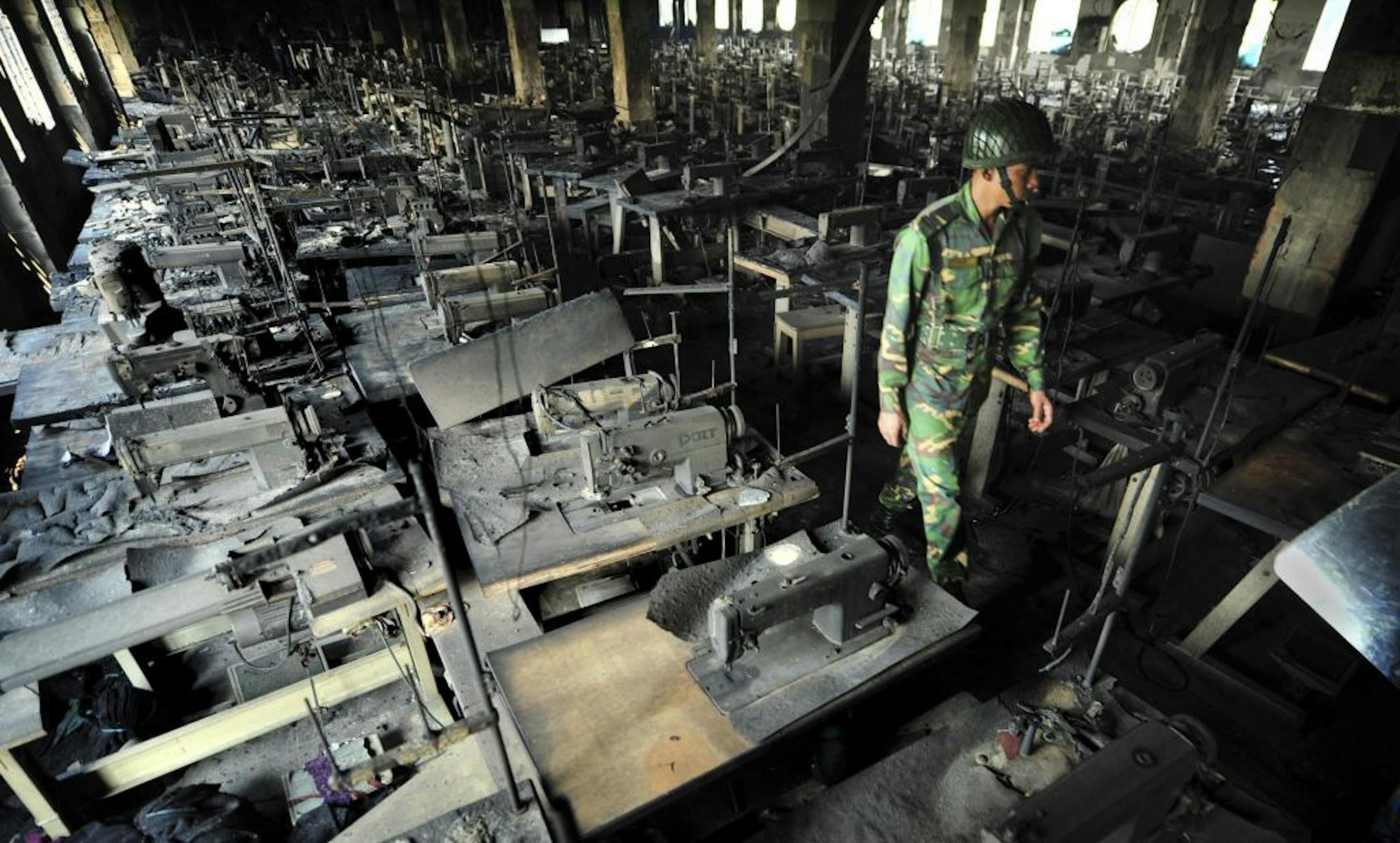
Workers hope that could change following the industry's latest tragedy, a fire Saturday that killed 112 people at a factory that made T-shirts and polo shirts for Wal-Mart and other retailers around the world. But they have their doubts.
"The owners must treat the workers with respect. They should care about their lives and they must keep in mind that they are human beings. They have families, parents and children," said Nazma Akhter, president of Combined Garment Workers Federation. "Is there anybody to really pay any heed to our words?"
There have been many garment-factory fires in Bangladesh — since 2006, more than 300 people have died. But Saturday's was by far the deadliest, and has drawn international attention to labor practices as the government tries to encourage Western countries and companies to expand their relationships here.
The Tazreen Fashions Ltd. factory had no emergency exit, and workers trying to flee found the main exit locked. Fire extinguishers were left unused, either because they didn't work or workers didn't know how to use them. One survivor said that after the fire alarm went off, managers told workers to get back to work.
In an interview published Tuesday in Dhaka's Daily Star newspaper, the managing director of Tazreen Fashions expressed concern — about possibly losing foreign buyers. "I'm concerned that my business with them will be hampered," said Delwar Hossain. But there was no mention in the article of concern for victims or their families.
Bangladesh's $20 billion-a-year garment industry accounts for 80 percent of its total export earnings and contributes a major share of the country's $110 billion GDP. This from an export market created only in 1978, with a consignment for 10,000 men's shirts.


