
Bangladesh collapse could stain garment industry

To save face, clothing retailers may have to actively campaign for improved safety for Bangladeshi workers.

The Associated Press
May 7, 2013 at 12:58AM
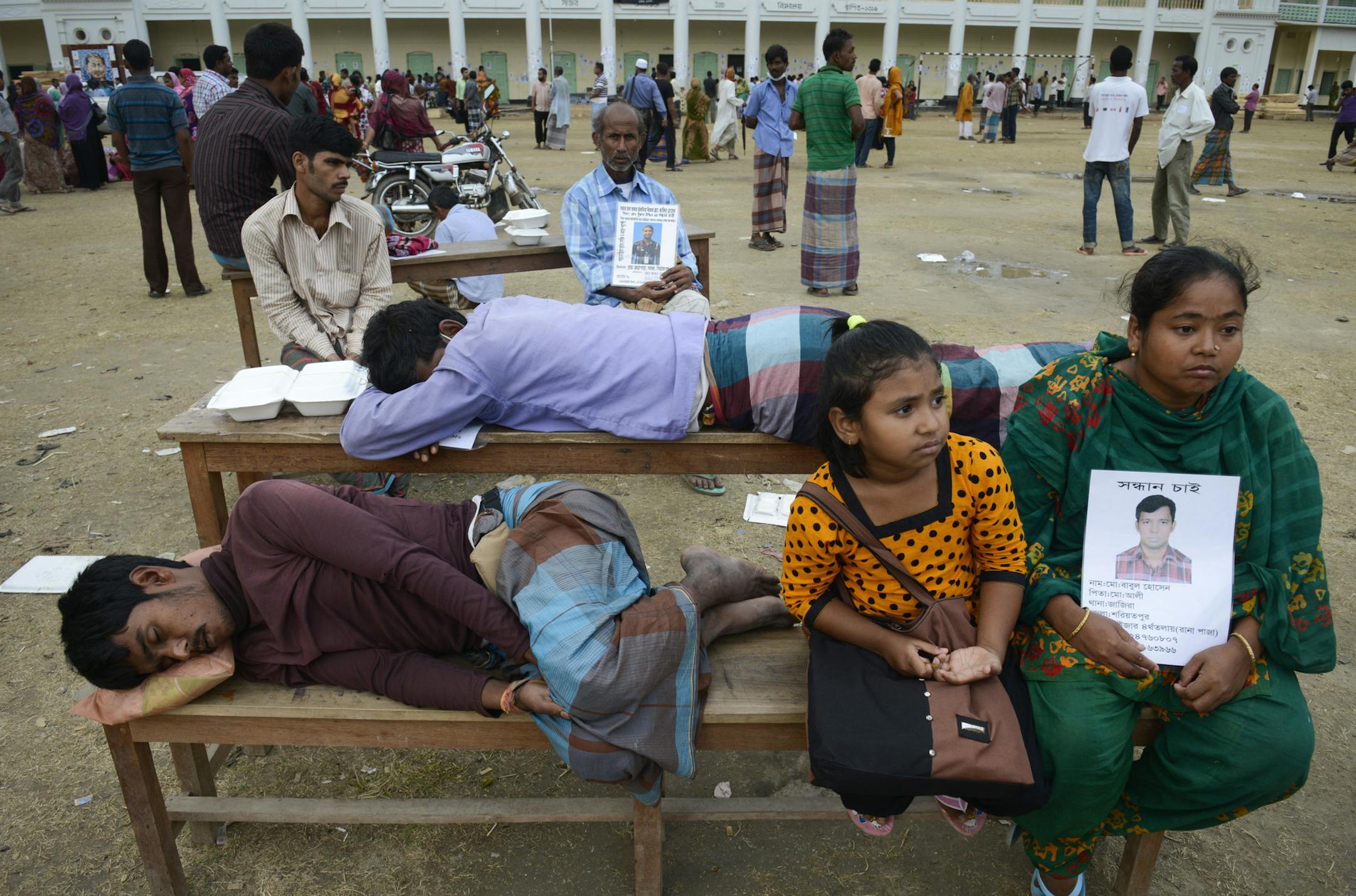
Relatives of missing garment workers wait for news of missing loved ones, as nearby workers and army personnel, not pictured, use heavy machinery as they work to clear the site and recover bodies of victims from the rubble of a garment factory building collapse, Monday, May 6, 2013, in Savar near Dhaka, Bangladesh. The death toll from the collapse of a shoddily built garment-factory building on April 24, in Bangladesh, continued its horrifying climb, reaching at least 630 on Monday with little s
Relatives of missing garment workers waited for news of missing loved ones on Monday. Nearby, workers and army personnel worked to clear the site and recover bodies of victims from the rubble of a garment factory building collapse on April 24 in Savar, Bangladesh. (The Minnesota Star Tribune)

MUMBAI, India – Global clothing brands involved in Bangladesh's troubled garment industry responded in starkly different ways to the building collapse that killed more than 600 people two weeks ago. Some quickly acknowledged their links to the disaster and promised compensation. Others denied that they had authorized work at factories in the building even when their labels were found in the rubble.

Communications professionals say both positions are public relations strategies and neither may be enough to protect companies from the stain of doing business in Bangladesh.

Such experts say that with other deadly disasters and fires in Bangladesh's $20 billion garment industry in the past six months — a factory fire killed 112 workers in November and a January fire killed seven — possibly the only way retailers and clothing brands can protect their reputations is to visibly and genuinely work to overhaul safety in Bangladesh's garment factories.

"Just public relations is not going to do it," said Caroline Sapriel, managing director of CS&A, a firm that specializes in reputation management in crisis situations.

Over the past decade, major players in the fashion industry have flocked to Bangladesh, where a minimum wage of about $38 a month has helped boost profits in a global business worth $1 trillion a year. Clothing and textiles now make up 80 percent of Bangladesh's exports and employ several million people.

Yet the country's worker safety record has become so notorious that the reputational risks of doing business there may have become too great even for retailers and brands that didn't work with factories in the collapsed Rana Plaza building or the Tazreen Fashions factory that burned late last year.

"I don't think it's enough anymore to say 'We're not involved in these particular factories,' " Sapriel said.

Many clothing brands were quick to distance themselves from the five factories that were housed in Rana Plaza. The building, which was not designed for industrial use and had three illegally added levels, collapsed April 24.

Benetton said none of the factories were its authorized suppliers, although Benetton labels were found in the rubble. Wal-Mart said there was no authorized production of its clothing lines at Rana Plaza but it was investigating whether there was unapproved subcontracting. Swedish retailer H&M, the single largest customer of Bangladeshi garment factories, said none of its clothes were produced there.

The Walt Disney Co. in March responded to publicity from last year's fire at the Tazreen factory, where its branded clothing was found, by pulling out of Bangladesh production altogether.

Only a few companies have acknowledged production at Rana Plaza and promised compensation.

Companies that are downplaying involvement in Bangladesh's problems may be counting on the short memories of Western consumers. But that's risky, said Rahul Sharma, public affairs executive with the India-based public relations firm Genesis Burston-Marsteller.

"Reputation is built over a long period of time. But to lose it, it can take seconds," Sharma said.

about the writer

about the writer

Kay Johnson

More from No Section

See More
FILE -- A rent deposit slot at an apartment complex in Tucker, Ga., on July 21, 2020. As an eviction crisis has seemed increasingly likely this summer, everyone in the housing market has made the same plea to Washington: Send money — lots of it — that would keep renters in their homes and landlords afloat. (Melissa Golden/The New York Times) ORG XMIT: XNYT58
Melissa Golden/The New York Times

It’s too soon to tell how much the immigration crackdown is to blame.