
Balancing faith and pets: Somali families navigate dog ownership in Minnesota

Somali Muslim religious tradition considers dogs unclean, but many American-schooled children of Minnesota immigrants have a different view.

Sahan Journal
October 11, 2025 at 10:26PM
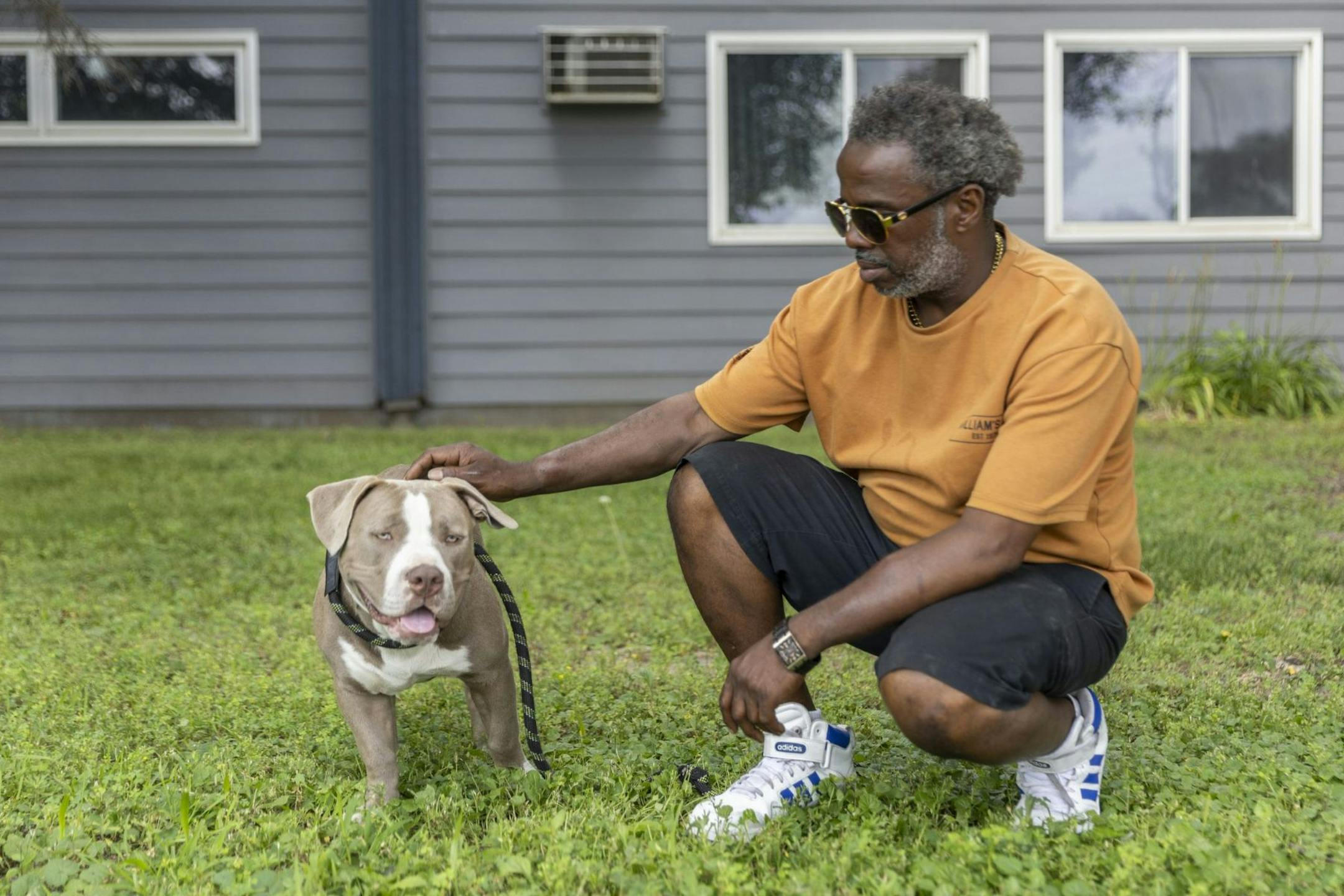
Shamsudir Mohamud with one of his three pitbulls. “I wish there was a secret club for Muslim dog owners in Minnesota,” he says. (Chris Juhn/Sahan Journal)

Shamsudir Mohamud, a Somali immigrant and 47-year-old father of three who lives in Minneapolis, adores the three pitbulls — Sadam, Stormy and Nine — he’s had since they were puppies. So do his children.

“I didn’t just raise them — I also love them, and they love me,” Mohamud said.

But that’s not the prevailing sentiment in Minnesota’s Somali Muslim immigrant community, where dogs often are viewed as undesirable and unclean.

When St. Louis Park Mayor Nadia Mohamed officiated in June at the swearing-in of Rolo, a new police dog for the city’s department, the event drew sharp criticism in local Muslim communities. Imam Mohamud Aden, of Khalid Binu Walid Center in Minneapolis, said that a Muslim woman presiding over the induction of a police dog crossed traditional expectations for public religious leadership.

Some in the Somali community have reacted negatively to U.S. Rep. Ilhan Omar’s comments about her family’s decision to own a dog, which her office described as a protective animal as well as a pet.

The backlash from some in the Somali community to dog ownership highlights the tension between traditional Islamic values and cultural practices in the United States. Demand for dogs is thought to be on the rise in Minnesota’s Muslim households, where children — often influenced by their non-Muslim friends — plead with their parents for one.

But for many Somali Muslims, dogs remain a sensitive subject. Dogs are impure according to the Shafi’i school of Sunni Islamic theology, particularly because of their saliva.

The Shafi’i and Hanbali schools regard all parts of a dog — fur, saliva and body — as impure. The Hanafi school permits dogs for utility purposes as long as cleanliness is maintained; the Maliki school does not consider dogs inherently impure.

Mohamud’s connection to dogs stretches back to his childhood in Mogadishu’s Hodan neighborhood, where he often watched local Italian expatriates and diplomats walking their dogs.

“That early fascination never faded, even though my own parents avoided keeping dogs,” he said.

Local imams sometimes ease up on rulings to acknowledge the reality of raising families in the U.S., where nearly 45.5% of households have a dog. Imam Abdirahman Bashir, a former judge in Djibouti and an imam at Dar Al-Farooq Center in Bloomington, has advised that dogs are not impure when dry and that Muslims may keep them if precautions are taken against contact with saliva.

In Egypt and many Muslim countries, the number of registered dog owners has grown significantly over the past decade. The halal pet food industry is booming, with projections estimating a global market value of $2.5 billion this year.

Mohamud believes responsible dog ownership can coexist with Islamic values, but balancing religious teaching with affection for animals remains a challenge. He said that walking his dogs around Karmel Mall in Minneapolis’ Whittier neighborhood and nearby mosques invites constant questions.

“Sadly, their response is almost always negative,” he said.

At the same time, he said, he has encountered quiet curiosity about his pitbulls, especially among Somali women who confide that they would like to keep a dog but fear the judgment of relatives and neighbors.

Mohamud has connected with several local dog enthusiasts from the Middle East, as well as two Somali truck drivers he frequently meets at Karmel Mall.

“It’s important for us to have a space where we can share our experiences and educate our Muslim communities about responsible pet ownership,” he said.

A changing conversation

Family tension over dogs is familiar to parents like Nuruldin Nur and Dayib Ali, who find themselves navigating requests from their kids for pets while weighing their faith and community expectations. For them, even considering a pet dog feels like walking a fine line between honoring their children’s wishes and risking disapproval.

Nur, of Inver Grove Heights, feigns sneezes whenever his four children plead for a dog, saying he’s allergic to them. He grew up in a Somali household where dogs were prohibited except when serving as guard animals. But he recognizes that his children are growing up in a different cultural context.

Ali, an Apple Valley father of five, also finds himself caught between his convictions and his children’s pleas for a dog. Like Nur, he’s deeply rooted in traditions that view dogs with caution. But at a park on a recent Saturday, Ali said, he watched as his kids ran toward families with dogs.

“They weren’t just asking for a dog,” Ali said. “They were asking to feel like they belonged in a world that seemed so different from the one I had known.”

Muslim parents say such requests can’t be answered casually. Said Abdullahi Aden, 34, a Fridley social worker and father of four: “What seems like an innocent plea from a child becomes [for adults] an entry point into much larger conversations about faith.”

Such discussions in the home often lead back to the mosque, where imams are asked to clarify the boundaries of Islamic guidance on dogs. Some offer assurance that not every interaction with dogs is prohibited, while others emphasize traditional rulings.

Somali immigrants who follow Shafi’i teachings often reject the idea of pet dogs entirely. Sudanese and Egyptian immigrants, influenced by Maliki rulings, may take a more relaxed approach.

Despite the evolving discussion, the social stigma attached to owning a dog remains powerful for Muslims. The example of Muslims like Mohamud, who live openly with dogs despite criticism, demonstrate that a different path can be taken.

“At stake is more than pet ownership,” Aden said. “It is the negotiation of faith, identity, and belonging in a changing world.”

About the partnership

This story comes to you from Sahan Journal, a nonprofit newsroom dedicated to covering Minnesota’s immigrants and communities of color. Sign up for a free newsletter to receive Sahan’s stories in your inbox.

about the writer

about the writer

Mohamud Farah

More from Twin Cities

See More
card image
card image