

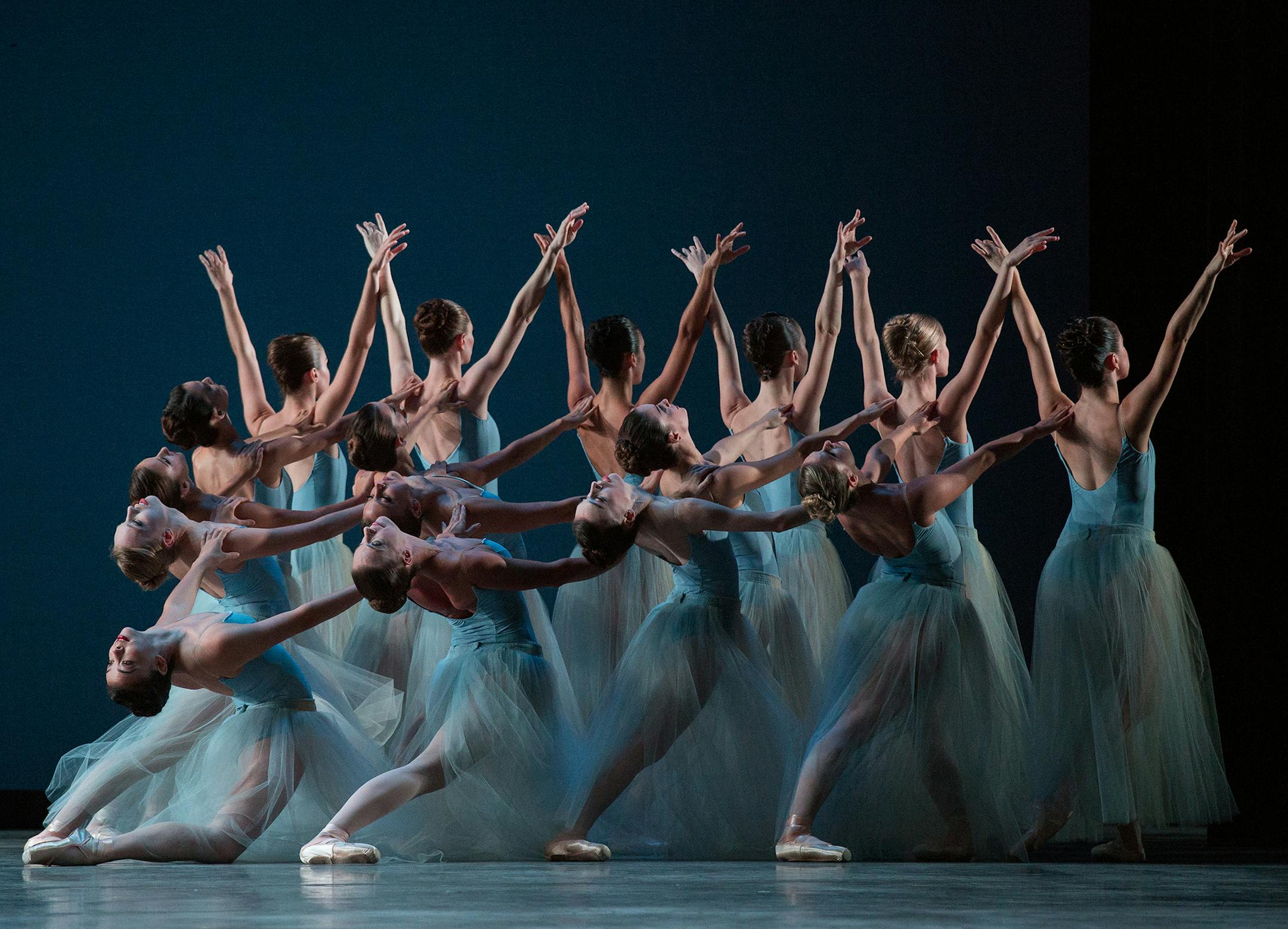
For those unfamiliar with the wonders of ballet, don't let your initiation be "Swan Lake," "Giselle" or "The Nutcracker."
Instead, immerse yourself in what critic Edwin Denby once accurately labeled "a completely beautiful ballet." Yes, George Balanchine's "Serenade."
Northrop auditorium audiences haven't seen this ballet since 1987 — far too long — but they'll revel in its radiance on Wednesday evening, when Miami City Ballet rolls into town for a one-night stand.
An immigration story
Balanchine was hungry — literally — to leave his native Russia in 1924, and had been working in Europe for nearly a decade — most notably for Sergei Diaghilev's Ballets Russes — before coming to America in 1933. He was 29 years old.
"Serenade" grew out of an academic exercise. On Jan. 2, 1934, Balanchine and philanthropist Lincoln Kirstein opened their School of American Ballet in New York City, renting studios previously used by Isadora Duncan. The goal was to train enough dancers to launch a ballet company.
After several months of work, Balanchine wanted to get his fledgling students acclimated to the stage, and used a series of night classes to fashion what Denby would later describe as "a kind of graduation exercise."
What developed was "Serenade," and its debut on June 9 of that year turned out to be a pivotal moment in American dance history.
For starters, "Serenade" was a narrative-free ballet. Balanchine's choreography takes its cues from the music — Tchaikovsky's Serenade for Strings in C Major, Op. 48 — rather than imposing a plot upon it.


