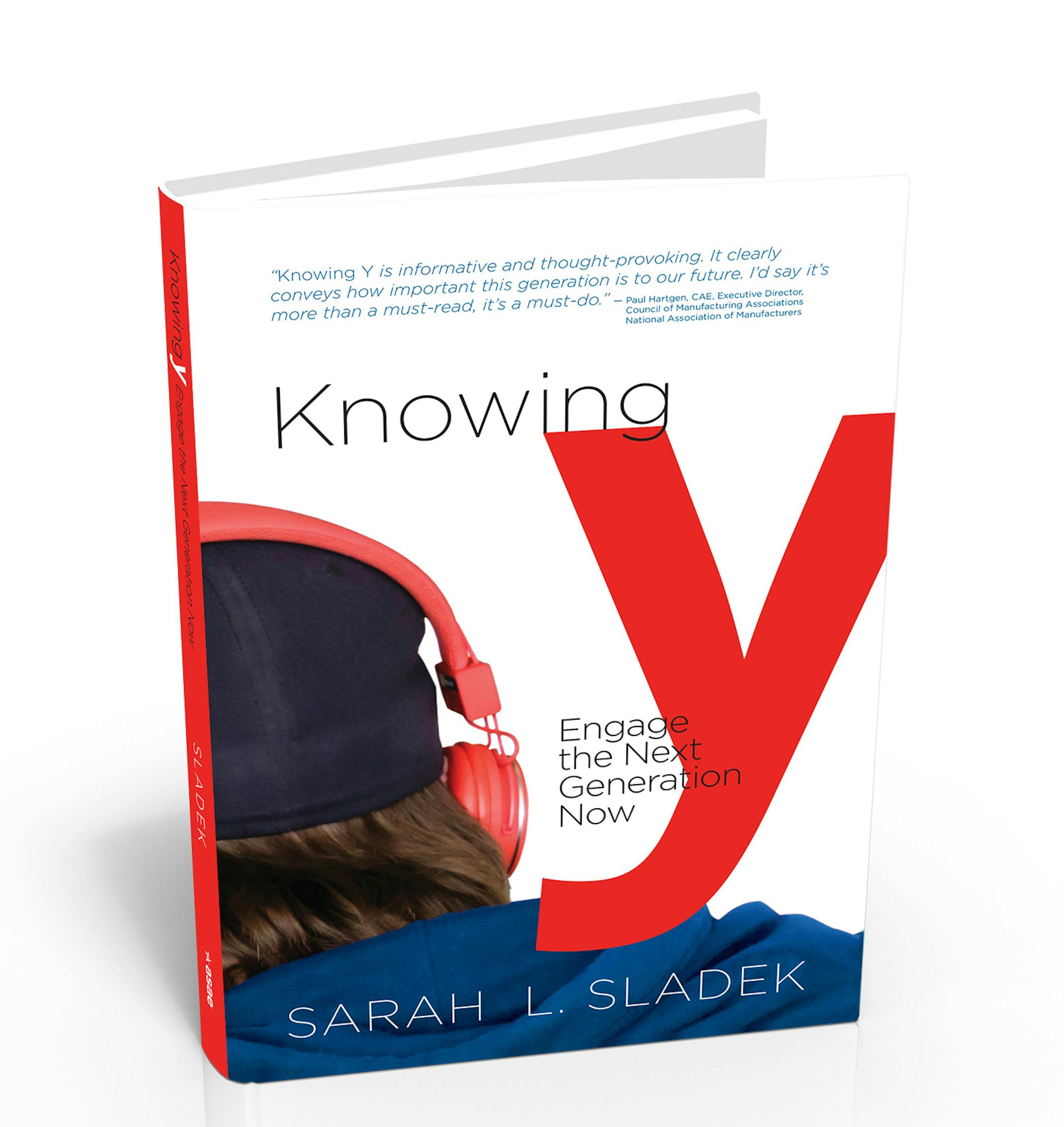
Millennials will soon outnumber baby boomers in the United States, and sometime this year they are expected to become a majority of the workforce. Suddenly, Maple Grove workplace consultant Sarah Sladek is in high demand.
As CEO and founder of XYZ University, she helps businesses and nonprofits figure out how to engage younger workers. Her latest book, "Knowing Y: Engage the Next Generation Now," makes the case that organizations are doomed to fail if they cling to old-guard ideas that motivated baby boomers.
Sladek's company name comes from the alphabet soup of labels given to generational cohorts, which she defines this way: Generation X (born 1965 to 1981), Generation Y/millennials (1982 to 1995) and the still-forming Generation Z (those under 18).
This year Sladek, who at 42 is solidly Gen X, will work with companies across North America, Europe and Australia that are eager — shall we say, desperate? — to understand the brash and digitally savvy millennials. Sladek has been quoted by the National Rifle Assocation, hired by the National Watermelon Association and has consulted with organizations as diverse as the YMCA and solid waste haulers.
Q: You say you wrote this book because you were afraid for the future. Why is that?
A: We are about to experience the largest shift in human capital in history, and younger workers are being neglected or dismissed. That is going to be a real problem in this country. The average age of the board of directors at trade associations is 59. The United States has the oldest Congress in history and the oldest Senate in more than a century. During the recession, it almost felt like people were hunkered down and didn't really have to worry about an aging workforce. Now, organizations are waking up and saying: "Oh, my gosh! I haven't planned for what the next generation of leaders will be, or the next generation of volunteers."
Q: How do the millennials/Generation Y differ?
A: The whole concept of time has changed. Millennials live in a technology-driven, instant-gratification world. It's the only world they've ever known. They don't want to commit. Ask a millennial to come sit on a board for three years? That's a jail sentence. Boards deliberate and discuss. That takes time. It's reminiscent of another era. Millennials place a high value on collaboration, but they are going to go someplace where they can have some fun.