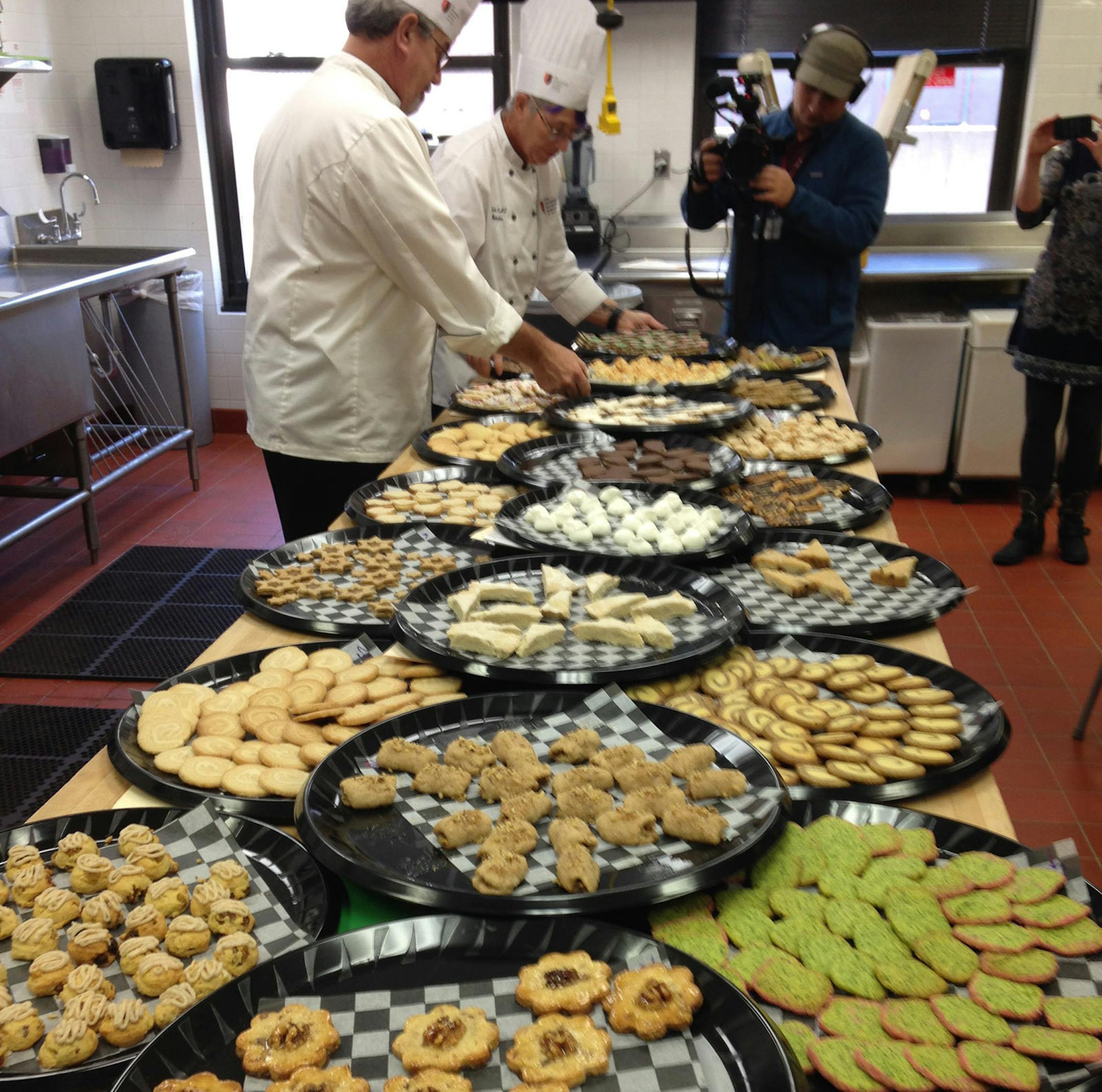
Amy Carter, a chef instructor at the Art Institutes International Minnesota, isn't just a cookie-baking authority, she's an avid enthusiast. "Cookies are one of my all-time favorite things," she said.
A former bakery owner, now a teacher, Carter estimates that she's educated 3,000 to 4,000 students during her 17-year tenure at the downtown Minneapolis school.
"I fell into teaching, and I found that it's even better than being a pastry chef," she said. "How many are lucky enough to do what they love?"
Carter and a half-dozen AIA students baked the 24 semifinalists in this year's Taste Holiday Cookie Contest, a herculean task. In late October, she hosted our eight judges in a taste-a-thon at the school's fascinating, fragrant and well-equipped baking lab. Here's her take on some key cookie-baking issues.
Flour: When measuring flour, Carter relies upon weight. "But if I have to use measuring cups, I will scoop and level," she said. "I almost never sift flour, unless I'm making a cake."
Butter: "Not all butters are the same," she said. "You can't buy the cheapest butter when you're making cookies. Land O'Lakes makes a good butter. Personally, I use Hope Butter." When baking cookies, it's unsalted butter, all the way. "That way you can control the amount of salt in the cookie," she said. "But the trade-off is that unsalted butter has a shorter shelf life."
Butter, Part 2: Cookie-baking success starts with room-temperature butter, somewhere in the 65- to 75-degree range, "80 degrees, tops," she said. "You should be able to press into it with your finger without it being hard work, but the butter shouldn't be so soft that your finger pokes into it."
Butter, Part 3: "When it comes to creaming butter, I tell students that the mixer should never be on high speed, and it shouldn't be slow," she said. "Medium-high is where you want to be, and you're looking for the butter to lighten up in color, two times lighter. You should always scrape down the bowl, and then give it another minute for good measure." Look carefully. "If you have lumps of butter that aren't mixed properly at the moment when you add eggs, you'll have lumps forever," she said. "They'll melt, and you'll have holes in your cookies."