

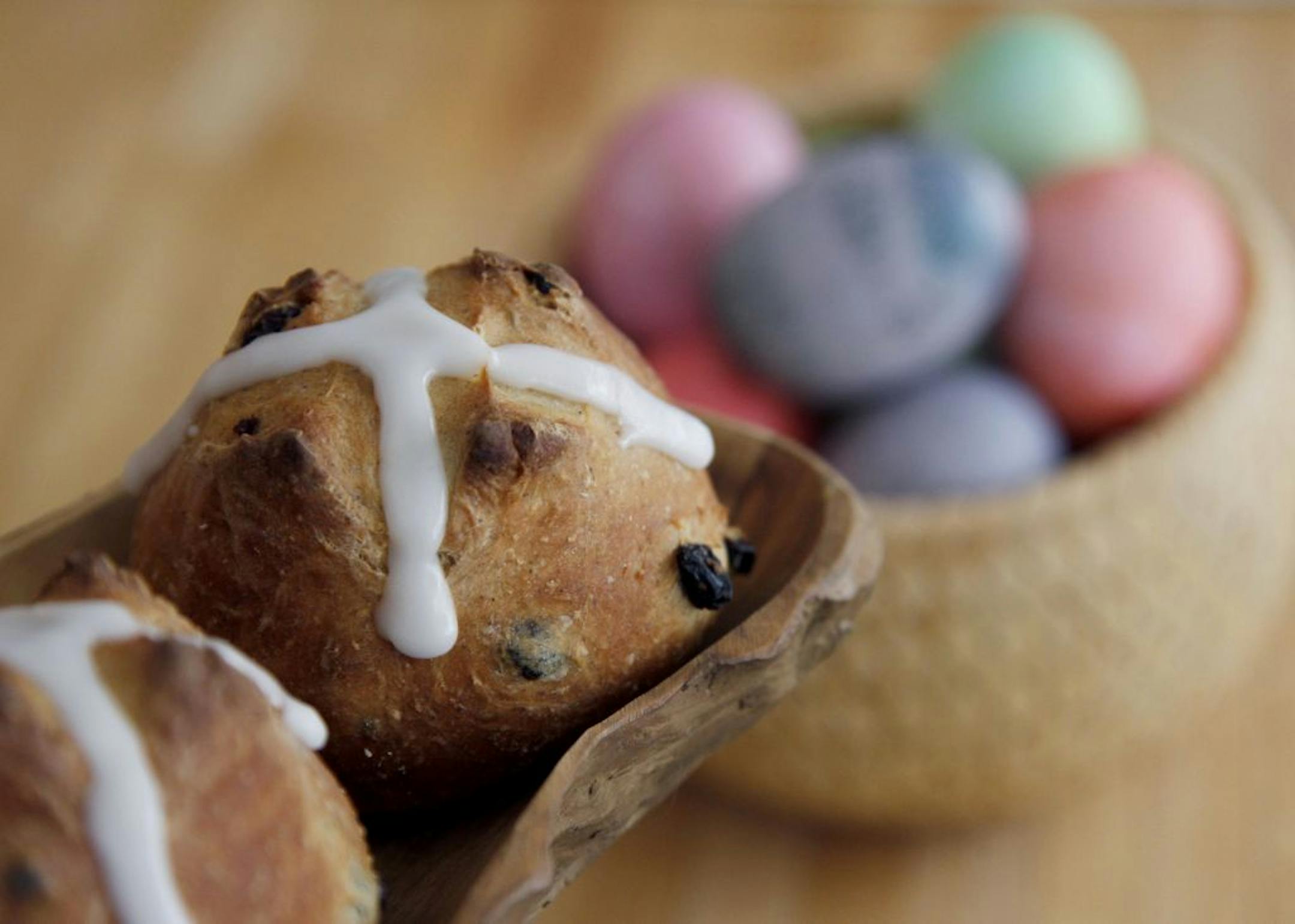
Hot cross buns have been blessed, banned, toasted, frosted, gussied up, put to rhyme, hung in kitchens and carried to stave off shipwrecks.
They've also been eaten, which is all we really care about on these pages.
Few foods have such a vibrantly contradictory back story, though. So before we begin baking, let's look briefly at the lore behind this traditional Easter bread.
Hot cross buns are most associated with Good Friday observances. Their distinctive criss-cross of dough or frosting is meant to symbolize the crucifixion, while the nutmeg, allspice, cinnamon and cloves represent the spices used in the burial cloths of Jesus.
Yet some of their fame also must be credited to Mother Goose, whose rhyme about them being hawked for "one a penny, two a penny" is a fixture of many bedtime rituals.
More lore: Sharing a hot cross bun is said to cement a friendship for another year. If you're heading out to sea, or even across Lake Harriet, a hot cross bun may be a talisman against shipwreck. Hanging one in your kitchen is a lucky charm; it's said a hot cross bun never gets moldy.
Or just eat them (but never hot -- the icing would melt).
A hot cross bun starts as a simple egg-enriched dough, which is elevated by adding the heady flavors of cinnamon, allspice, cloves and nutmeg. We've also added some fresh orange zest, which makes the dough smell wonderful even before it's baked.


