

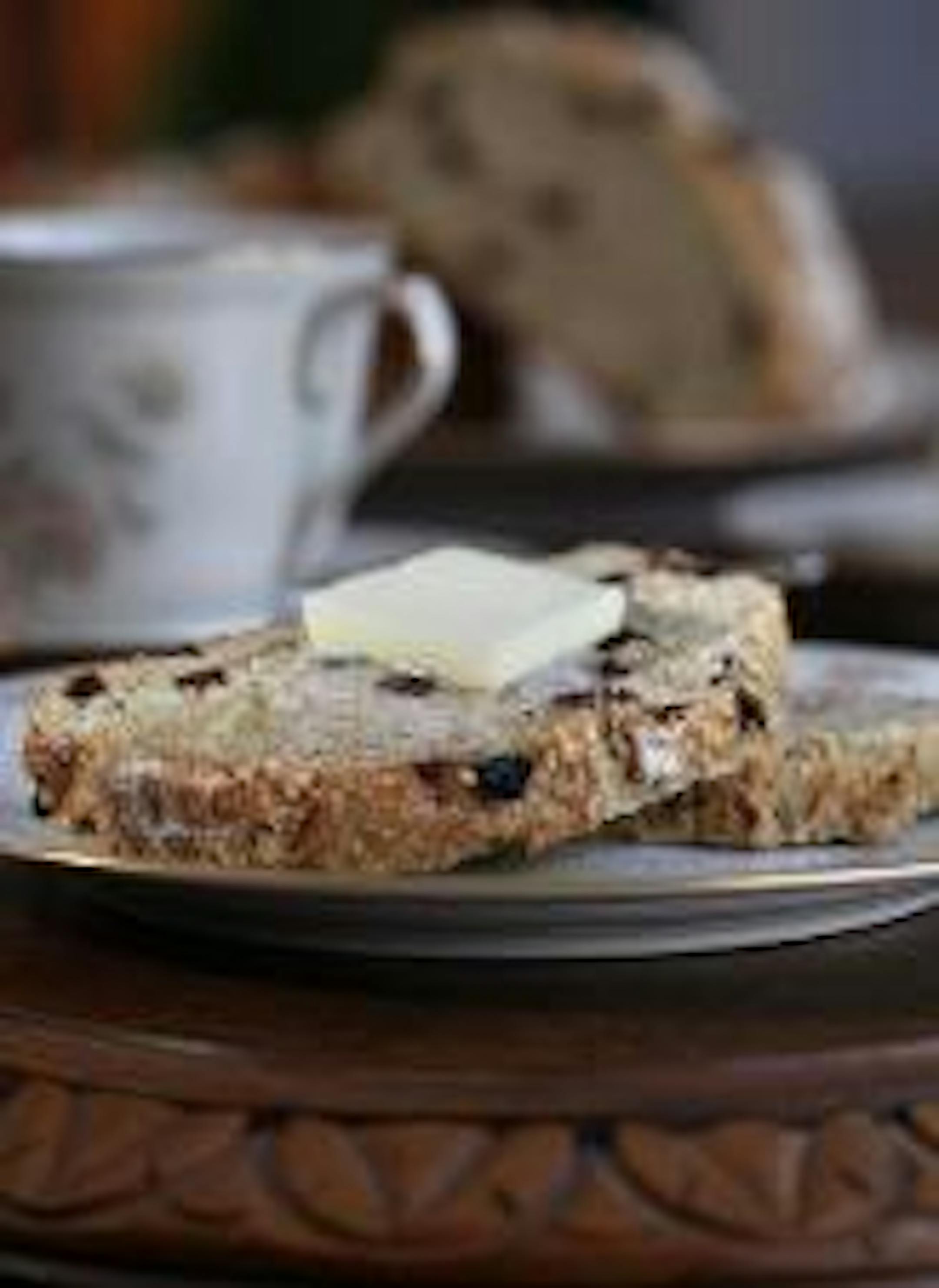
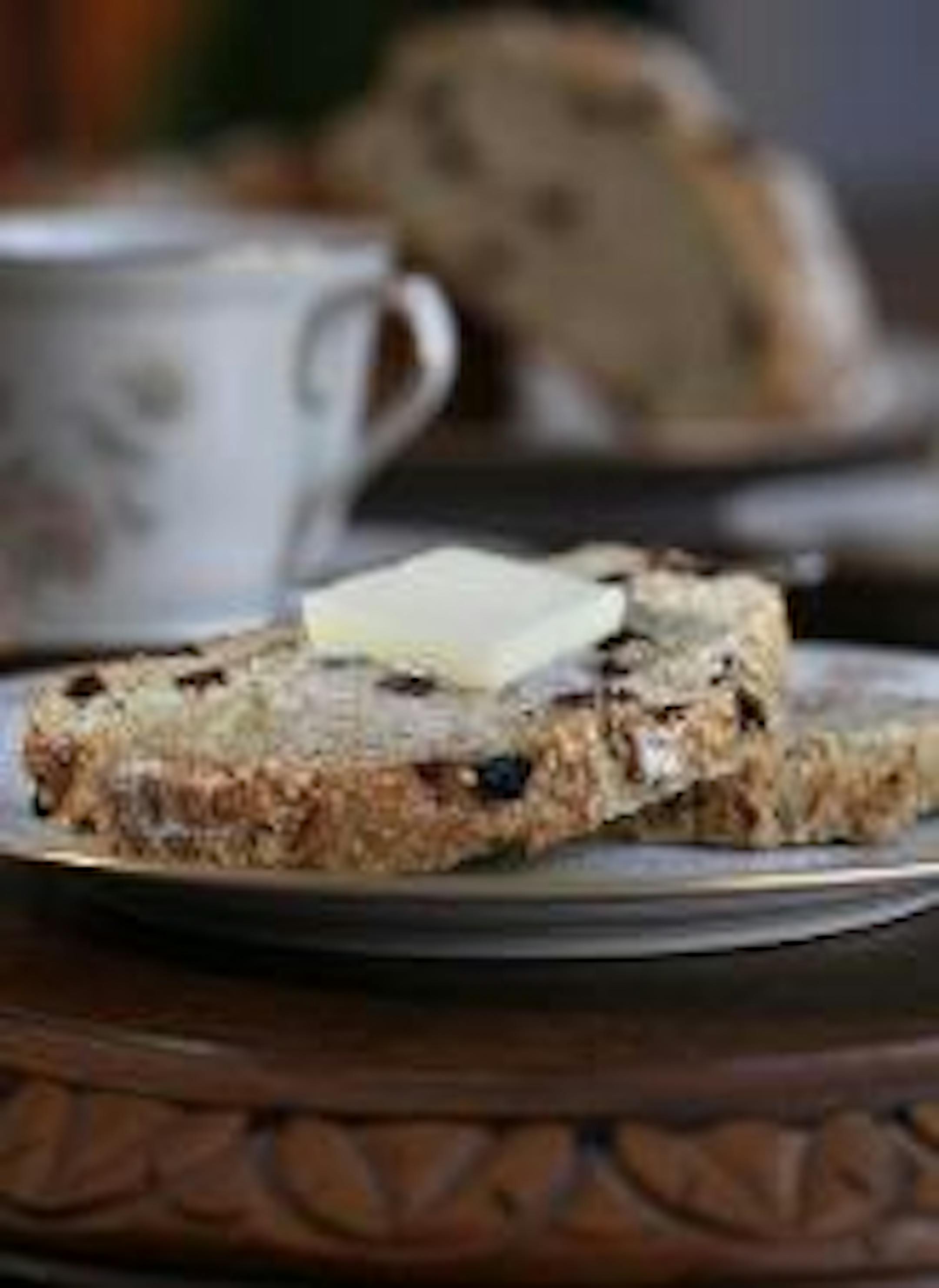
Saturday's St. Patrick's Day celebrations always call for a warm slice of Irish Soda Bread, but the truth is that this loaf, rich with eggs and studded with currants (if you're of the Spotted Dog camp of bakers) is terrific year-round. Here's a Baking Central installment from the archives with all you need to know about this traditional bread. The recipe follows:
If beauty is in the eye of the beholder, then tradition is in the mouth of the eater. This is especially true when talking about Irish soda bread.
Some say it's a brown bread, while others swear that it should be white. Raisins have both defenders and blasphemers. Most recipes labeled "American-style" include eggs, sugar, butter, caraway and currants, resulting in a slice of what tastes more like cake than bread.
Here's the real kicker: Irish soda bread didn't come from Ireland, although the Emerald Isle certainly can claim credit for popularizing the rustic, economical bread.
The Society for the Preservation of Irish Soda Bread says that soda ash was in use by American Indians when European settlers arrived. When bicarbonate of soda was introduced in Ireland in the early 1800s, it enabled a bread to be baked in an iron pot over a fire, an advantage where ovens were not widely in use.
Bottom line: For most of us, tradition means the food with which we grew up. The great thing about soda bread is that it's easily adaptable to personal tastes because it contains just four main ingredients: flour, baking soda, salt and buttermilk.
You can shift the balance of white and whole wheat flour to your liking, add raisins or currants if you please -- even mix a few tablespoons of butter or sugar into the dough, to taste.
A lesson in simple chemistry


