

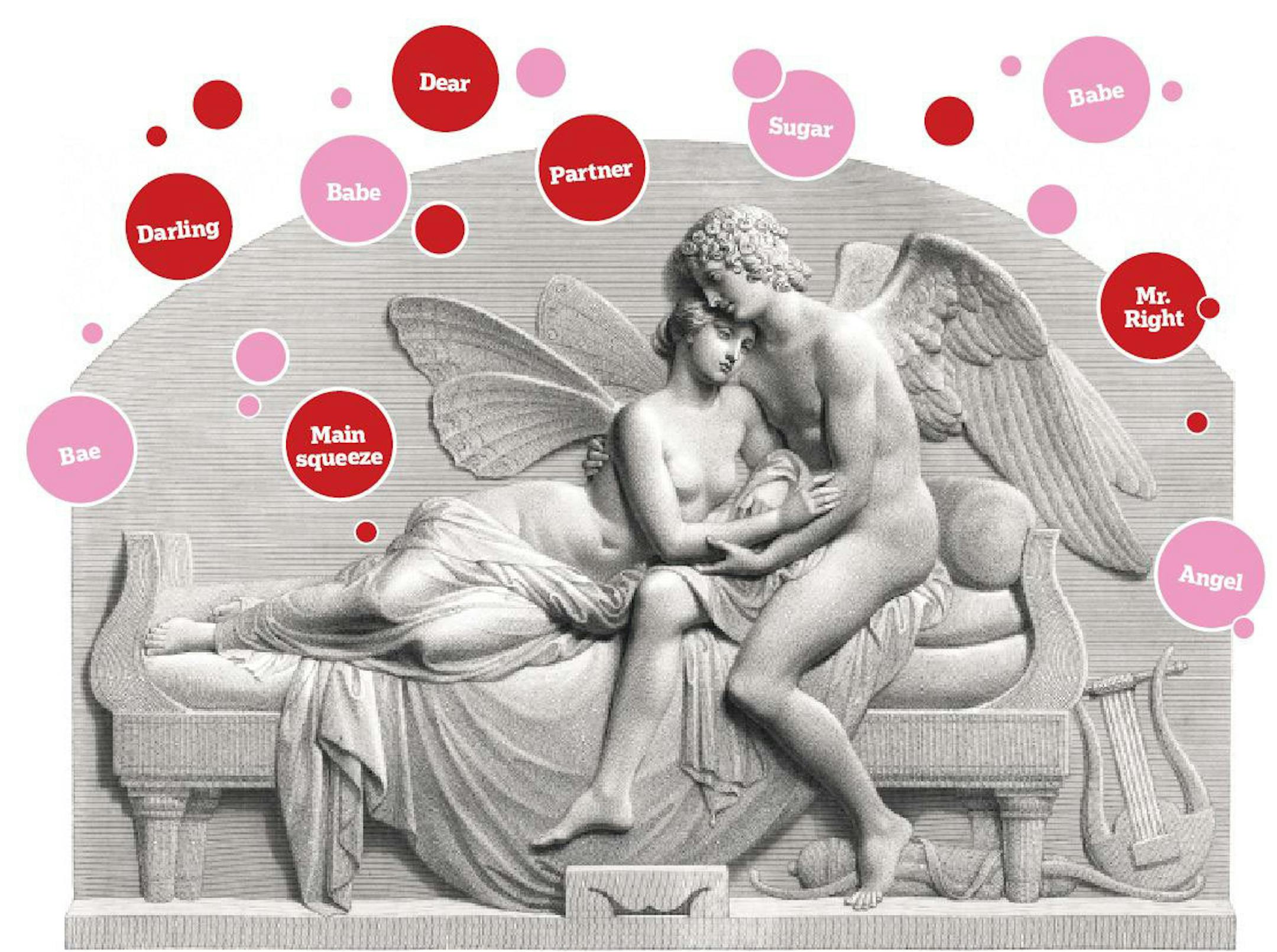
Ever since people have been falling in love, they've been coming up with pet names for each other.
And not for naught. It turns out that those cutsey, affectionate nicknames actually serve an important sociological function: They strengthen our relationships.
That's what Carol J. Bruess, professor emeritus of communication and journalism at the University of St. Thomas in St. Paul, discovered while researching her master's thesis, " 'Sweet Pea and 'Pussy Cat': An Examination of Idiom Use and Marital Satisfaction Over the Life Cycle."
Idiosyncratic communication (that's ivory tower-speak for terms like Cutie Patootie) leads to happier, longer-lasting relationships, according to the thesis. "Satisfied husbands and wives report [the use of] more idioms than unsatisfied spouses."
For people who are oratorically shy, however, that's easier said than done. So on this day devoted to lovers, here's an overview of the many categories of pet names.
Saccharine
This category includes any nickname with syrupy sentimentality. Honey and Sweetheart are the primary ones, but there's a plethora of variations from Sugar to Cookie. You can add suffixes to personalize them, producing Honeybun or Sweetie Pie, without leaving one of the main food groups.
Hip
Squeeze, and its variation Main Squeeze, have been around so long that, like bell bottom pants, they're trendy again. Much newer in origin is Bae, which some linguists think is a shorthand version of Babe. Coining a new term to save just one letter seems like a lot of work. More likely is the argument that it came from the Twitterverse, where it was an acronym for Before Anyone Else.
Nonsensical
Some terms defy logical analysis. These are things like Duck. No less a wordsmith than William Shakespeare thought it worked, however, using the term "O dainty duck! O dear!" in "Midsummer Night's Dream." And at least it's better than the German pet name Hasenfürzchen, which means rabbit flatulence. If you're planning to use that, we suggest doing so with someone who doesn't speak German.


