

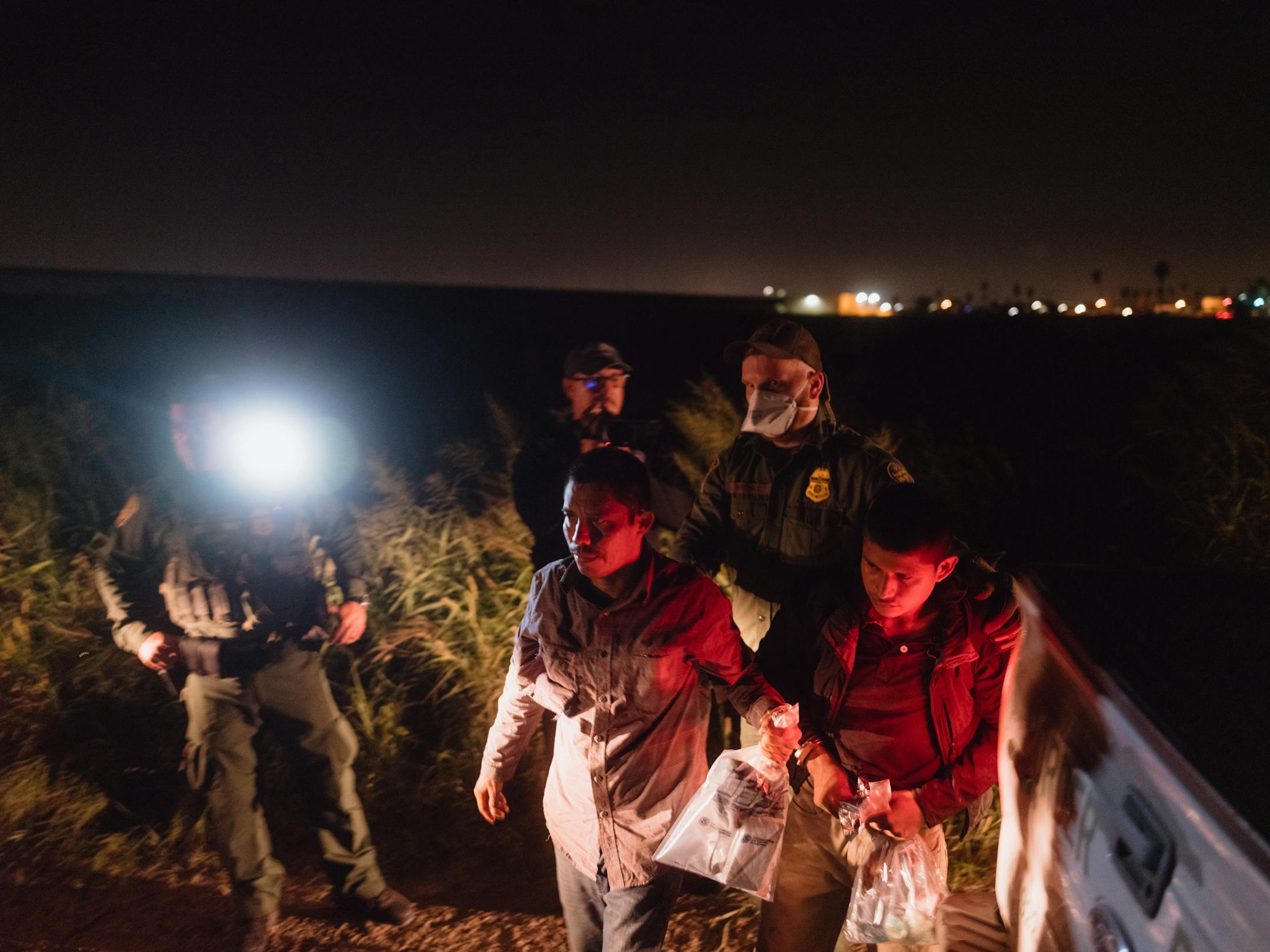
We work at the George W. Bush Institute on challenges that would appear to be disconnected: modernizing America's immigration system and promoting a reliable flow of information. But they come together directly and forcefully at America's southern border, which remains the epicenter of the nation's immigration debate and has emerged as a new front line in the need for truth-telling over "fake news."
We see border issues and disinformation converging in three ways: smugglers spreading false information about border security, those same smugglers spreading disinformation about the safety of trips to the border, and a Russian campaign to spread misleading narratives. Combating these realities will require comprehensive immigration reform, a vigilant effort to counter disinformation and better use of Spanish-language media to convey truthful information.
Of course, human smugglers have long used lies to tempt migrants to come to the U.S. border. They continue that habit today by leading would-be migrants from El Salvador, Guatemala and Honduras to believe that the Biden administration is throwing the gates open for them to seek a new life in the United States. As NPR reported this spring, "Misinformation being spread by smuggling organizations is helping spur this surge in migration from Central America."
The border, however, is not wide-open. While President Joe Biden rescinded the Trump administration policy of not allowing in unaccompanied minors or some asylum-seekers with children, the current administration is drawing upon public health guidance as it continues to expel migrants along the southern border. According to the U.S. Customs and Border Protection, 103,014 of the 178,416 migrants that Border Patrol encountered in June were sent back to Mexico.
Smugglers also maliciously trick migrant families into thinking that their trip to the U.S. will be an easy, comfortable family vacation. In reality, crossings at times run from brutal to deadly. Sometimes migrants get rounded up and sent back to Mexico on a bus.
The Russians, meanwhile, are adding an extra wrinkle. Adm. Craig Faller, head of the U.S. Southern Command, recently informed Congress that disinformation can drive migration. As an example, pieces from RT en Español, which is part of the government-controlled Russia Today operation, end up in popular local media outlets where they provide misleading information about the border to potential migrants.
The best way to stop the unreliable flow of information is to fix our broken immigration system, which gives smugglers ample room to spread disinformation. If we modernize our system with regularized, legal and realistic pathways for immigrants to enter our country, we could help curb inaccurate information. We particularly should expand temporary worker visa programs and diversify employment-based green cards so that migrants who want to work here can do so without attempting to cross the southwest border.
Countering disinformation also involves a smart media strategy. Advertising in Central American media outlets is crucial to countering the smugglers' misinformation as well as misleading RT en Español stories. Earlier this year, the White House launched an ad campaign in Spanish and Indigenous language media outlets to inform would-be migrants our border is not wide-open. Good. Keep up the just-the-facts campaign.


