

Opinion editor's note: Editorials represent the opinions of the Star Tribune Editorial Board, which operates independently from the newsroom.
•••
It's taken nearly 50 years, but we're going back. To the moon, that is.
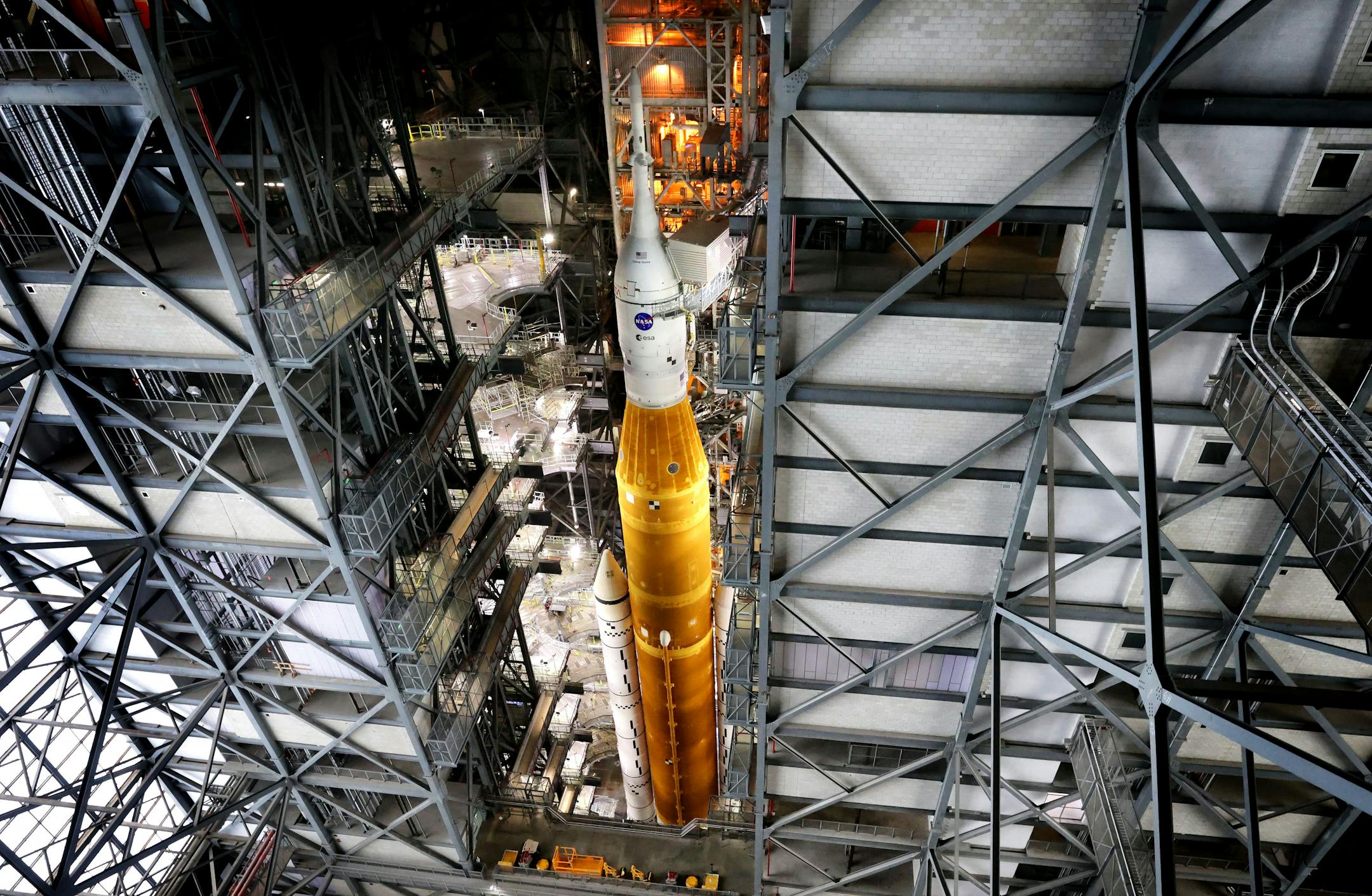
Artemis 1 is the most powerful rocket ever built by NASA. It's scheduled to fly a total of 1.3 million miles, to the moon, beyond and back. The 37-day trek is designed to thoroughly test the rocket and its Orion space capsule, whose heat shield must prove it can sustain a re-entry that will come at a blistering 25,000 miles per hour.
That would be ambitious enough, but this is about much more than another moon shot. NASA says Artemis I will lay the foundation for a return to deep space exploration, including landing a crew in the next couple of years, building a permanent lunar base camp, and culminating, ultimately, in a Mars landing.
So why now? Why spend all the money, take on all the risk — including the possibility that a crew might never return — and face the inevitable failures along the way? Why reach for the moon and beyond when so many problems remain unresolved on Earth?
Those same questions were asked when astronauts Neil Armstrong and Buzz Aldrin landed on the moon in 1969. America was mired in the slog that was the Vietnam War. The battle for civil rights was in full swing, and the Cold War with the Soviet Union raged on. There was, admittedly, some impetus to beat the Soviets to the moon. But there was more to it than that.


