
Back in the big city

Former Hennepin County Commissioner Penny Steele has moved her business from the suburbs to north Minneapolis.

January 25, 2011 at 11:06PM
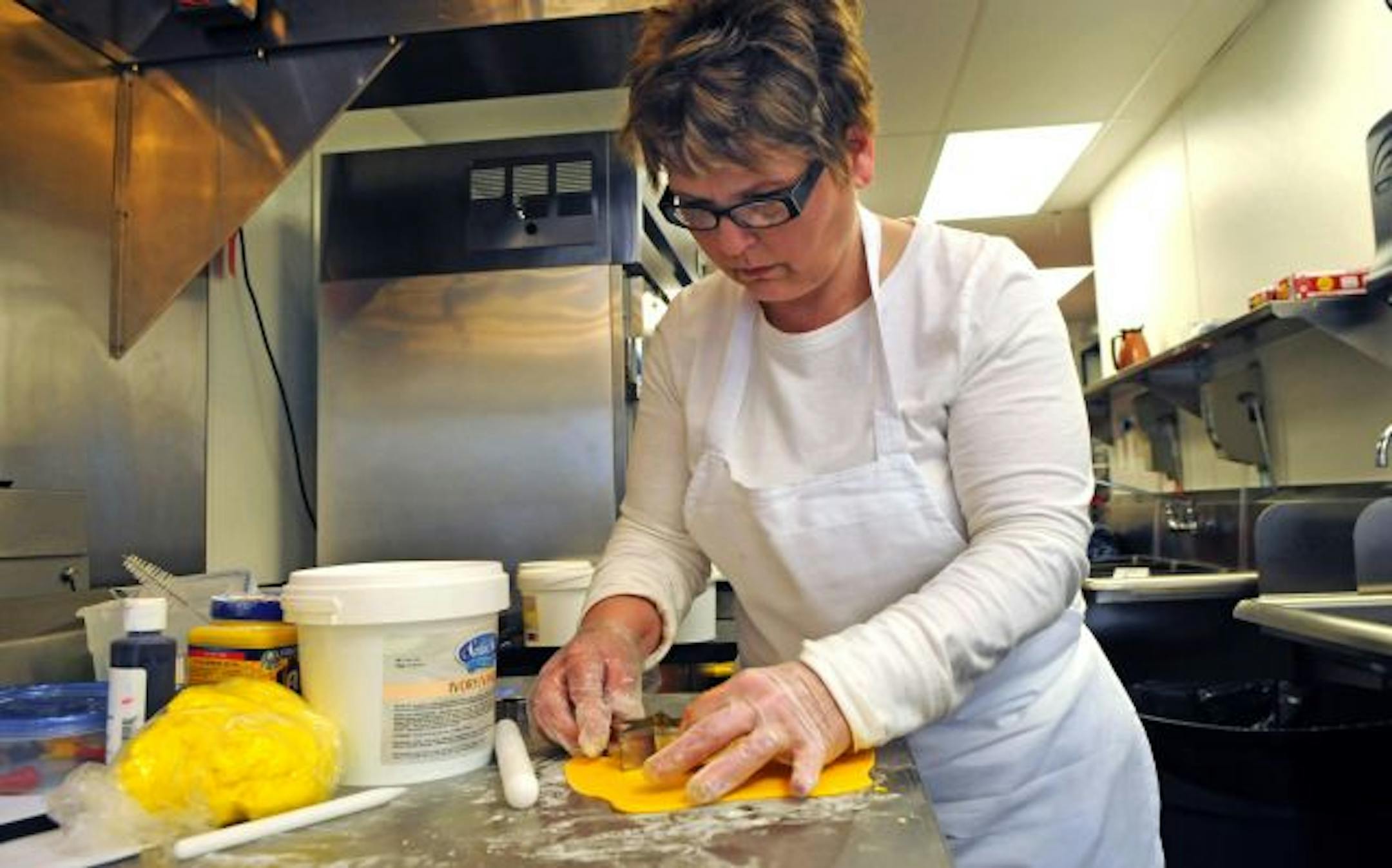
Penny Steele has brought her bakery back to Minneapolis. Above left, cakes made to look like fast food.
Penny Steele has brought her bakery back to Minneapolis. Above left, cakes made to look like fast food. (Star Tribune/The Minnesota Star Tribune)

For years, Penny Steele went to Minneapolis to shape policy for Hennepin County. Now she's back in the big city again -- only this time, the thing she's shaping is fondant icing.

Steele launched a suburban custom cake business in 2009 when she stepped down from the County Board after 14 years as commissioner for the northwestern suburbs. But two months ago she moved the business to Kindred Kitchen, a newly opened business incubator in north Minneapolis.

The new space has two full-sized commercial kitchens, big enough for three teams of cooks, that are rented monthly by a dozen food entrepreneurs who are either just getting started or, like Steele, already in business. Several more are on the waiting list.

"It's kind of an amazing place," Steele said. "They have a big walk-in freezer and cooler, and you can rent a sliding bin and lock it up. They've thought it through quite nicely."

The cakes that Steele bakes are pretty amazing, too. Weddings make up about two-thirds of her business, including groom's cakes. With the help of her son Mark, a genuine edibles artist who can sculpt a cake to look like anything from a hot dog to a real dog, she turned out 80 custom wedding cakes last year.

It was, she said, too much. When an opportunity came along to expand the space she was occupying in Hamel, she realized that she really didn't want to grow the business. Instead, she wanted to cut back a bit, save on overhead and spend less time at work.

Kindred Kitchen was developed by the nonprofit Catalyst Community Partners in response to food entrepreneurs who had been working out of their homes and church basements and needed commercial kitchens to take their businesses to the next level. It opened in October, said sales and marketing director Austin Aho.

"We see it as an investment in our community," he said. "We're hoping to create jobs. We're trying to lower the barrier to the food industry in north Minneapolis, as well as provide a quality service to chefs all over the Twin Cities."

In addition to the rental space, Kindred Kitchen offers classes and workshops and also helps budding restaurants and bakeries develop business plans. A Minneapolis food business license, safety certificate and insurance are required to cook there.

Dozens have expressed in interest in using the kitchens, he said, including everything from "food trucks serving hot dogs to cupcakes-on-a-stick, specialty foods, salsa and spice manufacturers, caterers of all different cuisines -- Jamaican, Creole, Thai, Asian."

For Steele, Kindred Kitchen was perfect. The facility rents for $20 to $35 an hour, depending on the number of hours you work there each month. It's well-equipped and features a cheerful front window for curious passersby to watch what's happening inside.

"And I really did miss Minneapolis," said Steele.

Kevin Duchschere • 612-673-4455

about the writer

about the writer

Kevin Duchschere

Team Leader

Kevin Duchschere, a metro team editor, has worked in the newsroom since 1986 as a general assignment reporter and has covered St. Paul City Hall, the Minnesota Legislature and Hennepin, Ramsey, Washington and Dakota counties. He was St. Paul bureau chief in 2005-07 and Suburbs team leader in 2015-20.

See Moreicon

More from No Section

See More
FILE -- A rent deposit slot at an apartment complex in Tucker, Ga., on July 21, 2020. As an eviction crisis has seemed increasingly likely this summer, everyone in the housing market has made the same plea to Washington: Send money — lots of it — that would keep renters in their homes and landlords afloat. (Melissa Golden/The New York Times) ORG XMIT: XNYT58
Melissa Golden/The New York Times

It’s too soon to tell how much the immigration crackdown is to blame.