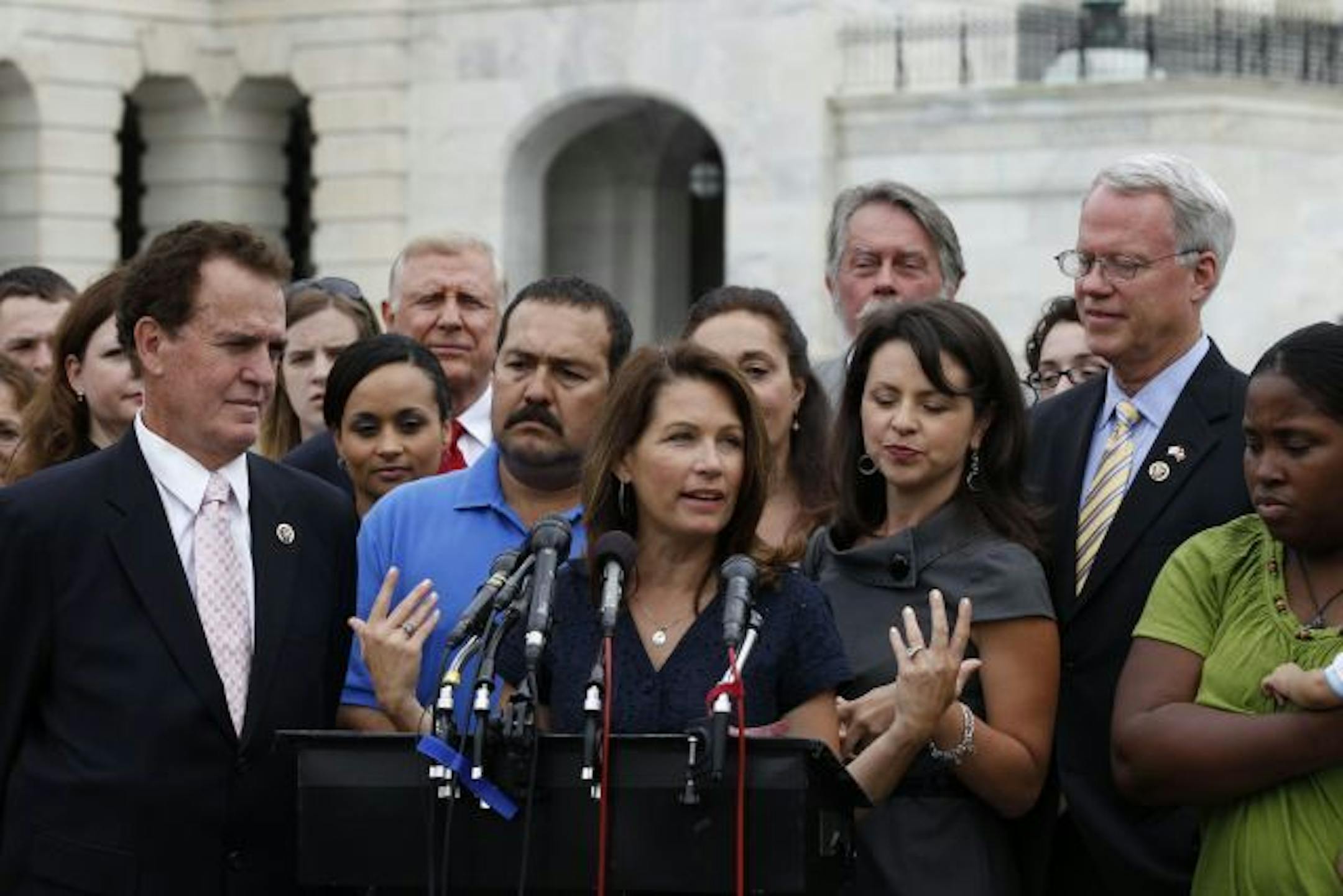
WASHINGTON - Rep. Michele Bachmann holds no leadership position in the House Republican hierarchy, but on Wednesday she debuted in her new role as founder of the 35-member Tea Party Caucus, which has put some of her GOP colleagues on the spot.
Flanked by several GOP Congress members and a multi-racial array of Tea Party activists, Bachmann concluded the group's first meeting with a Capitol Hill news conference intended to allay concerns that congressional Republicans might co-opt the national Tea Party movement. "We members of Congress are not the mouthpiece," she said. "Those involved in the movement are the mouthpiece."
But the rollout of the House Tea Party Caucus also comes amid signs of unease among top GOP leaders and other Minnesota House Republicans, who have largely declined to sign on. Infighting and dust-ups over Tea Party figures who have been accused of racism have caused misgivings about the movement.
Many GOP House members, though happy to join Bachmann in her national "House Call" rally on the Capitol steps last fall, seem leery of playing any formal role in a loosely connected network with groups whose members sometimes play to the fringes of national politics.
It 'will lose its identity'
Another lingering question is whether the movement even wants a formal presence in Washington. Though some Tea Party leaders have been well-connected Republican operatives, the movement prides itself on its grassroots bona fides, which might not be helped by a formal Tea Party Caucus among House Republicans.
"Formality is counterproductive," tweeted Utah Republican Jason Chaffetz, a Tea Party enthusiast who opposes the caucus. "If one person tries to co-opt it, the Tea Party will lose its identity and effectiveness."
While the Tea Party Caucus remains largely symbolic for now, it could position Bachmann for a more prominent national role if the Republicans take back control of the House after midterm elections this fall.