

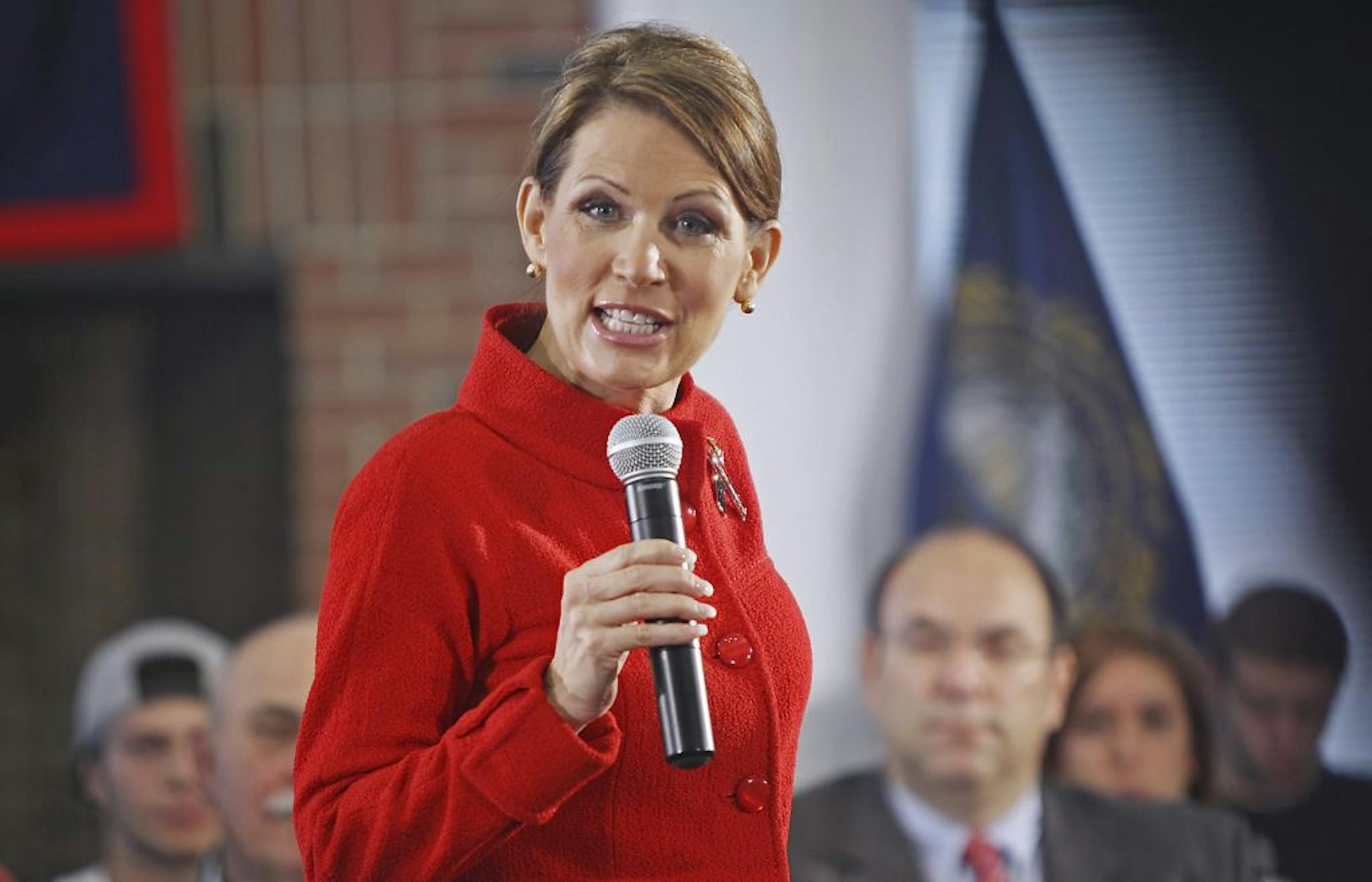
WASHINGTON -- Her first order of business is well-known: Repeal "Obamacare."
That's the issue that thrust Michele Bachmann into the national spotlight and provided a rallying cry for her White House campaign.
Even as Bachmann's poll numbers have tumbled in recent weeks, her continued appearances on the campaign trail are providing voters in Minnesota and across the nation a revealing look at just how deeply she disagrees with Democrats and even fellow Republicans on issues such as taxes and spending, federal food safety regulations and the Arab Spring.
The massive tax and spending cuts she is championing on the campaign trail, for example, are more radical than any Congress or the White House has ever seriously considered.
"The first bill I would send to Congress would be the one to turn the economy around, and that would be dealing with the tax code," Bachmann said at a recent campaign stop in Virginia. Her administration would start with dramatic cuts in corporate taxes, she said, then move to "lower the regulatory burden" on companies, including the Wall Street reforms passed in response to the nation's financial crisis and the insurance requirements imposed under President Obama's health care law.
"The repeal of Obamacare needs to be a part of that package as well," Bachmann said.
But friends and foes alike say that given the current partisan gridlock, Bachmann's Tea Party opposition to this summer's debt ceiling compromise would be politically problematic. For example, analysts across the political spectrum agree her strategy for avoiding national default -- largely limiting federal payments to interest on the debt -- would require a minimum 35 percent across-the-board reduction in the size of the government.
"Congress wets its pants and the special interest groups cry bloody murder if you just tell them that their budgets can be increased only 5 percent instead of 7 percent," said Cato Institute economist Daniel Mitchell, a conservative who is sympathetic to Bachmann's reform efforts. "So a 35 percent actual reduction, that is a real spending cut -- not a phony cut -- might be economically desirable, but politically I don't see it happening."


