Baby starfish return in droves after wasting disease decimated populations

The Associated Press
May 15, 2016 at 9:16PM
FILE - In this July 30, 2015 file photo, a healthy sea star is seen under a magnifying glass during a survey to determine the health of local sea star populations at Camano Island State Park in Washington state. Researchers in Oregon and Northern California are finding that droves of baby sea stars are returning to the shores after whole populations of starfish along the West Coast were decimated by a wasting disease over the last two years. (Ian Terry/The Herald via AP, File) MANDATORY CREDIT
Experts said a deadly virus still threatens starfish. (The Minnesota Star Tribune)

EUREKA, Calif. – Droves of baby starfish are returning to Oregon and Northern California's shores after a wasting disease decimated whole populations of the creatures over the past two years along the West Coast.

Data collected by Oregon State University researchers shows an unprecedented number of baby starfish, or sea stars, survived the summer and winter of 2015, the Eureka Times Standard reported.

"When we looked at the settlement of the larval sea stars on rocks in 2014 during the epidemic, it was the same or maybe even a bit lower than previous years," said Oregon State University marine biology professor Bruce Menge. "But a few months later, the number of juveniles was off the charts — higher than we'd ever seen — as much as 300 times normal."

A similar increase was found north of Trinidad, Calif. A baby starfish boom also was noted in the summer of 2014 near Santa Cruz.

A virus killed millions of starfish on the Pacific Coast from Southern California to Alaska by causing them to lose their limbs and eventually disintegrate into slime and piles of tiny bones. The cause of the massive outbreak remains unclear.

Associated Press

FILE - In this April 9, 2015 file photo, several sea stars cling to a concrete piling on Washington’s Hood Canal near Poulsbo, Wash. Researchers in Oregon and Northern California are finding that droves of baby sea stars are returning to the shores after whole populations of starfish along the West Coast were decimated by a wasting disease over the last two years. (AP Photo/Elaine Thompson, File)
FILE - In this April 9, 2015 file photo, several sea stars cling to a concrete piling on Washington’s Hood Canal near Poulsbo, Wash. Researchers in Oregon and Northern California are finding that droves of baby sea stars are returning to the shores after whole populations of starfish along the West Coast were decimated by a wasting disease over the last two years. (AP Photo/Elaine Thompson, File) (Elaine Thompson/The Associated Press)
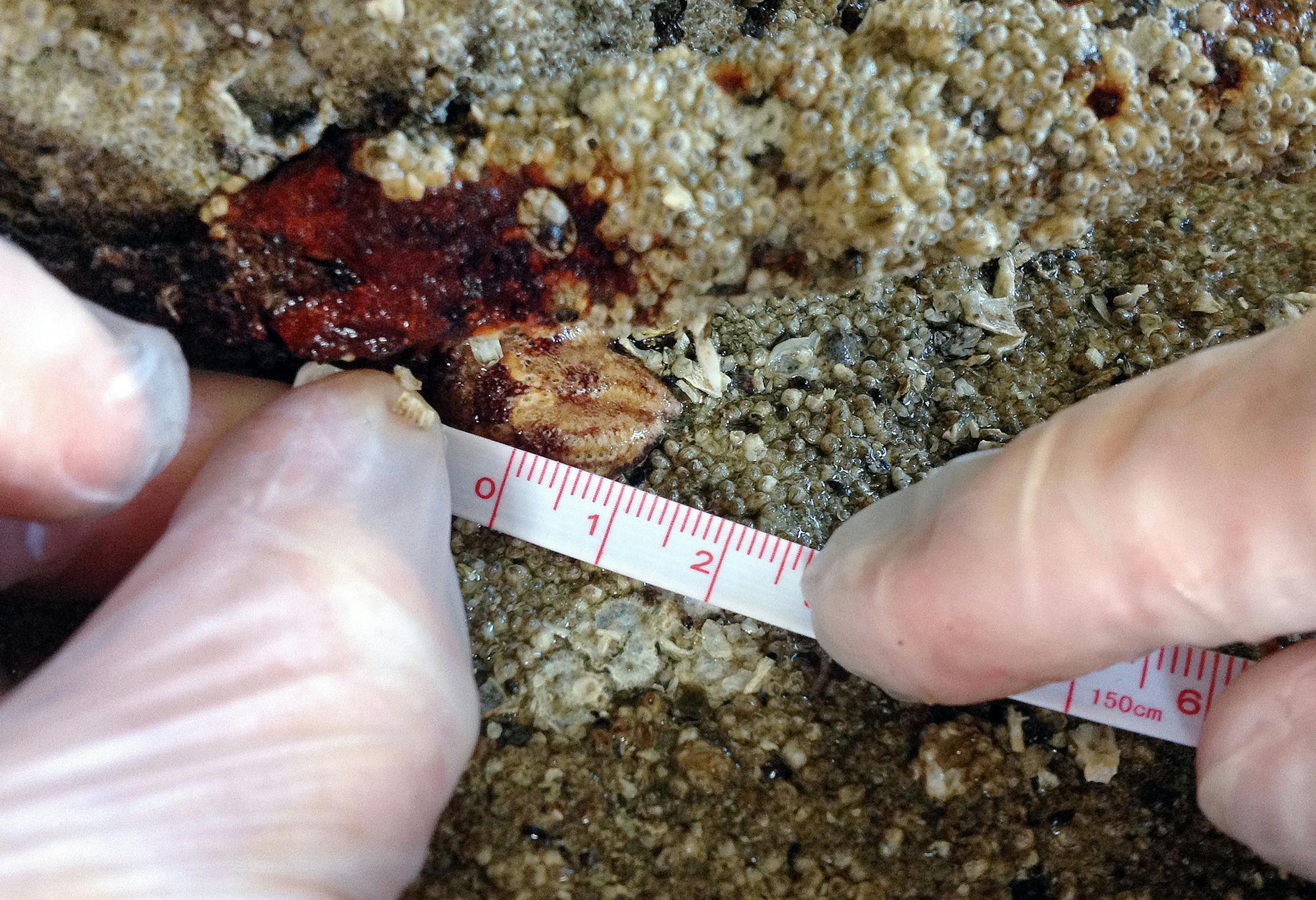
FILE - In this April 9, 2015 file photo, a volunteer measures a tiny baby sea star on a concrete piling on Washington’s Hood Canal near Poulsbo, Wash. Researchers in Oregon and Northern California are finding that droves of baby sea stars are returning to the shores after whole populations of starfish along the West Coast were decimated by a wasting disease over the last two years. (AP Photo/Elaine Thompson. File)
FILE - In this April 9, 2015 file photo, a volunteer measures a tiny baby sea star on a concrete piling on Washington’s Hood Canal near Poulsbo, Wash. Researchers in Oregon and Northern California are finding that droves of baby sea stars are returning to the shores after whole populations of starfish along the West Coast were decimated by a wasting disease over the last two years. (AP Photo/Elaine Thompson. File) (Elaine Thompson/The Associated Press)
about the writer

about the writer

More from No Section

See More
FILE -- A rent deposit slot at an apartment complex in Tucker, Ga., on July 21, 2020. As an eviction crisis has seemed increasingly likely this summer, everyone in the housing market has made the same plea to Washington: Send money — lots of it — that would keep renters in their homes and landlords afloat. (Melissa Golden/The New York Times) ORG XMIT: XNYT58
Melissa Golden/The New York Times

It’s too soon to tell how much the immigration crackdown is to blame.