

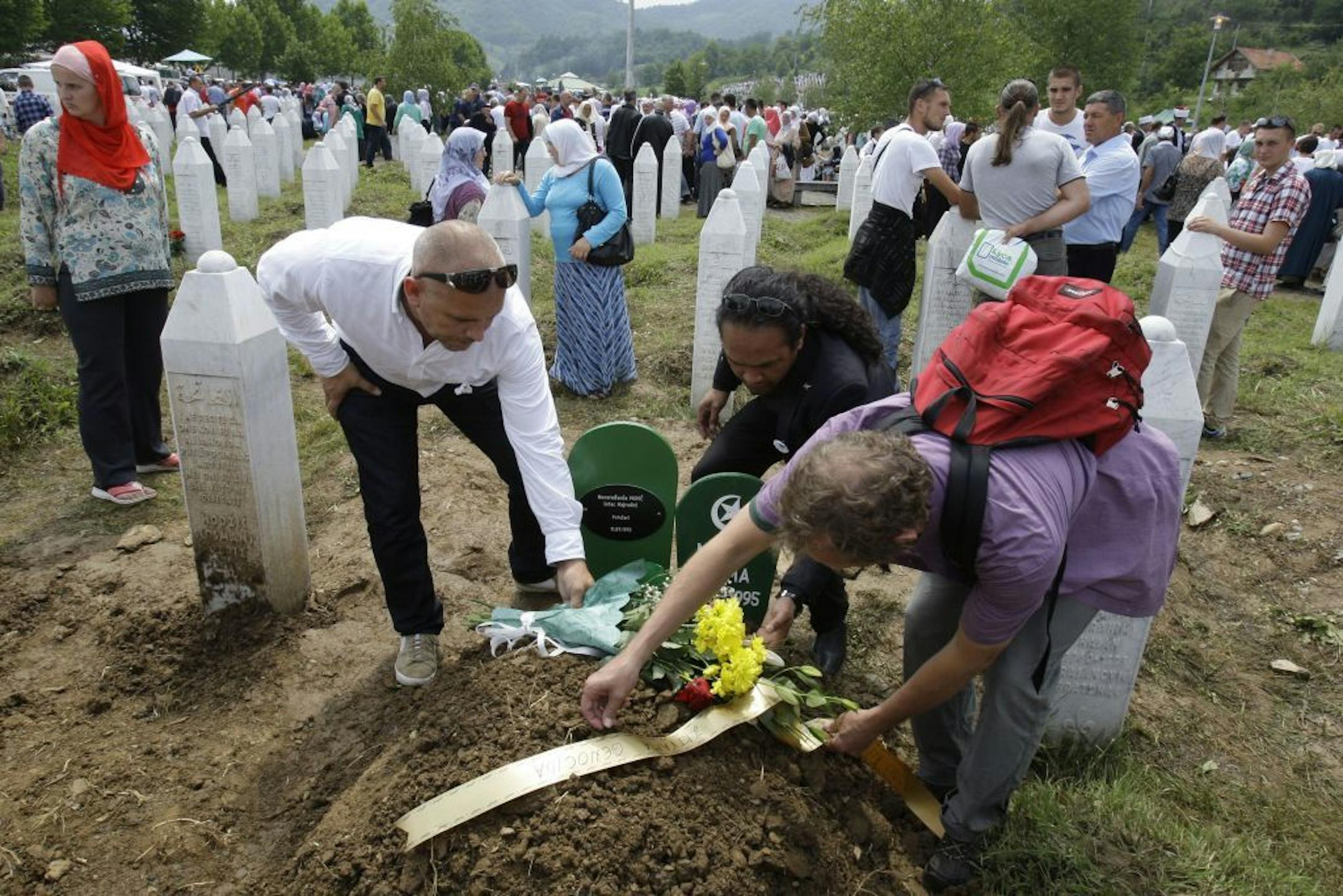
SREBRENICA, Bosnia-Herzegovina — Hava Muhic stood Thursday above the smallest pit in the cemetery, near her husband's grave. It was dug for her baby girl — who was born and died here 18 years ago on the day of the worst massacre Europe has seen since World War II.
Muhic's baby is among the remains of 409 people recently identified after being found in mass graves, who were reburied at the Potocari Memorial Center on the anniversary of the Srebrenica massacre. This year's commemorations bring the total of identified victims to 6,066. Another 2,306 remain missing.
Muhic is burying the daughter she never had a chance to see or call by name.
A simple wooden marker above the little green coffin says: Newborn Muhic (father Hajrudin) 11.07.1995 — the single date marking both birth and death.
Muhic blames her child's death on the frantic rush to seek safety among U.N. peacekeepers as Bosnian Serbs overran the town. A woman who helped her give birth in the U.N. compound told her the girl was born with the umbilical cord wrapped around her neck and that she was dead.
There is no way to know whether the chaos of the day had anything to do with the baby's death. One thing's certain, however: Muhic spent 18 years living with the pain of not knowing where her baby girl was buried.
Back then, Srebrenica was a U.N.-protected Muslim town in Bosnia besieged by Serb forces throughout the country's 1992-95 war. Serb troops led by Gen. Ratko Mladic broke into the enclave on July 11, 1995. That morning, some 30,000 Bosnian Muslims flocked to the U.N. military base in the town's Potocari suburb seeking refuge.
Among them was Muhic, then 24 — and nine months pregnant with her second child. Labor pains took her breath away as she passed the gate of the U.N. base. One of the peacekeepers told her she could enter the base's main building but said the others would have to stay outside in the courtyard.


