

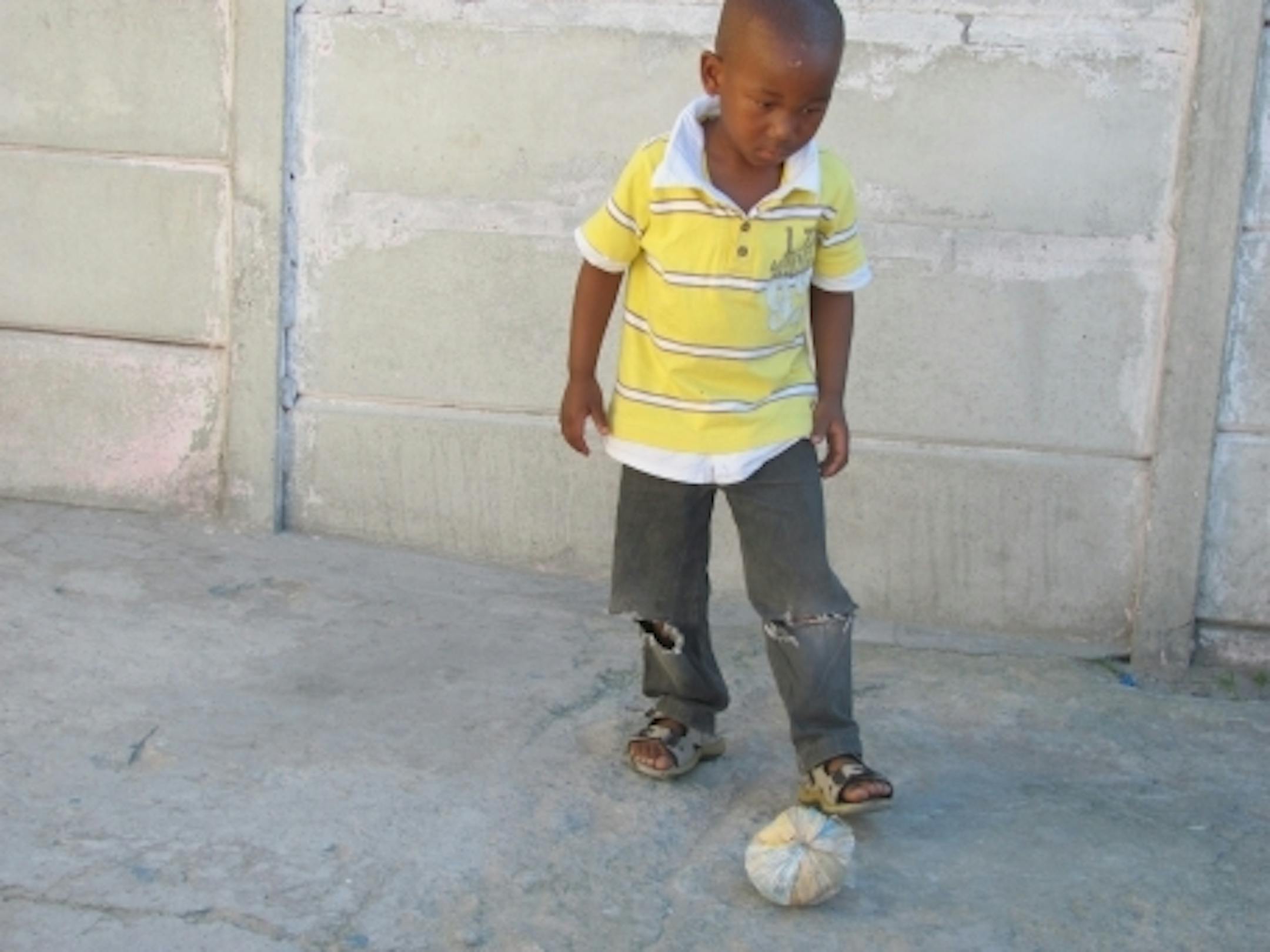
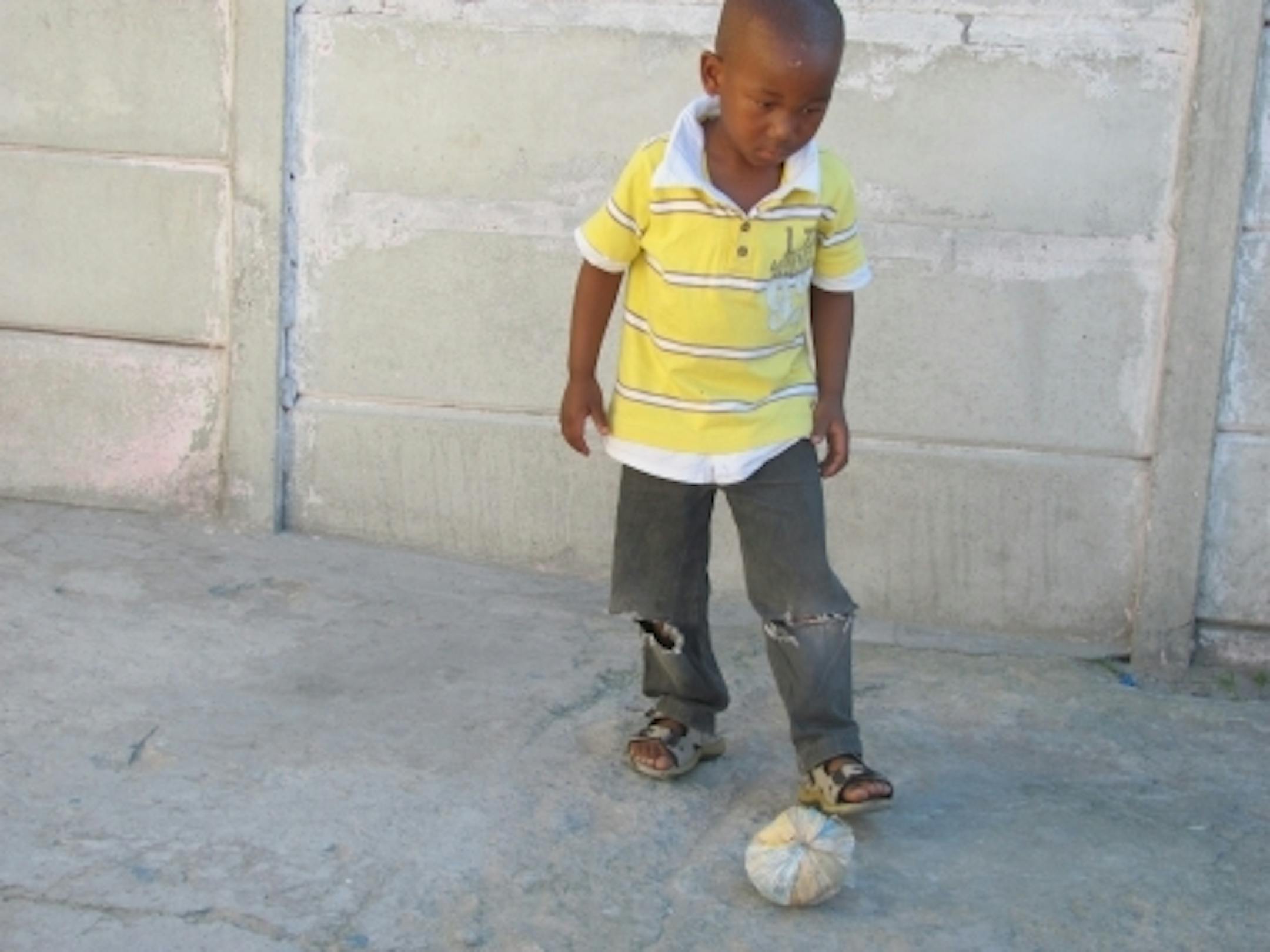
Although the soccer matches are still continuing, I'm packing my suitcase with the World Cup t-shirts and plastic vuvuzelas I bought as gifts and preparing to return to the United States. The memory card of my camera is filled with joyful images of South Africans celebrating the games. But the photo that best captures the experience of being in Cape Town for the 2010 World Cup is not of an enthusiastic fan, nor of one of the games. The defining image is of a small boy kicking his version of a soccer ball in a township located just a few miles from the Cape Town Stadium. You don't need to have an expensive ticket to the World Cup to see soccer being played in South Africa. It seems that every township street and vacant lot have been claimed by young soccer enthusiasts. In the absence of nets, kids make do with a couple of bricks or cans to indicate the goal zones. The balls they use are sometimes so deflated of air that they don't roll; rather they make the clunky motion of a flat tire on a car. Occasionally, even in winter in the southern hemisphere, a youngster will be playing soccer with bare feet. Nothing, it seems, will prevent boys from playing soccer. Not even the lack of a ball. Kids are everywhere in the townships and after more than a decade of visiting these sprawling urban ghettos, I realized that I was no longer really seeing the children. I was simply driving or walking past them on the way to my next destination. I noticed this particular child – the one who would provide the defining image of the World Cup – but paid no attention to him as I hurried into the house of a family where a mother and son are both battling HIV/AIDS. The same child was still outside when I left my meeting and this time I actually saw the four-year-old in his torn pants and hand-me-down shirt. It wasn't his attire that made this boy stand out. Nor was it his activity of quietly kicking a soccer ball against a wall. The thing that stopped me in my tracks and forced me to pay attention was the fact that this boy's "soccer ball" was actually made of plastic bags that had been rolled into the shape of a ball. With every little kick against the wall, the plastic seemed to unwind a bit, but the boy continued to play with it. This, to me, is the real image of the World Cup. More people in the world live in poverty, like this little boy in the township, than live like those of us who can afford to travel half way around the world and buy a ticket to the games. For this child and his family, the World Cup might as well have been in Minneapolis as to be just a 30 minute drive away in Cape Town. Each destination is remote when you don't have a rand in your pocket. Still, a little ingenuity – turning a bunch of discarded plastic bags into a soccer ball – connected this boy with the world. And he didn't need a ticket to the matches or a vuvuzela to be a part of the experience. There is a single word, ayoba, that has come to represent these World Cup games as much as the sound of the vuvuzela. Ayoba seems to have as many meanings as there have been soccer matches. It can mean "cool" or be used as a greeting, and it is always spoken with excitement. One South African interpreted it to mean "amazement." That is the translation that best captures the energy and emotion of the word. Watching this little boy play with his plastic bag ball, I could only think, ayoba! There is no better place to be in the world right now than in South Africa.

