

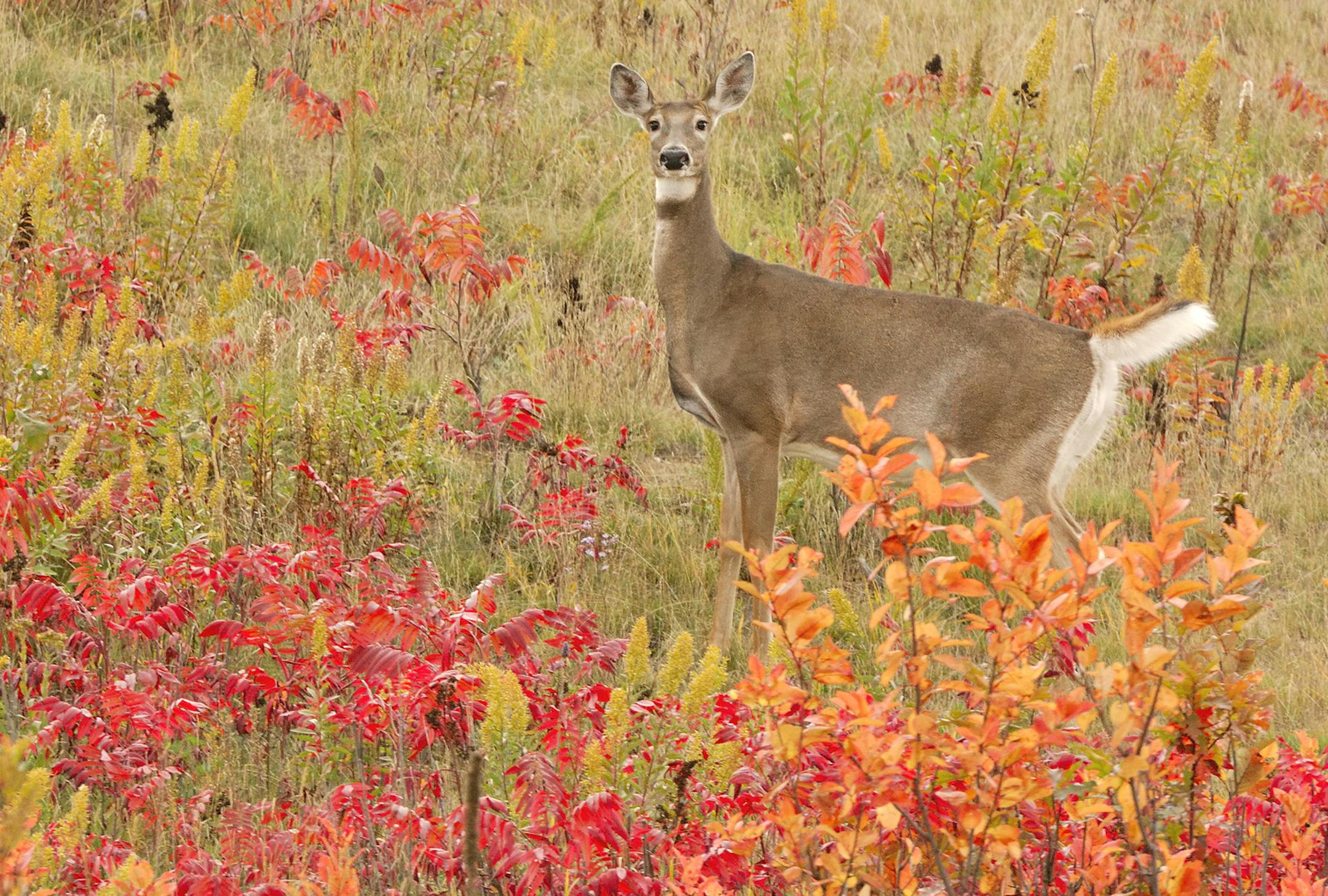
Brainerd – Last week, as fall colors were three-quarters of the way toward peak in central Minnesota, I was faced with a dilemma. It was one I had dealt with on many occasions: How can I best spend my time during the short stretch when the landscape glows red, orange and gold?
Many of the flamboyant birds of summer have headed south, riding a north wind on a clear evening. Photographing species like orioles, tanagers and most warblers is not an option in early October. Yet some colorful species are still hanging around, including some sparrows, and the normal vibrant winter residents like blue jays, cardinals and woodpeckers.
I also enjoy photographing waterfowl. But this early in the fall most species of waterfowl, particularly ducks, are still undergoing the molting process. Their drab feathers of summer are not yet fully replaced by iridescent plumage.
I don't consider myself a landscape photographer. I prefer to photograph wildlife. However, I do love when nature cooperates and I can combine an eye-popping landscape that also includes wildlife. I call those images two-for-ones. In other words, a combination of an attractive background or foreground (at this time of year, beautiful fall foliage) and wildlife.
So, on that day, I thought of attempting to photograph songbirds perched among brilliant fall foliage. But the wind was gusty, and that makes bird photography difficult because the branches are swaying, resulting in blurry images.
I instead chose to take the late afternoon to pursue deer. Though deer don't sway with the wind, I knew the wind speed and, more important, direction would play a key role in capturing excellent images.
Or not.
After all, it's no secret deer possess olfactory abilities that we humans can't begin to fathom. One whiff of us and they are gone.


