Advertisement

August Outlook: A Bigger, Brighter Moon

After a few stormy tantrums last week, this week looks quiet into Friday with little rain, and temperatures warming up over time. Daytime highs may top 90F in the metro the latter half of this week, before cooling back into the 80s next week. Check the blog for more details. -Todd Nelson

July 31, 2023 at 2:30AM
Advertisement

2 Supermoons This August!!

August has two full Moons this year! You may have heard that there are four supermoons in a row this year; the August 1 supermoon is the second supermoon of this unusual sequence. "Supermoon" is a catchy term for what astronomers call "a perigean full Moon" which is when the full Moon happens at (or very near) the exact time when the Moon is closest to us in its orbit. A supermoon exceeds the disk size of an average-sized Moon by up to 8% and the brightness of an average-sized full Moon by some 16%. You may not perceive the difference in size, but a supermoon will appear brighter in the sky. The full Sturgeon Moon reaches its peak on Tuesday, August 1, 2023, and then we have a full Blue Moon on Wednesday, August 30, 2023—and it will be the closest supermoon of the year!

August 1: Full Sturgeon Moon

August's first full Moon will appear on the afternoon of Tuesday, August 1, reaching peak illumination at 2:32 P.M. Eastern Time. That evening, look toward the southeast after sunset to catch a glimpse of the Sturgeon Moon rising.

August 30: Blue Moon

Later in the month, a second full Moon, a Blue Moon will make an appearance. The term Blue Moon is most commonly used when we have two full Moons in a single month. On Wednesday, August 30, the Full Moon will peak at 9:36 P.M.

Sturgeon Moon (Farmers Almanac/The Minnesota Star Tribune)

5th Driest May 15th Through July 30th on Record

It has been very dry across much of the region this summer with only 3.67" of rain falling at the MSP Airport from May 15th to July 30th. This is the 5th driest such period on record with the driest being 1.90" set in 1988. Interestingly, that same period last year was drier than this year.
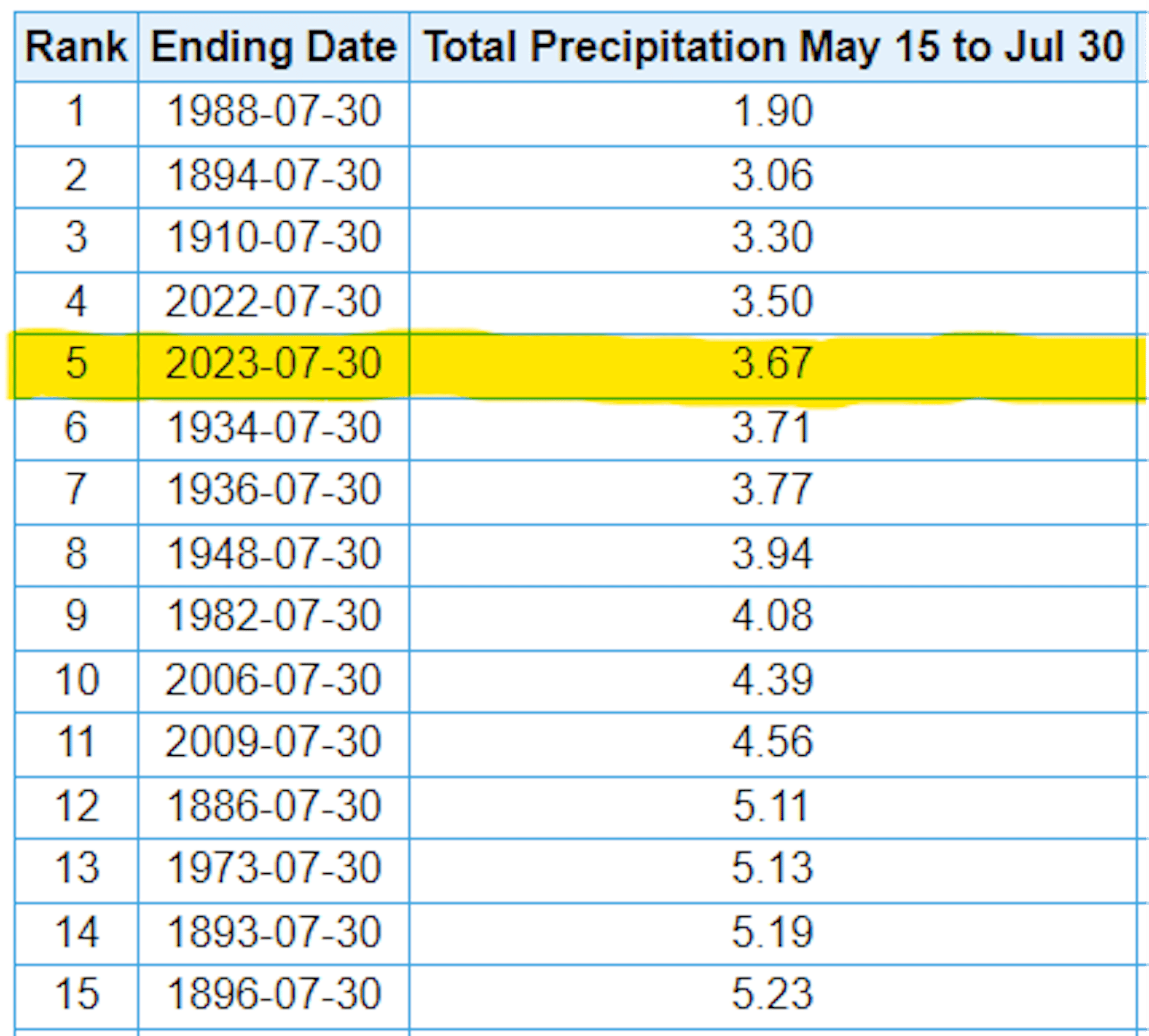
5th Driest May 15th Through July 30th on Record at MSP (NOAA NWS/The Minnesota Star Tribune)

60 Day Precipitation Anomaly

The map below shows the 60 day precipitation anomaly, which indicates that some locations are nearly -3.00" to nearly -7.00" below average (in red/pink) since mid/late May. There are a few locations across the state that have surpluses, but most locations are well below average.
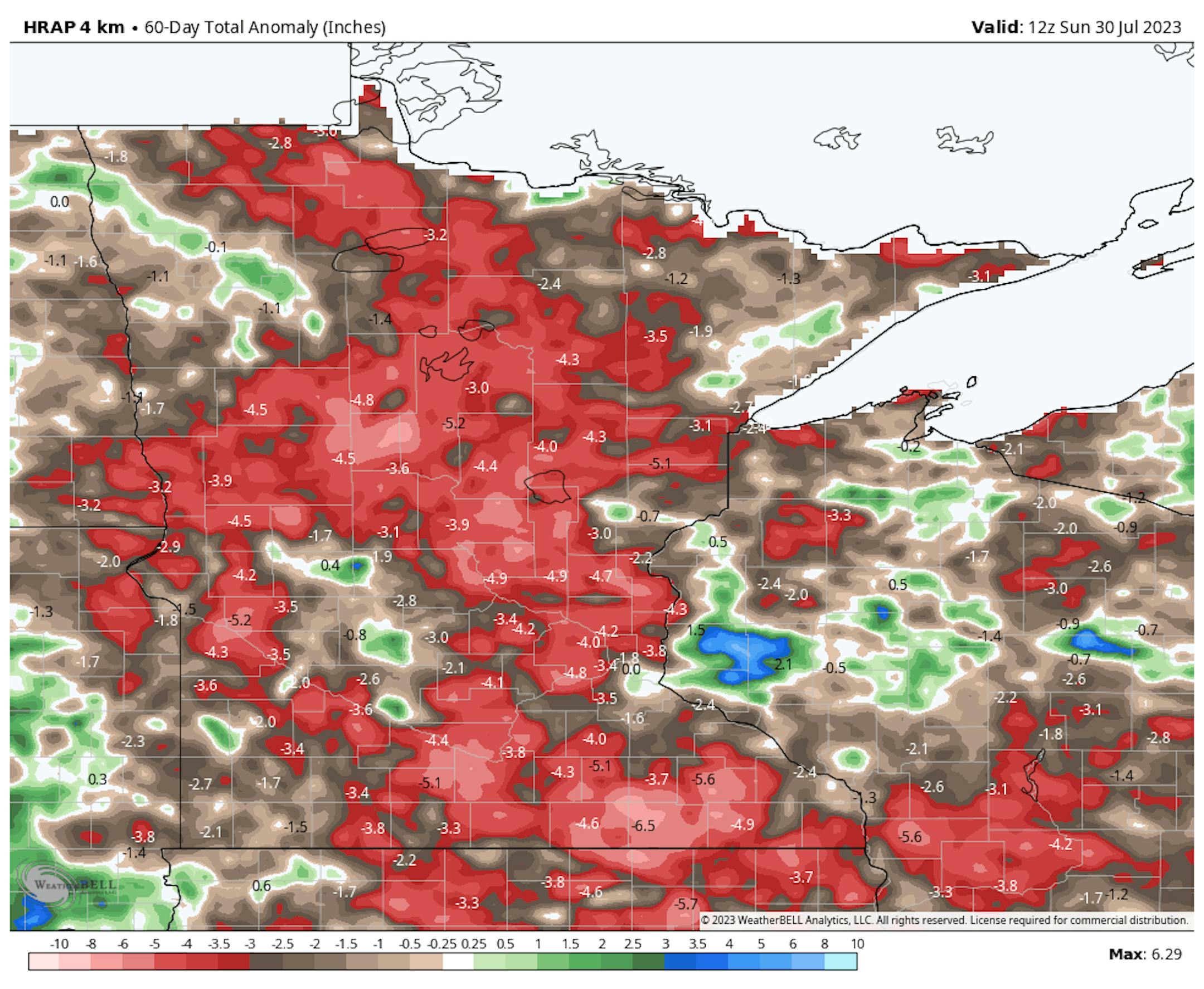
60 Day Precipitation Outlook (WeatherBell/The Minnesota Star Tribune)

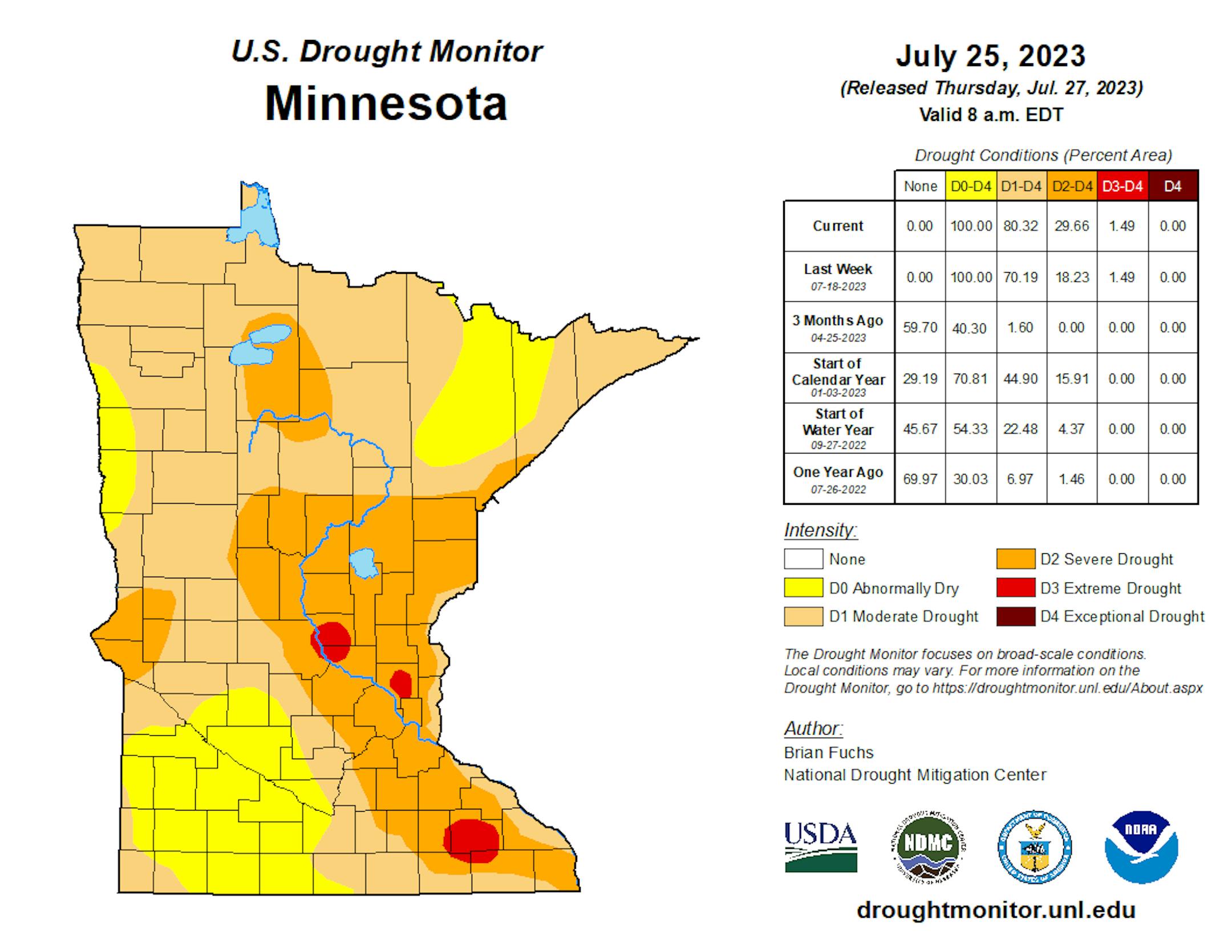
Drought Update

Drought conditions continue to deepen across the region with a few pockets of Extreme Drought now showing up (in red). The last time that parts of Minnesota were in an Extreme Drought was back in mid December, nearly 7 months ago.
Advertisement
Minnesota Drought Update (US Drought Monitor/The Minnesota Star Tribune)

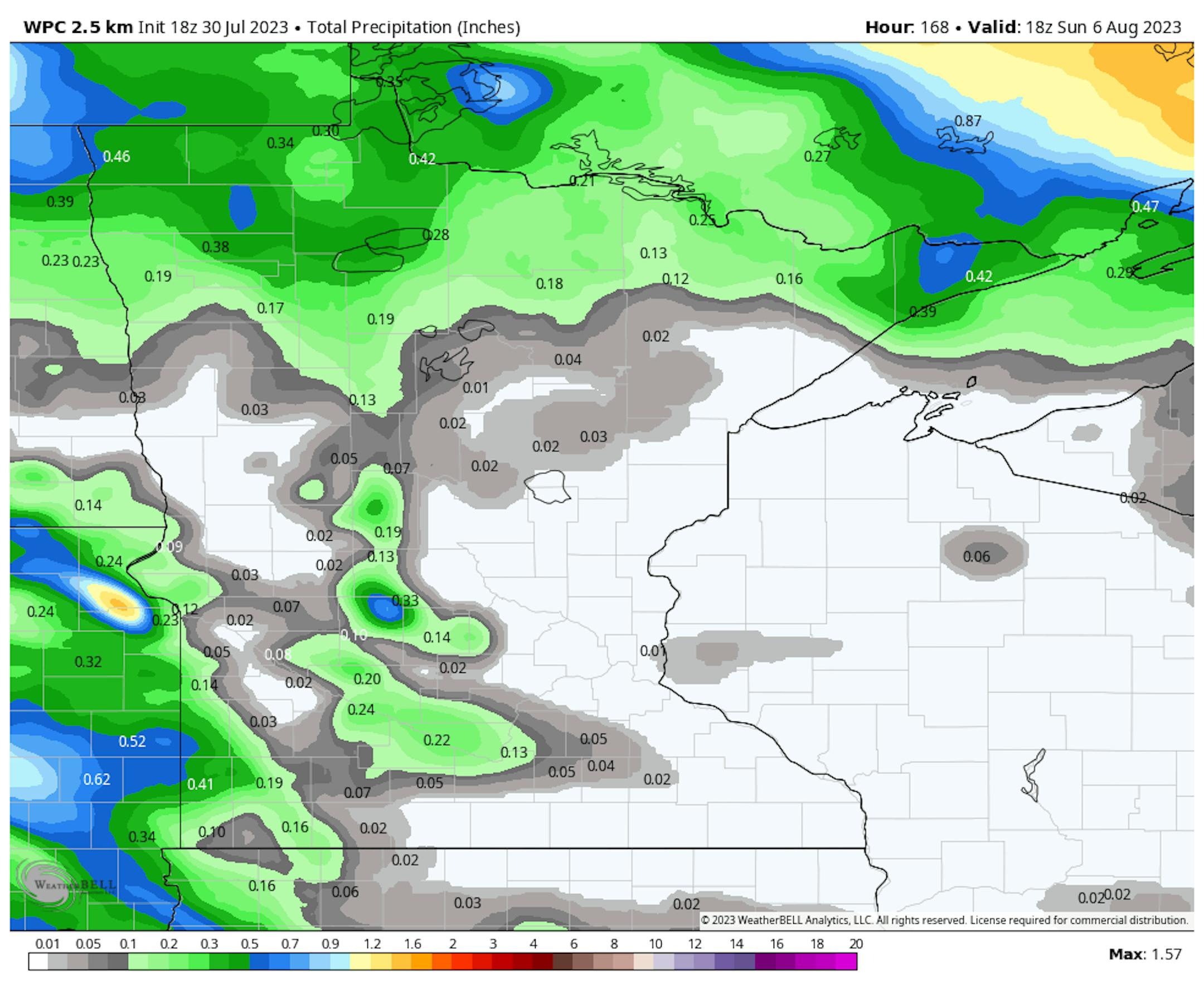
Extended Precipitation Outlook

The extended precipitation outlook shows minimal rainfall through next week. There could be a little rain here and there, but it won't be too widespread over heavy. We're getting indications of a greater rain risk as we approach next weekend. Stay tuned.

Extended Precipitation Outlook (WeatherBell & NOAA's WPC/The Minnesota Star Tribune)

Hottest Days of 2023 So Far

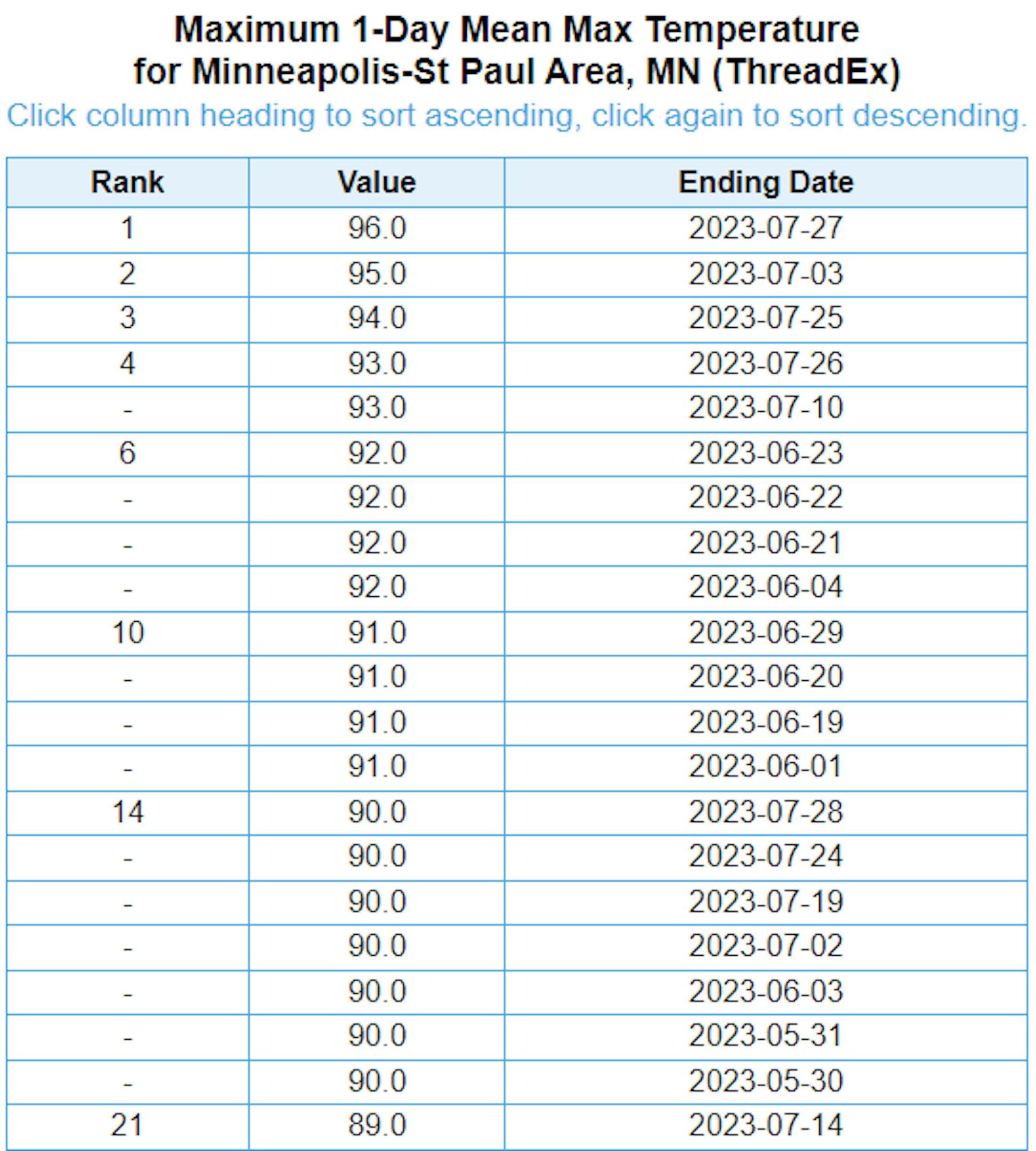
MSP Just had it's hottest week of 2023 with a number of 90F days. The hottest day of 2023 (so far) was on Thursday with a high of 96F and heat index values peaking around 105F to 110F. Uffda! There have been (20) 90F days this year. Our average number of 90F days is 14.

Warmest Days of 2023 So Far (NOAA NWS/The Minnesota Star Tribune)

Average Number of 90F Days At MSP

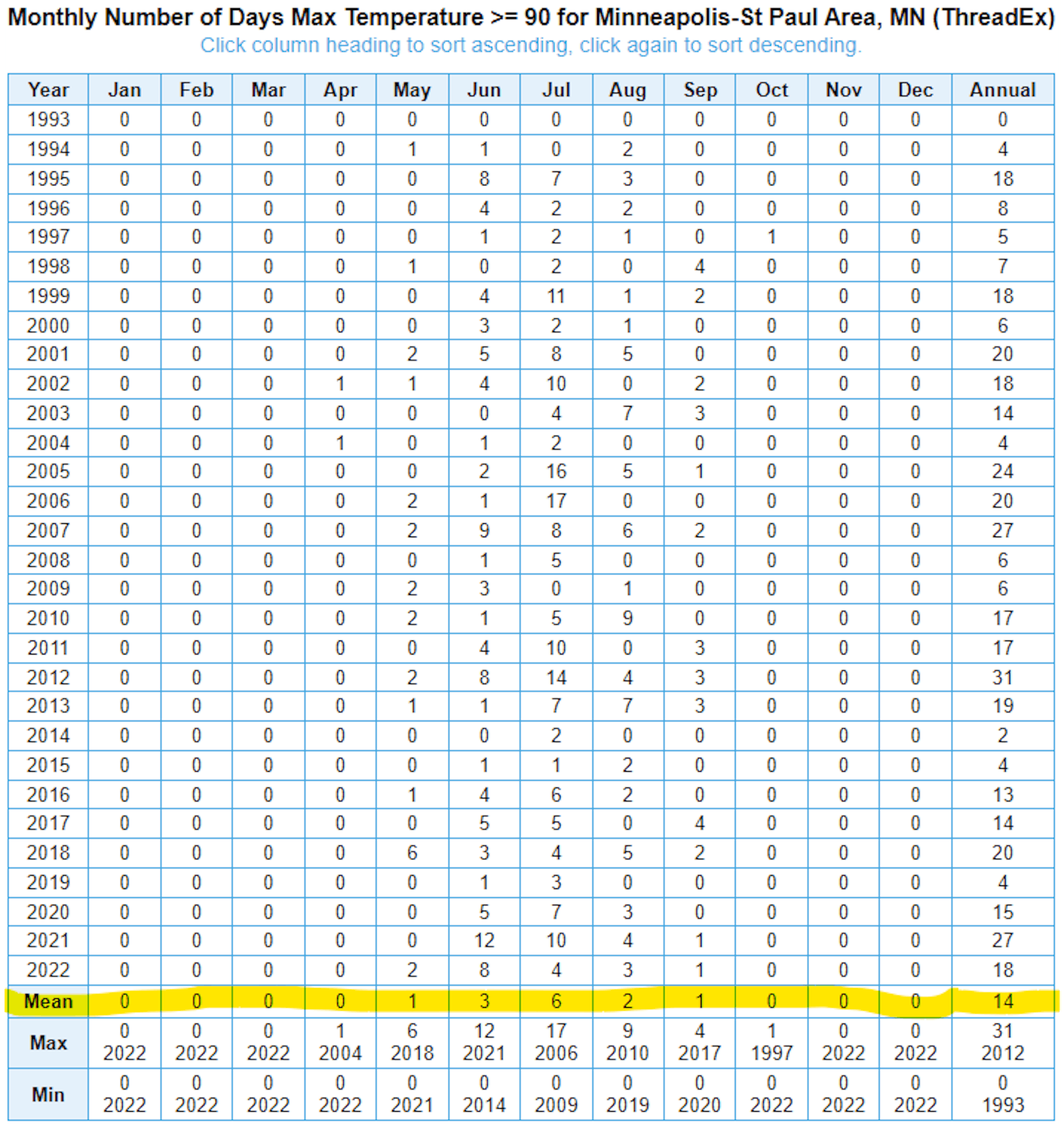
Looking at the last 30 years, the average number of 90F days at the MSP Airport is (14). July is the hottest month with an average of (6) 90F days. We've only had (3) days in the 90s this July, but have already had (14) days in the 90s this year. Last year we had (18) days in the 90s and in 2021 there were (27) days in the 90s. The most number of 90F days in any single year was (44) set in 1988.

Average Number of 90F Days At MSP (NOAA NWS/The Minnesota Star Tribune)

Simulated Radar

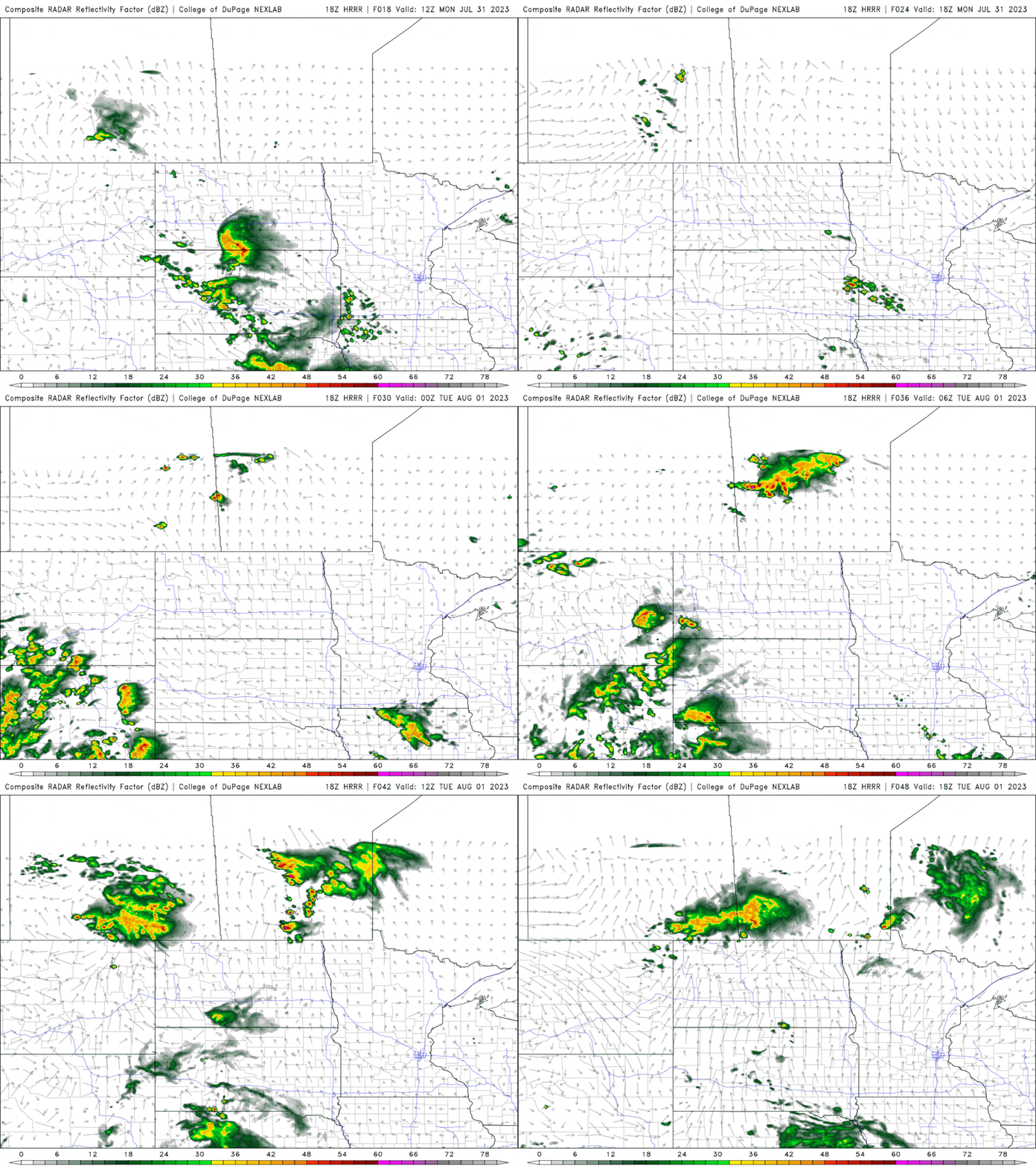
The simulated radar from AM Monday to midday Tuesday keeps weather conditions close to home rather quiet and dry. We really don't see a decent chance of rain until Wednesday and even then, it looks like rainfall amounts will be pretty light.

Simulated Radar From AM Monday to Midday Tuesday (COD Weather/The Minnesota Star Tribune)

Twin Cities Weather Outlook For Monday

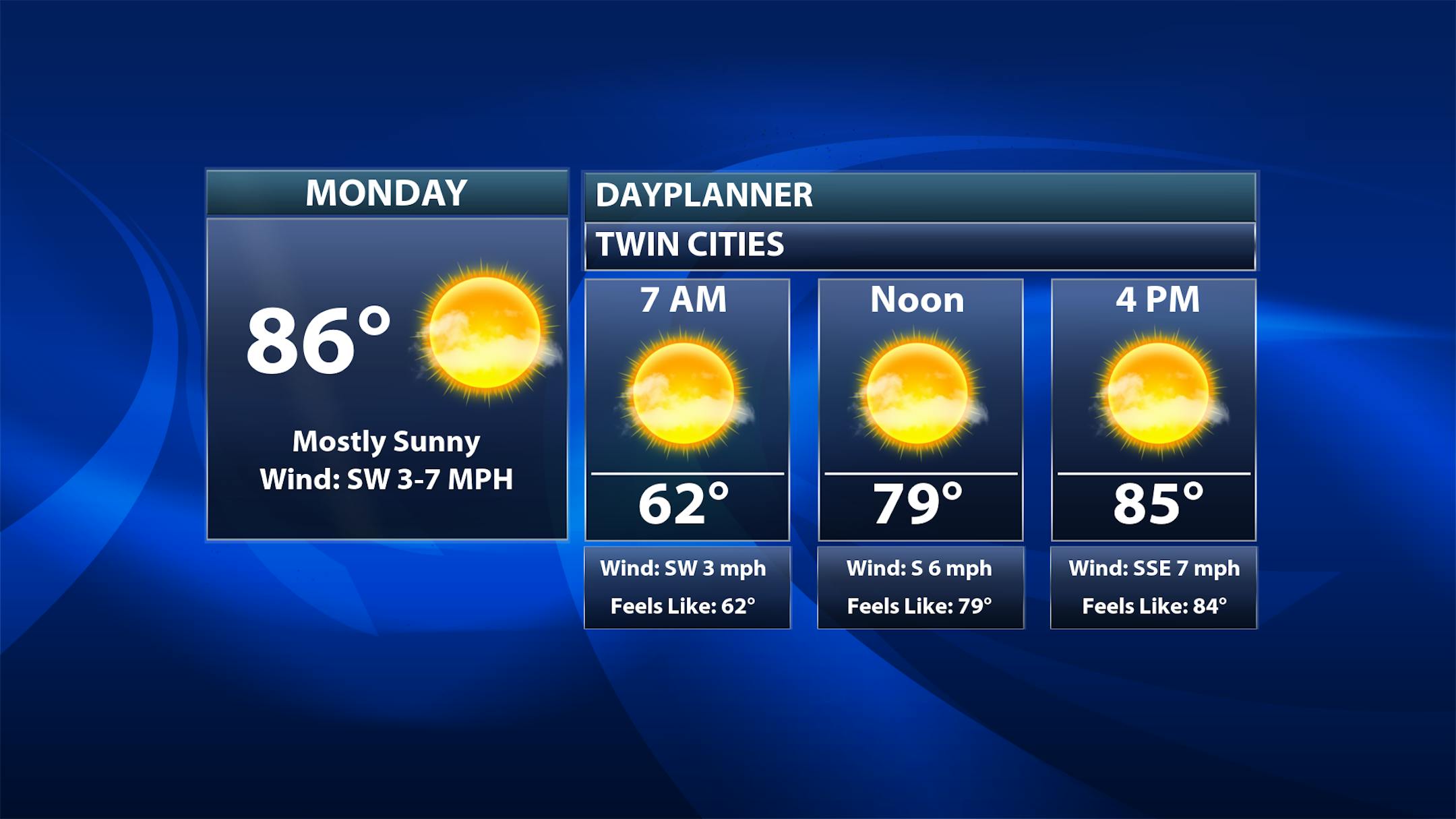
The weather outlook for the Twin Cities on Monday, July 31st will be quiet and dry with pretty comfortable temperatures. Highs may reach the mid 80s, which will cooler than it was last week by +10F.

Twin Cities Weather Outlook For Monday (Praedictix/The Minnesota Star Tribune)

Meteograms For Minneapolis

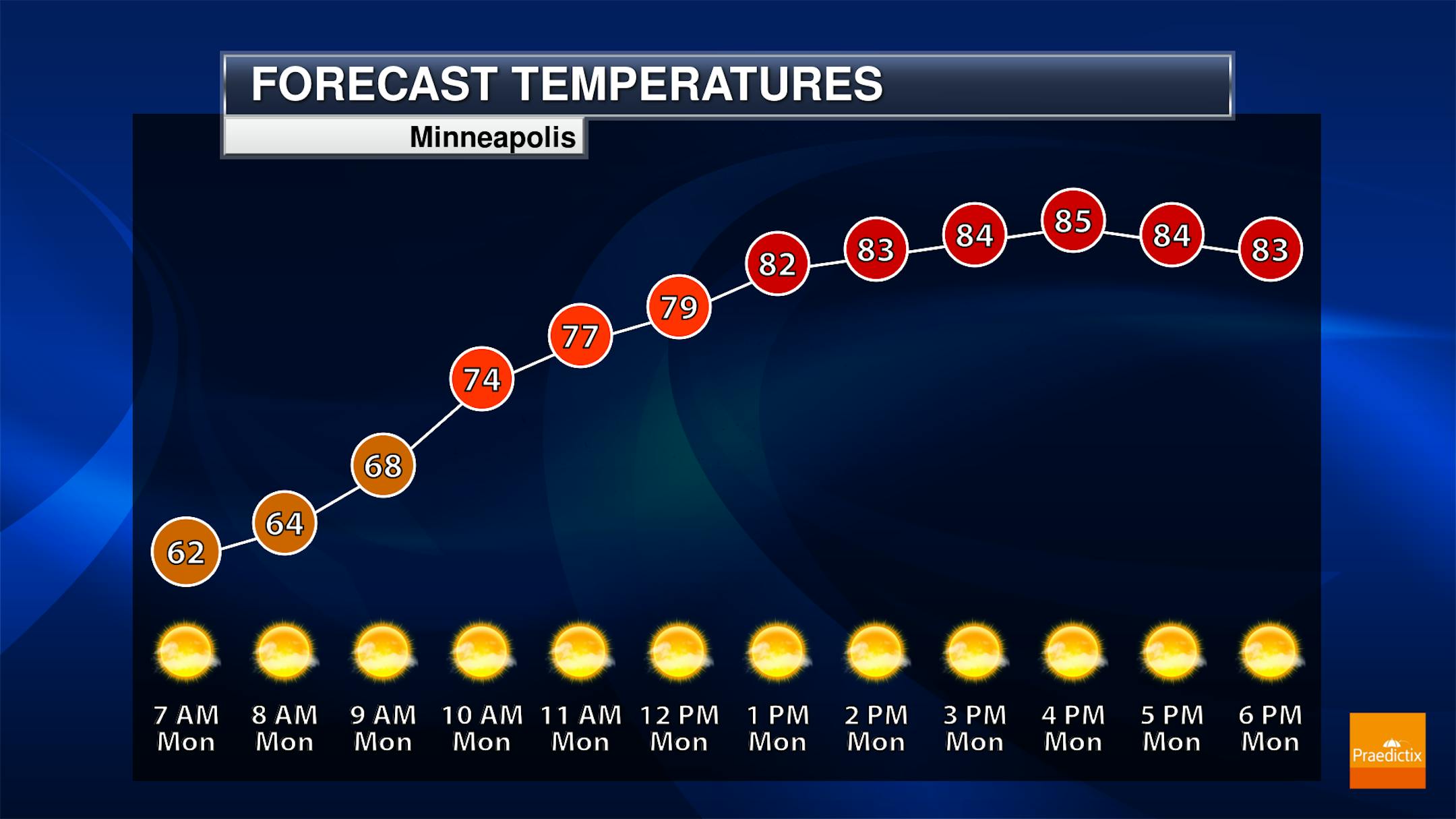
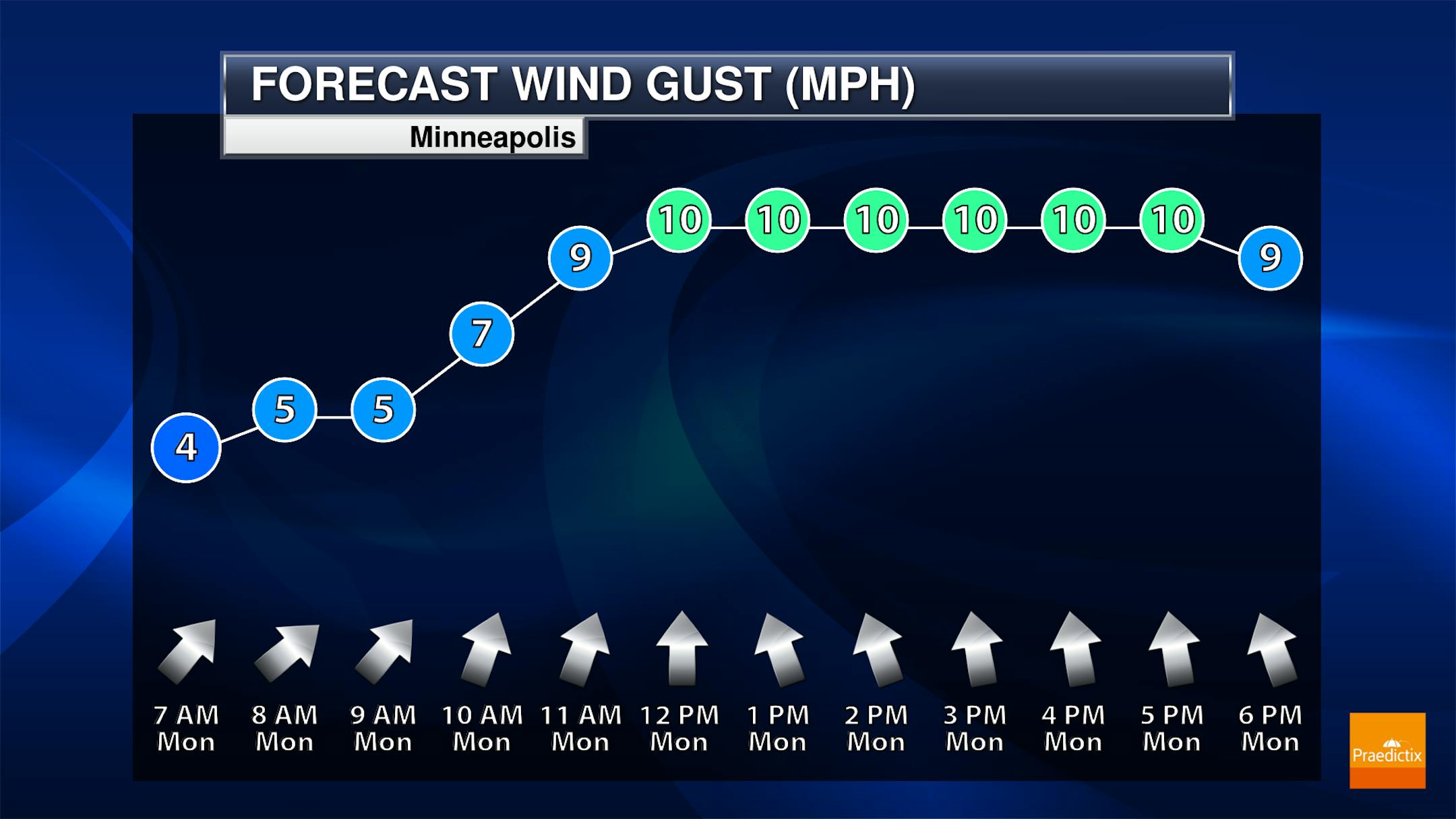
The hourly temps through the day Monday shows readings starting in the lower 60s in the morning and topping out in the mid 80s in the afternoon. The day will be dry with plenty of sunshine and lower humidity. Southerly winds will be around 10mph through the day.

Advertisement
Hourly Temperatures & Sky Conditions For Minneapolis on Monday (Praedictix/The Minnesota Star Tribune)
Hourly Wind Gusts & Direction For Minneapolis on Monday (Praedictix/The Minnesota Star Tribune)

Weather Outlook For Monday

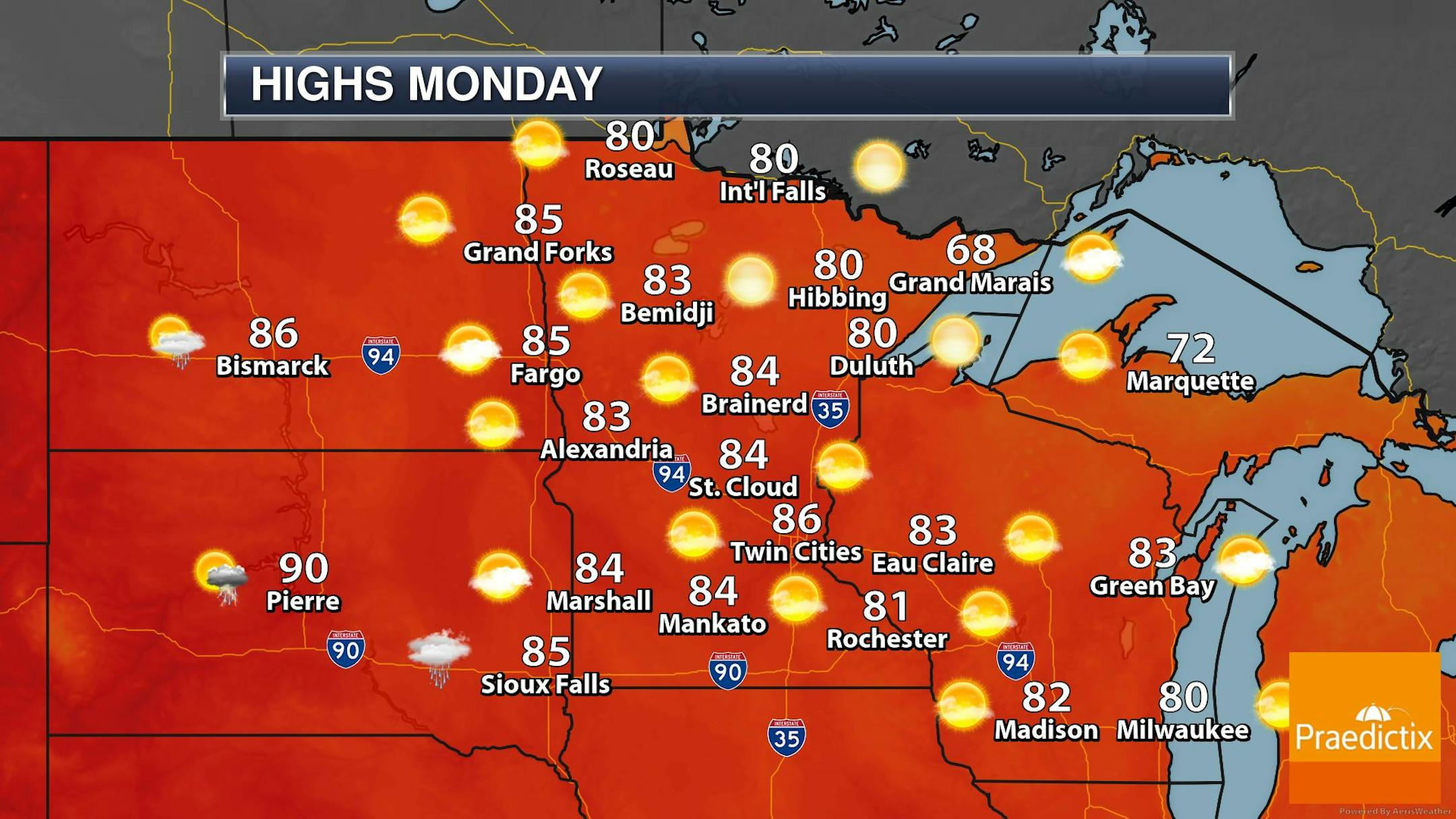
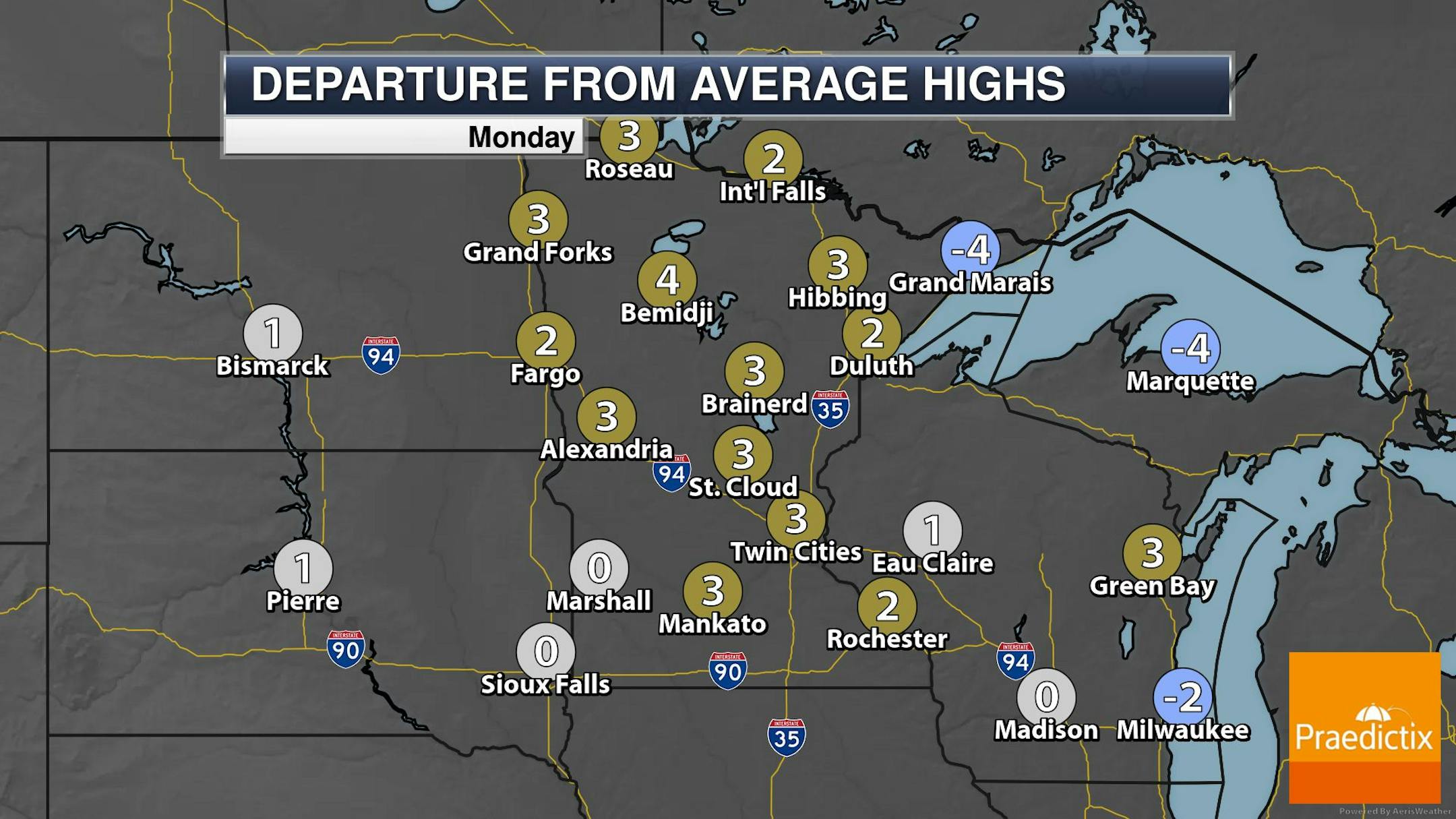
Temps on Monday will warm into the 80s across much of Minnesota, which will be at or slightly above average for this time of the year. Sunshine and dry conditions will be in place across much of the region.

Weather Outlook For Monday (Praedictix/The Minnesota Star Tribune)
Highs From Average on Monday (Praedictix/The Minnesota Star Tribune)

Extended Temperature Outlook For Minneapolis

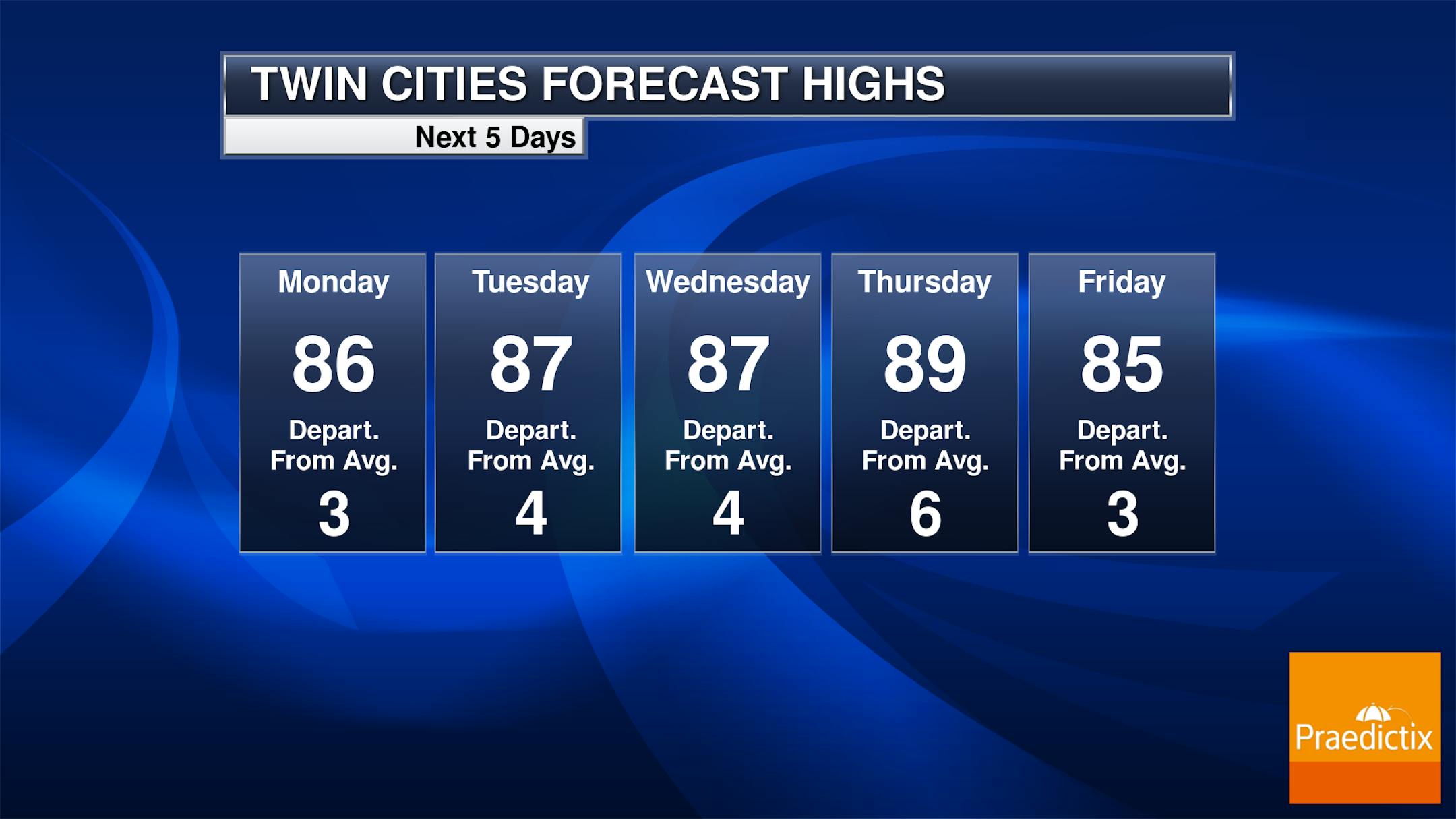
The 5 day temperature outlook for Minneapolis shows temps warming into the mid/upper 80s, which will be above average by a few degrees for the end of July and the early part of August.

5 Day Temperature Outlook For Minneapolis (Praedictix/The Minnesota Star Tribune)

Stickier Dewpoints Into the Week Ahead

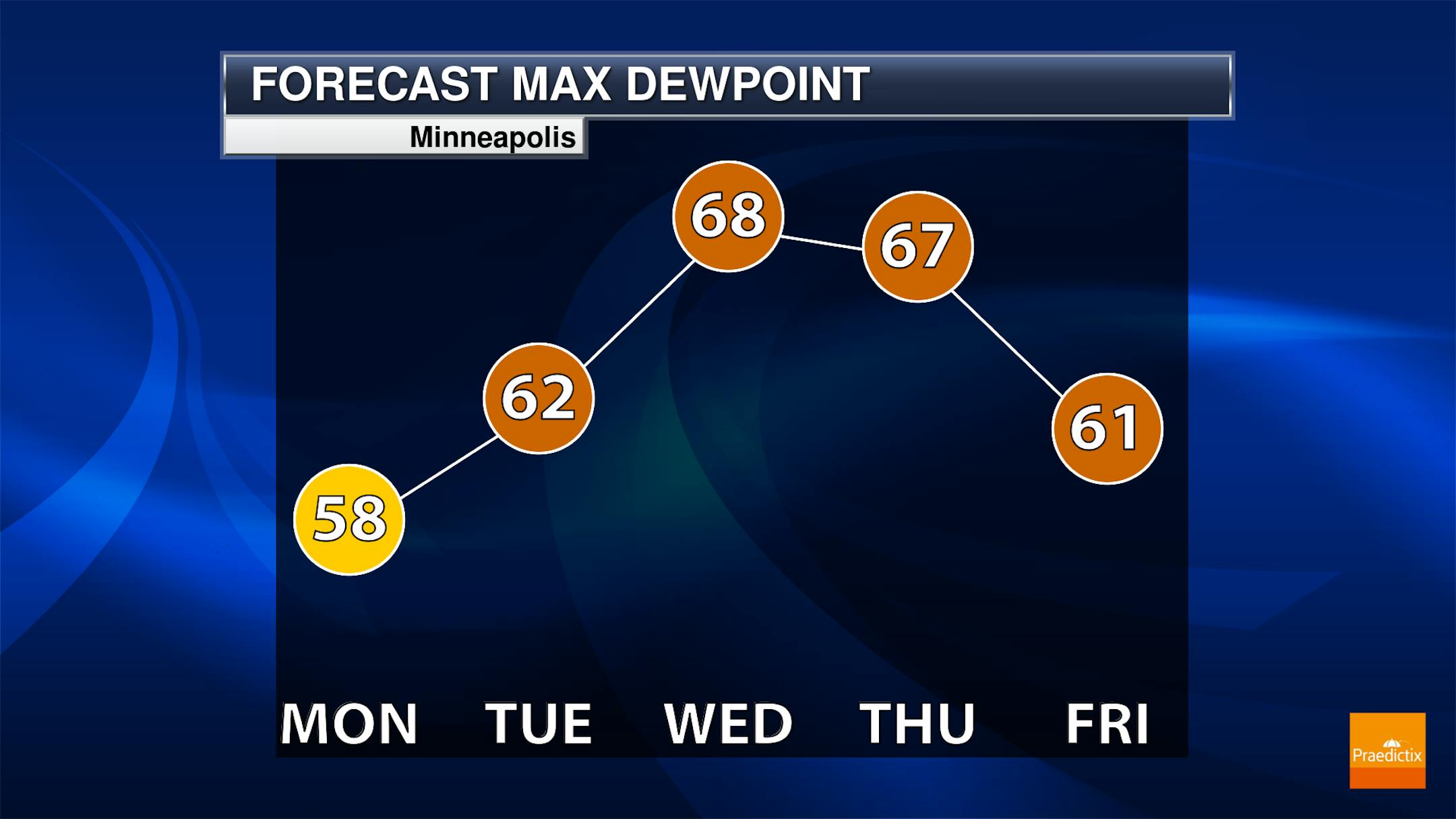
The dewpoint forecast over the next few days shows a gradual increase as we approach midweek. Readings by Wednesday and Thursday will be quite sticky and humid, but it should last too long.

Daily Dewpoint Outlook For Minneapolis (Praedictix/The Minnesota Star Tribune)

Extended Weather Outlook For Minneapolis

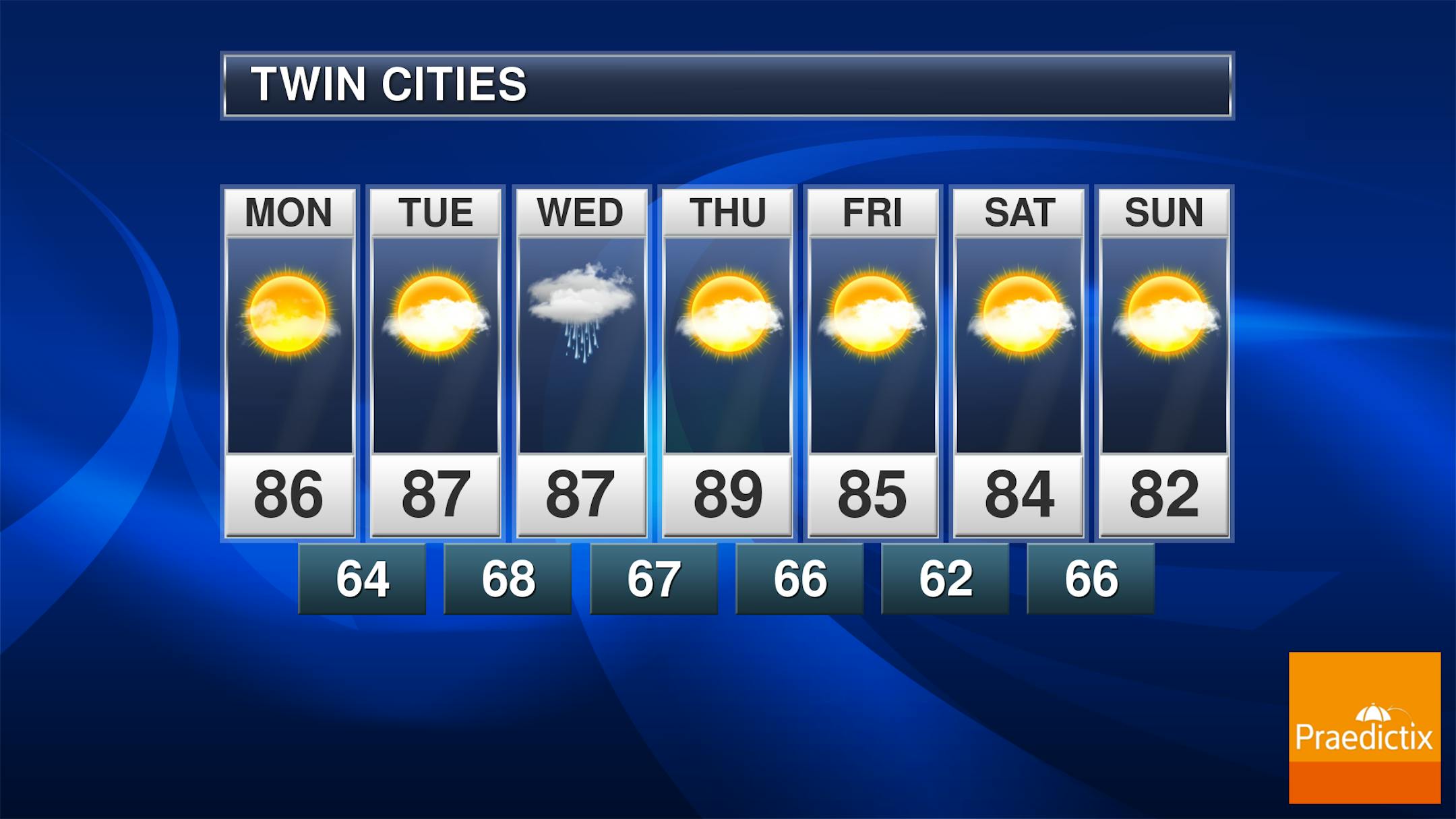
The extended weather outlook for the Twin Cities shows warmer temps with readings in the mid/upper 80s with more humid weather. Highs could approach 90F once again midweek, but it'll be brief. Temps into the week look a little cooler and back to near average readings.

7 Day Weather Outlook For Minneapolis (Praedictix/The Minnesota Star Tribune)

Extended Temperature Outlook For Minneapolis

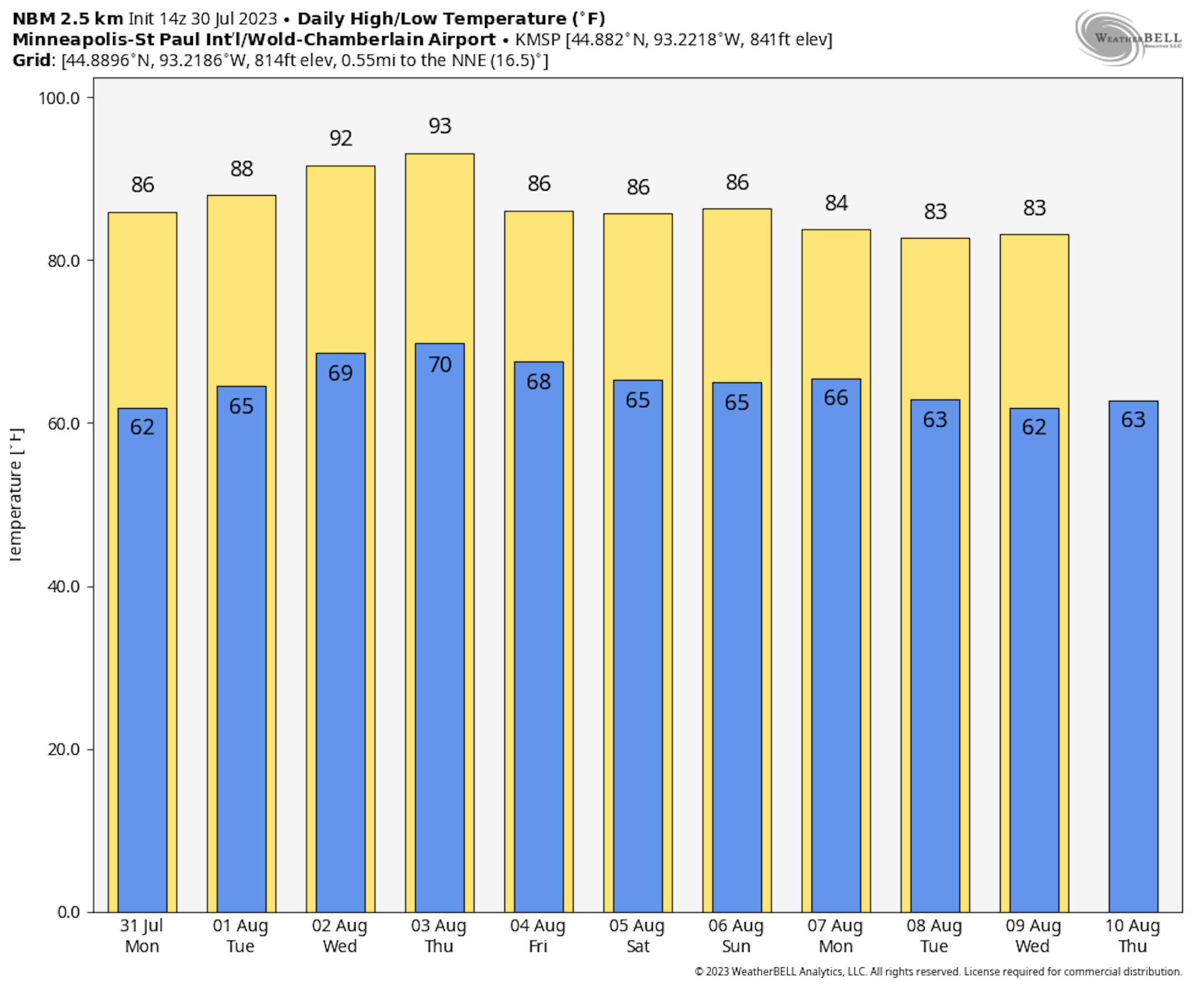
The extended temperature outlook for Minneapolis shows a gradual warming trend into the 90s this week before cooling back to near average into the 2nd week of August.

NBM Extended Temperature Outlook (WeatherBell/The Minnesota Star Tribune)

Weather Outlook

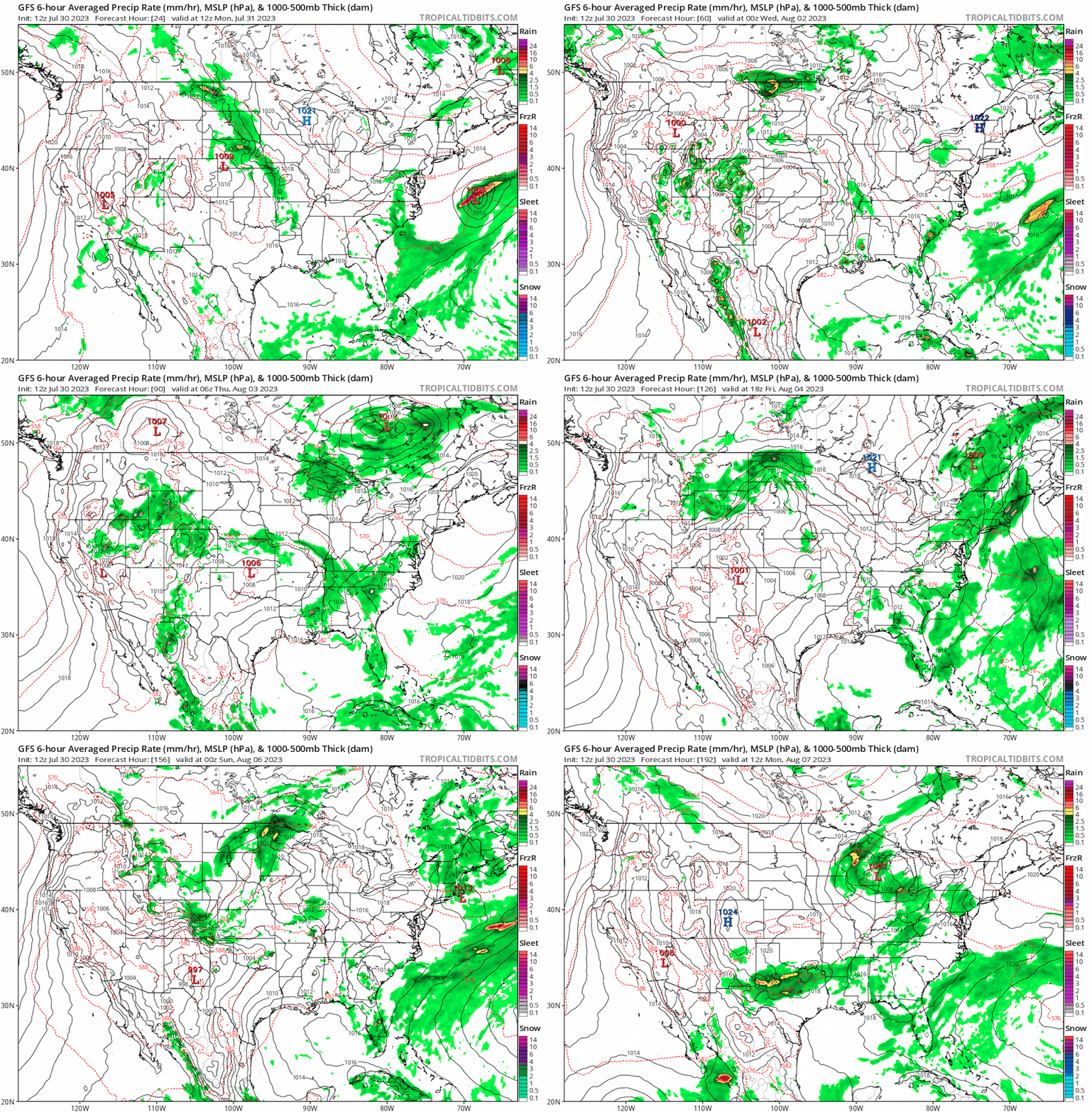
There will still be a few aggressive thunderstorms across parts of the nation over the next 5 to 7 days. Some of the rainfall could be heavy across the Intermountain-West and the Front Range of the Rockies. There could also be heavy rains from the Ohio Valley to the Mid-Atlantic States.

Advertisement
Weather Outlook Through Next Weekend (Tropical Tidbits/The Minnesota Star Tribune)

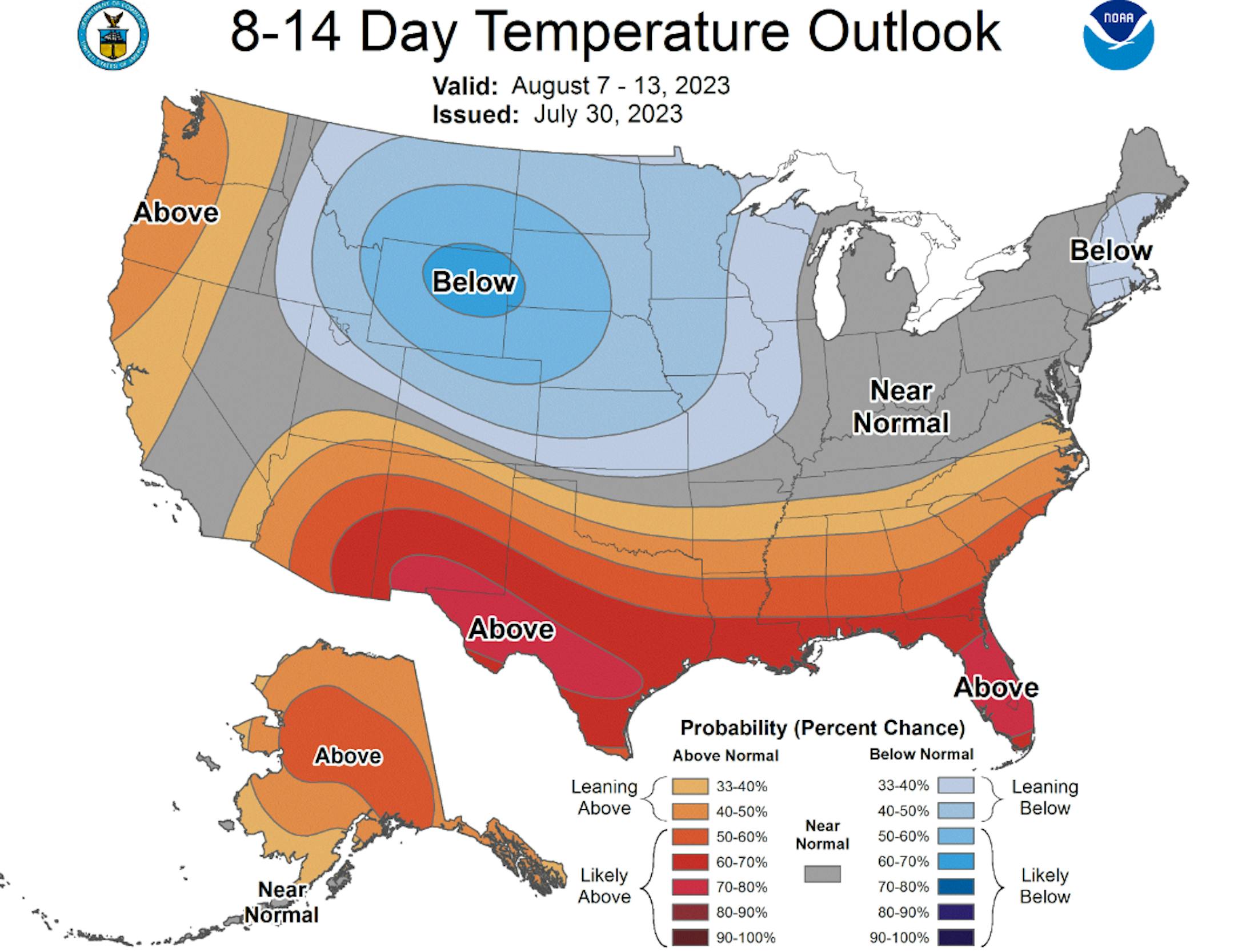
8 to 14 Day Temperature Outlook

According to NOAA's Climate Prediction Center, the 8 to 14-day temperature outlook shows cooler than average temps across the High Plains and the Midwest. Warmer than average readings will continue across the Southern US.

8 to 14 Day Temperature Outlook (NOAA CPC/The Minnesota Star Tribune)

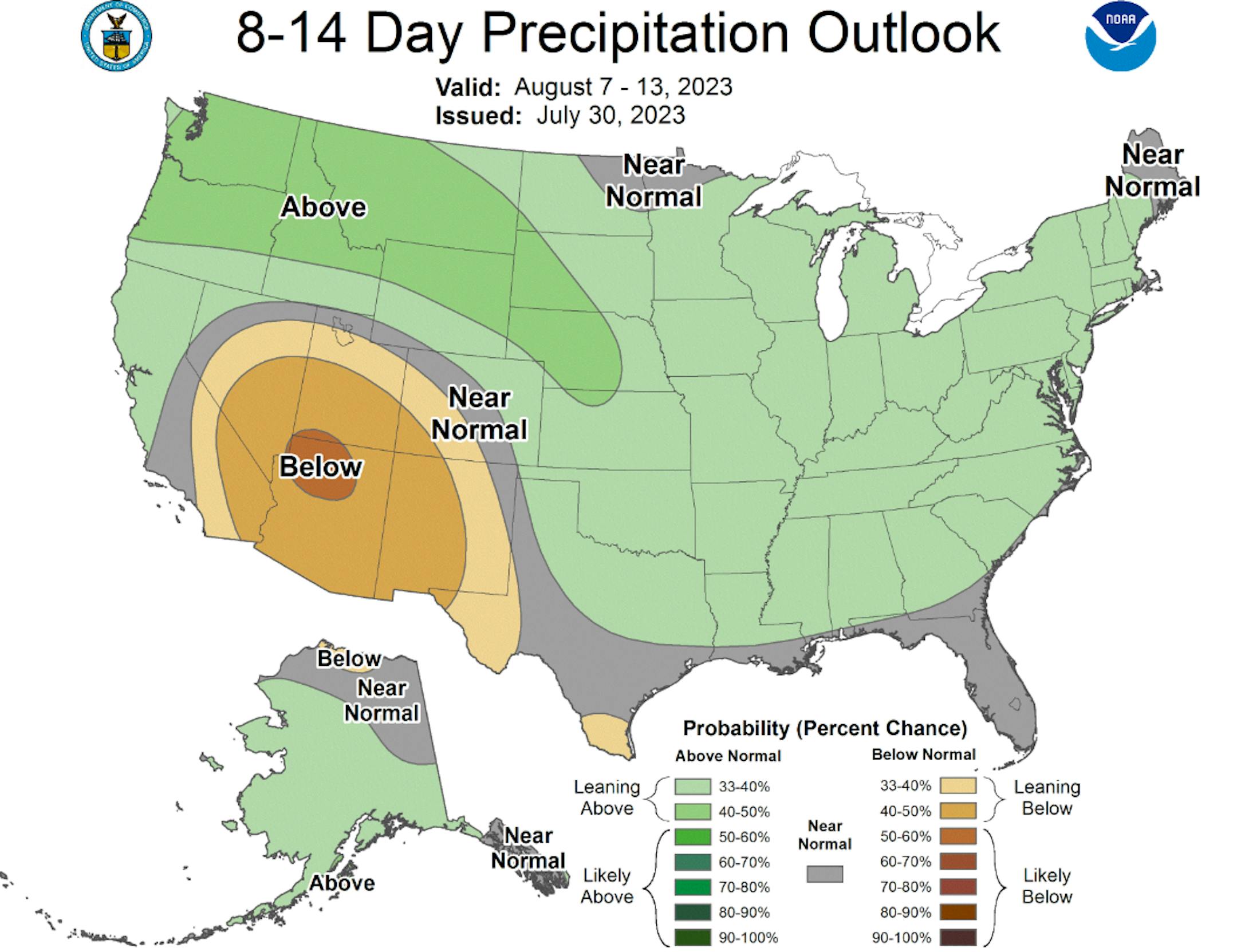
8 to 14 Day Precipitation Outlook

The extended precipitation outlook shows more active weather across much of the nation and especially in the Pacific Northwest. Meanwhile, folks in the Southwest will be drier and quieter.

8 to 14 Day Precipitation Outlook (NOAA CPC/The Minnesota Star Tribune)

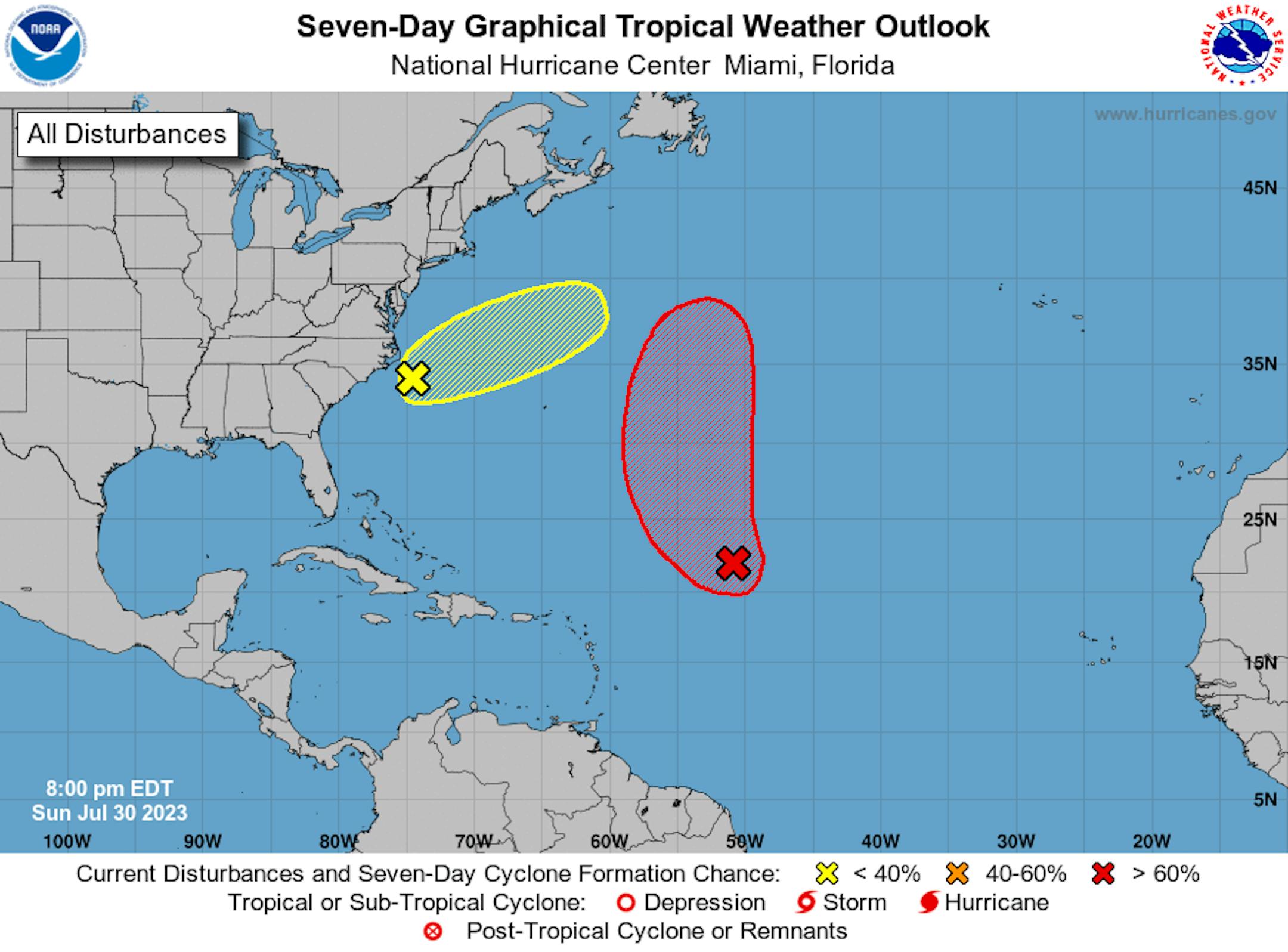
Watching The Tropics

According to NOAA's NHC, the wave in the Central Atlantic could be our next tropical system. Thankfully, we don't have any major systems in the immediate future.

7 Day Tropical Outlook (NOAA NHC/The Minnesota Star Tribune)

August Outlook: A Bigger, Brighter Moon
By Paul Douglas

This year August will bring two full" supermoons", coinciding with when the moon is closest to Earth. On August 1 we enjoy a Sturgeon Supermoon with a Blue Supermoon on August 30. If anyone asks, a supermoon is about 8% bigger and 16% brighter than a normal full moon.

After a few stormy tantrums last week, this week looks quiet into Friday with little rain, and temperatures warming up over time. Daytime highs may top 90F in the metro the latter half of this week, before cooling back into the 80s next week. The normal MSP high now is 83F (it has dropped one degree since mid-July) but I suspect a super-charged El Nino warm phase of the Pacific Ocean will keep us consistently warmer right into winter. NOAA's Climate division predicts a cooler than normal August for much of Minnesota, but I'm not convinced it will cool off much in coming weeks. Temperatures in the atmosphere, arctic and the world's oceans are at historically high levels.

Over 1,000 fires are burning across Canada. Expect episodes of smoke.

Advertisement

Extended Forecast

MONDAY: Warm sunshine. Winds: S 8-13. High: 84.

MONDAY NIGHT: Mostly clear and quiet. Winds: SE 5. Low: 65.

TUESDAY: Blue sky, near normal temperatures. Winds: SE 5-10. High 85.

WEDNESDAY: Hazy sun, heating up. Winds: S 7-12. Wake-up: 68. High: 89.

THURSDAY: Steamy and sticky with sunshine. Winds: W 8-13. Wake-up: 70. High 91.

FRIDAY: Sunny, muggy and hot. Winds: N 8-13. Wake-up: 71. High 90.

SATURDAY: A few strong T-storms possible. Winds: SE 8-13. Wake-up: 72. High: 88.

SUNDAY: Mix of clouds and sun, cooler. Winds: NW 10-20. Wake-up: 68. High: 83.

This Day in Weather History

July 31st

1961: Very heavy rain falls at Albert Lea, where 6.7 inches is recorded in 24 hours.

Average High/Low for Minneapolis

July 31st

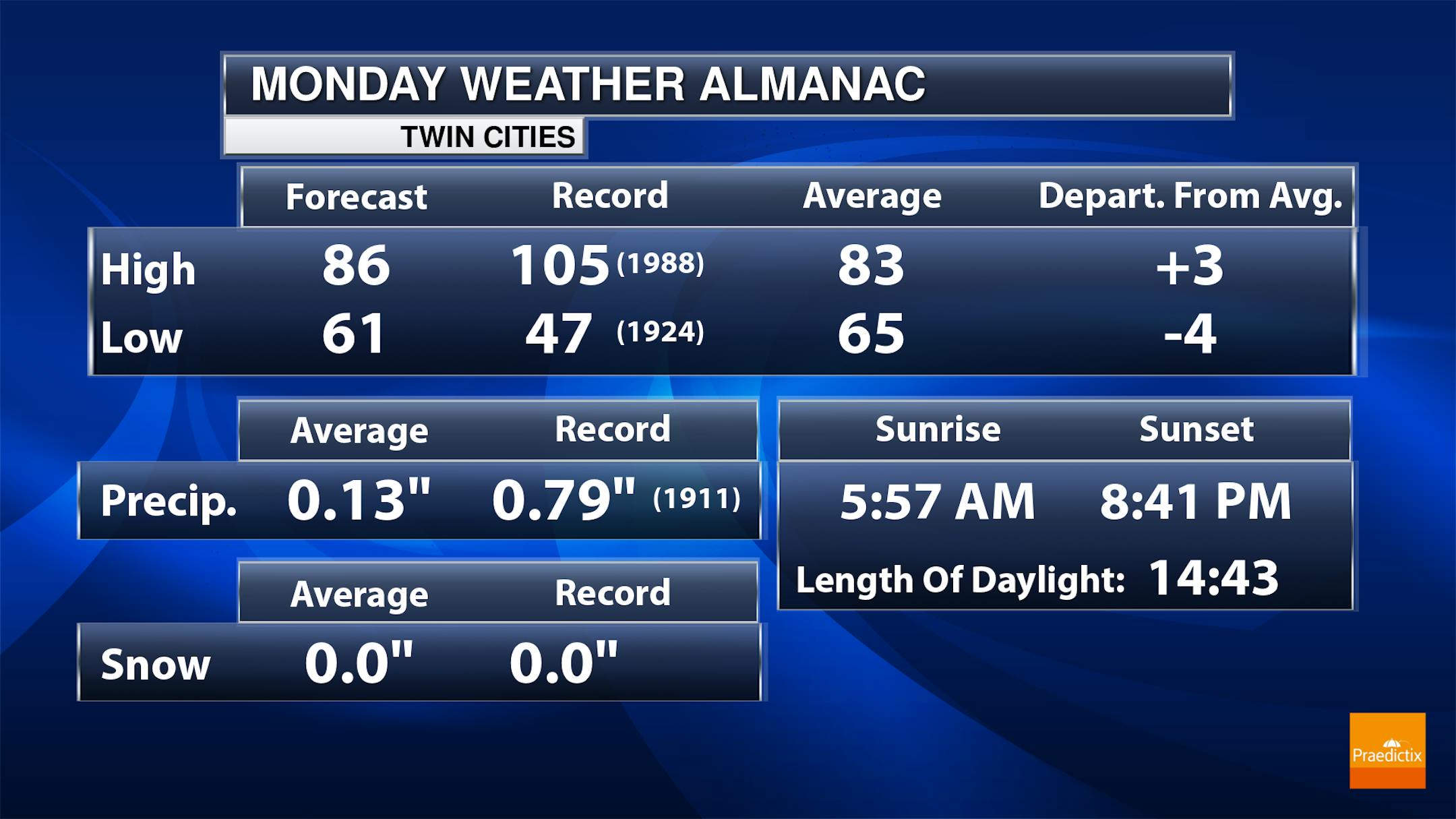
Average High: 83F (Record: 105F set in 1988)

Average Low: 65F (Record: 47F set in 1924)

Record Rainfall: 0.79" set in 1911

Record Snowfall: NONE

Twin Cities Almanac For July 31st (Praedictix/The Minnesota Star Tribune)

Sunrise/Sunset Times for Minneapolis

July 31st

Sunrise: 5:57am

Sunset: 8:41pm

Hours of Daylight: ~14 hours & 43 minutes

Daylight LOST since yesterday: 2 Minutes & 20 Seconds

Daylight LOST since Summer Solstice (June 21st): ~ 53 minutes

Moon Phase for July 31st at Midnight

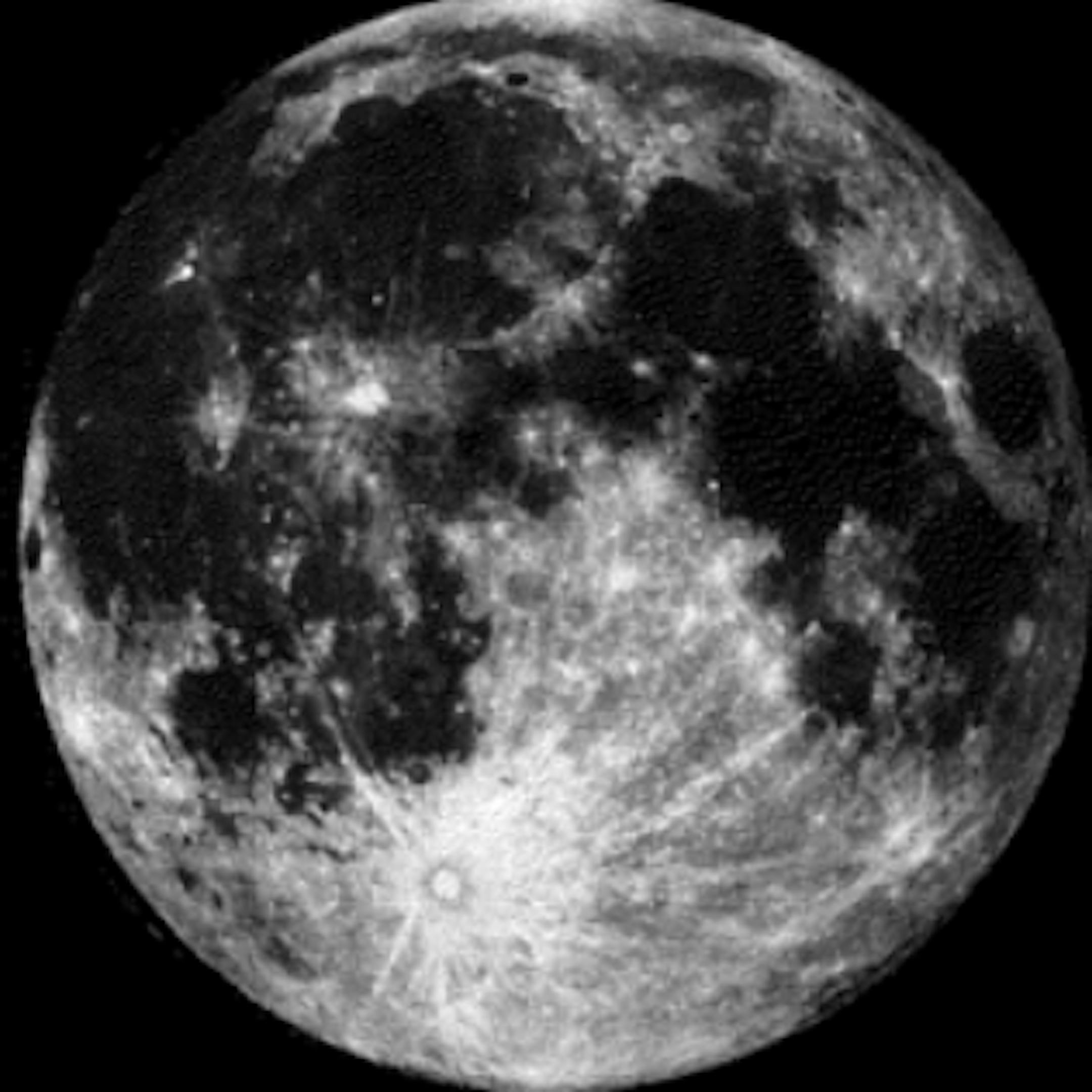
0.5 Days Until Full "Sturgeon" Moon - Aug. 1 at 1:32 p.m. CDT - The Sturgeon Moon, when this large fish of the Great Lakes and other major bodies of water like Lake Champlain is most readily caught. A few tribes knew it as the Full Red Moon because the moon rises looking reddish through sultry haze, or the Green Corn Moon or Grain Moon.

Moon Phase For July 29th at Midnight (The Minnesota Star Tribune)

National High Temps on Monday

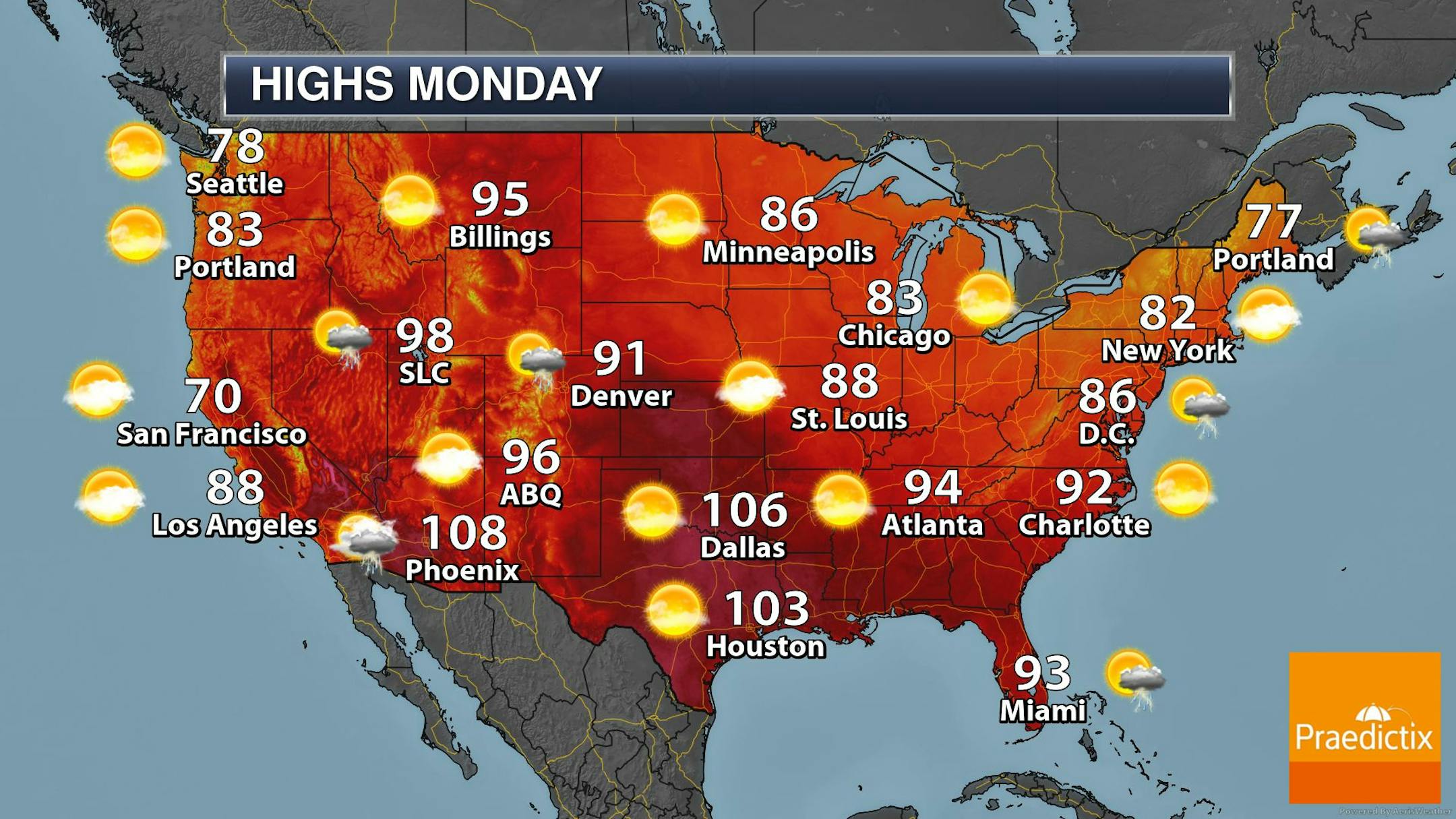
Temperatures on Monday will be very steamy across the Southern US, where readings will warm into triple digits. Incredibly, temps in Phoenix, will be cooler with readings falling below 110F for the first time in nearly 1 month.

National Weather Outlook For Monday (Praedictix/The Minnesota Star Tribune)
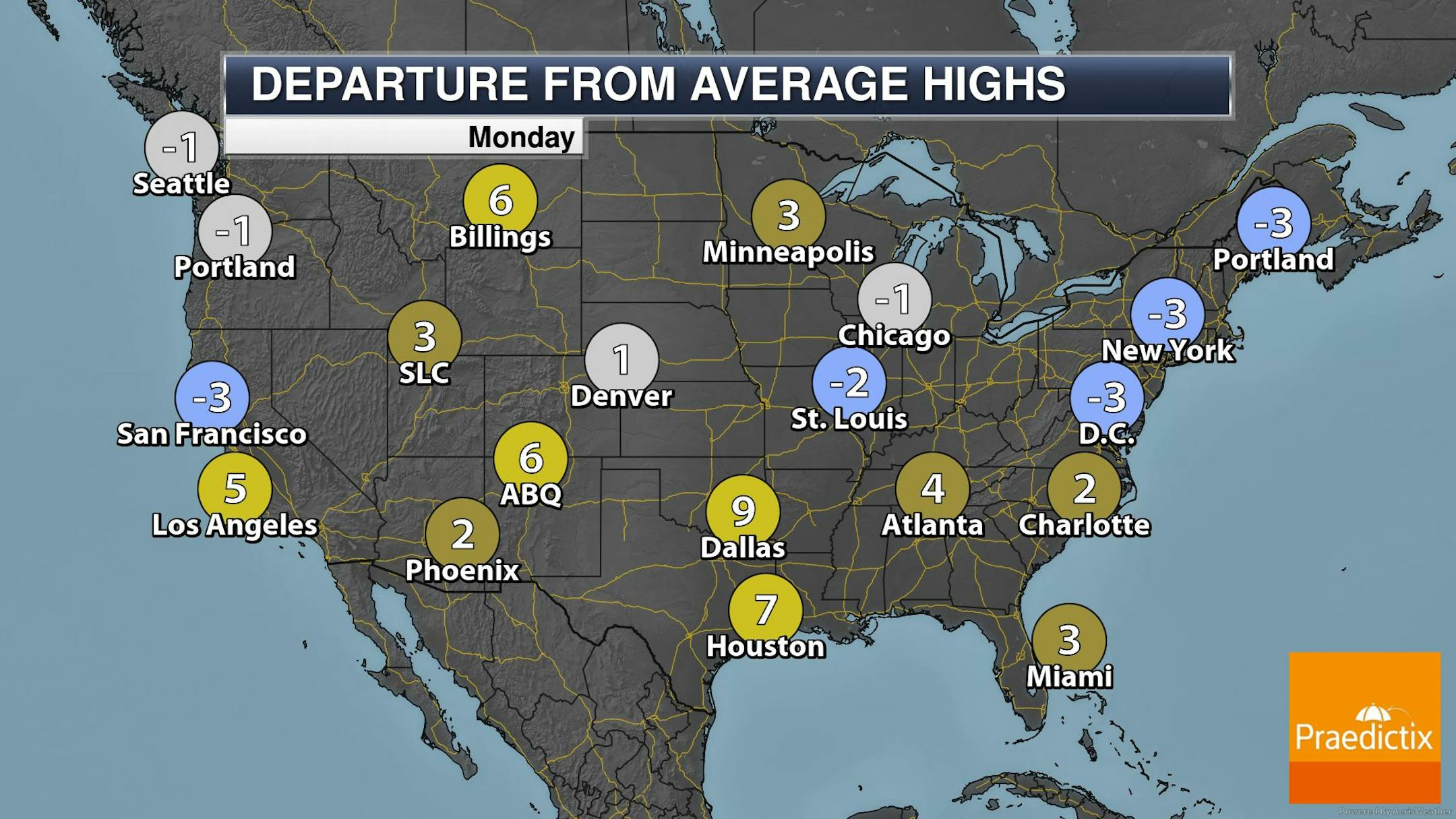
National Highs From Average on Sunday (Praedictix/The Minnesota Star Tribune)

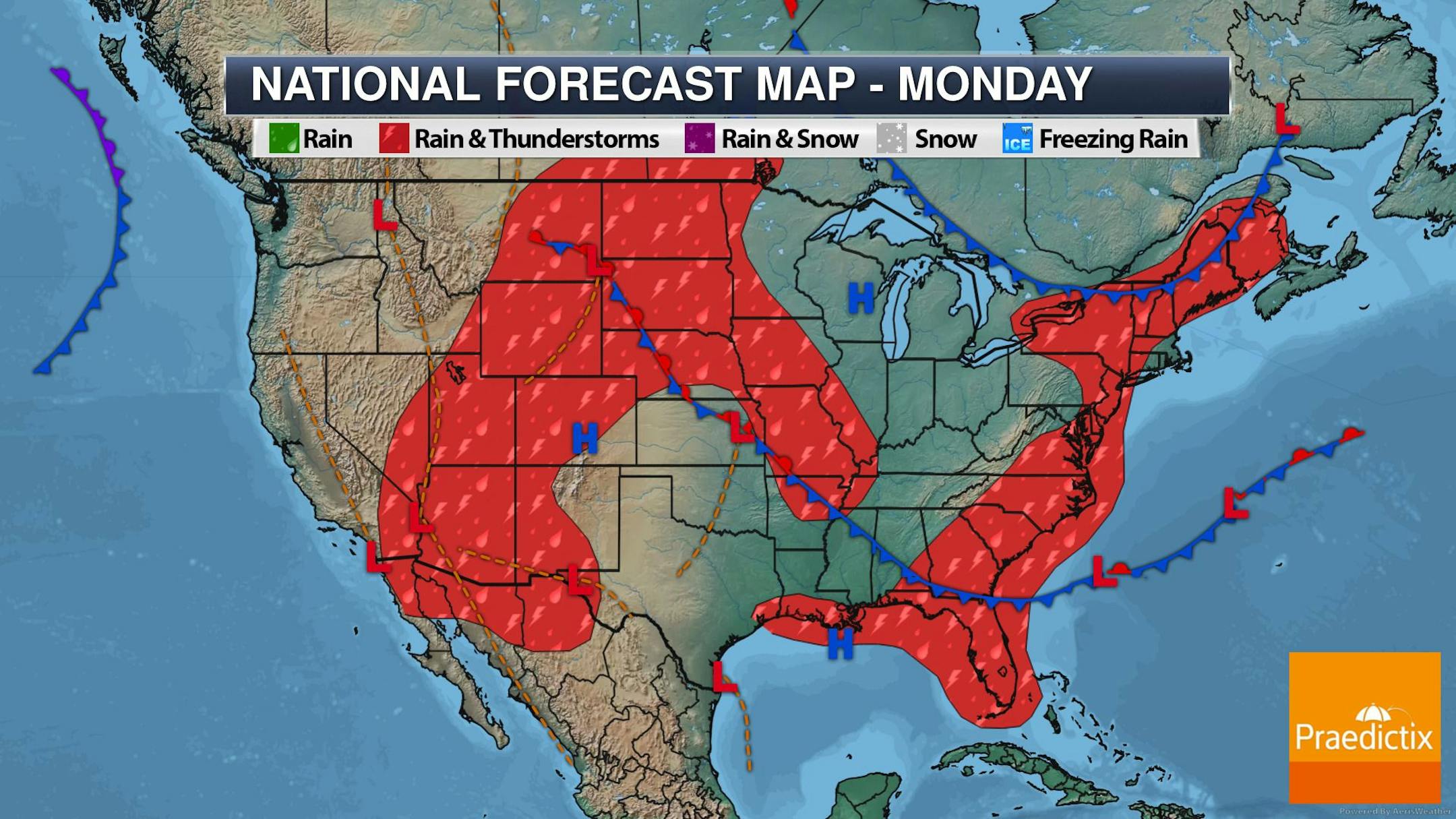
National Weather Monday

The weather outlook on Monday will feature showers and storms from the Desert Southwest the High Plains. Some of the storms could be a little on the strong side with locally heavy rainfall.

National Weather Map For Monday (Praedictix/The Minnesota Star Tribune)

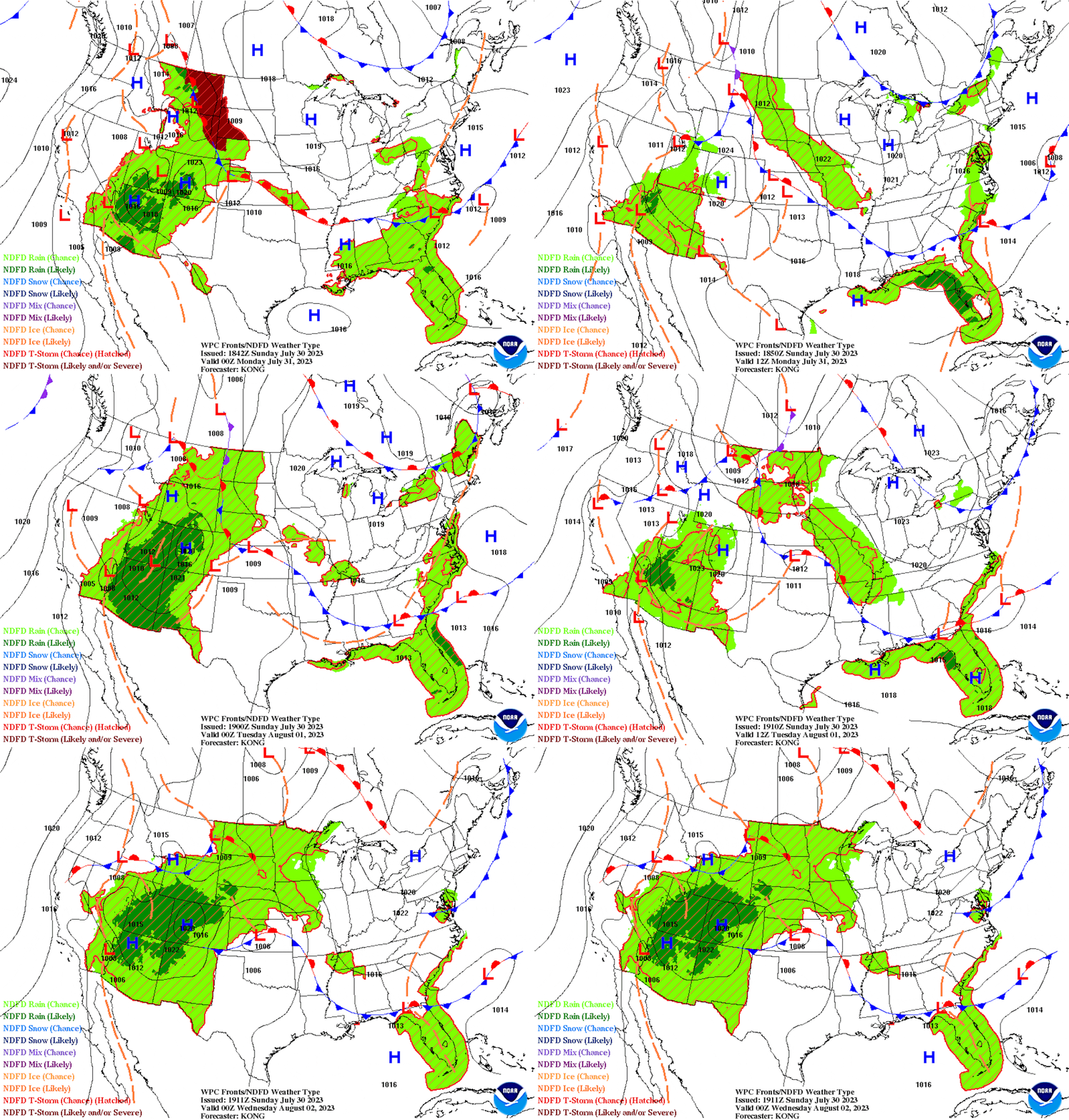
National Weather Outlook

The weather outlook through Tuesday shows scattered storms from the Desert Southwest to the Midwest. Some of the storms could be strong to severe with locally heavy rainfall.

Weather Outlook Through Tuesday (NOAA WPC/The Minnesota Star Tribune)

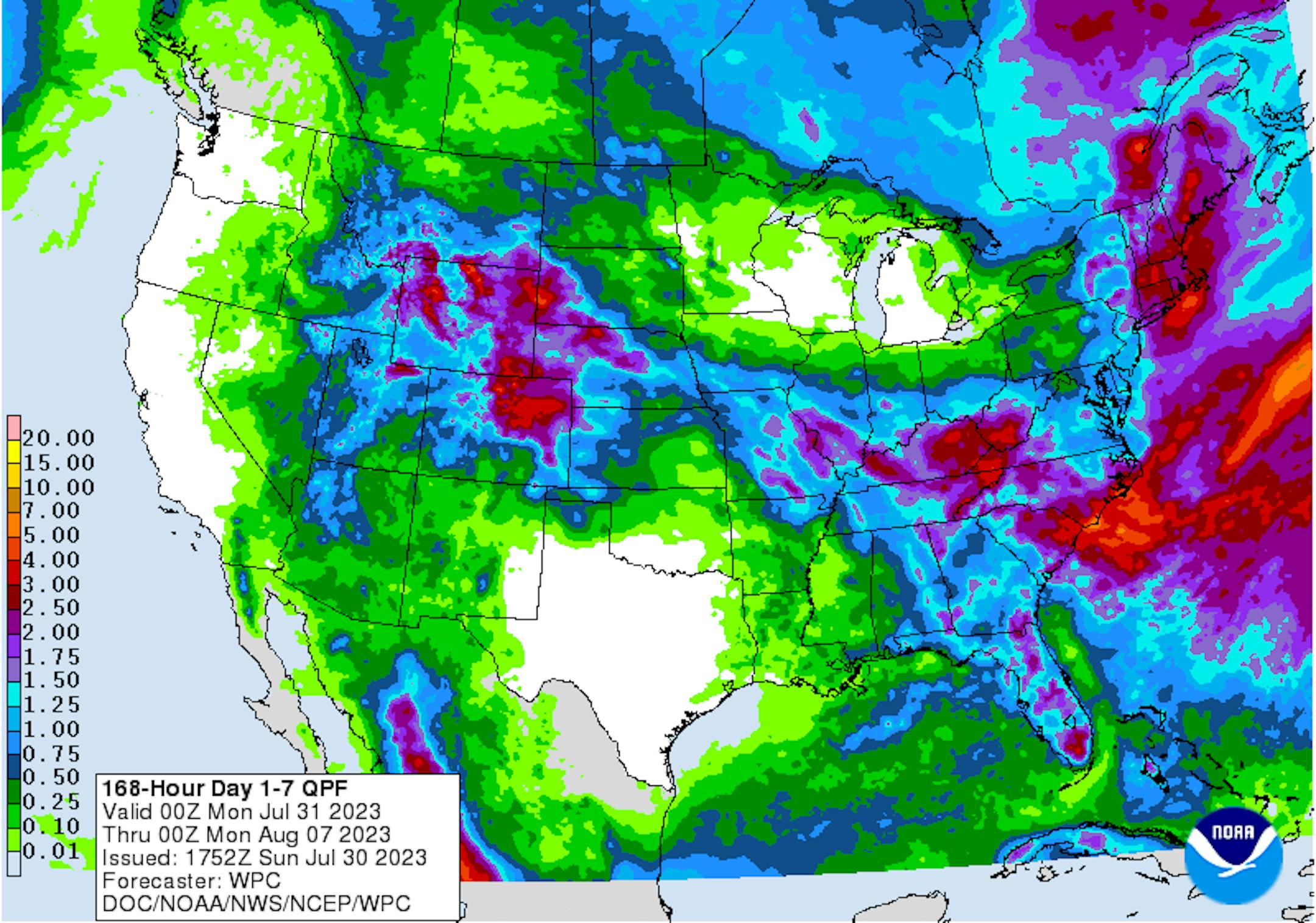
Extended Precipitation Outlook

According to NOAA's Weather Prediction Center, the extended precipitation outlook shows heavier precipitation across parts of the Western US and Plains. Storms and heavy rainfall will be possible across the Ohio Valley and along the East Coast.

Extended Precipitation Outlook (NOAA WPC/The Minnesota Star Tribune)

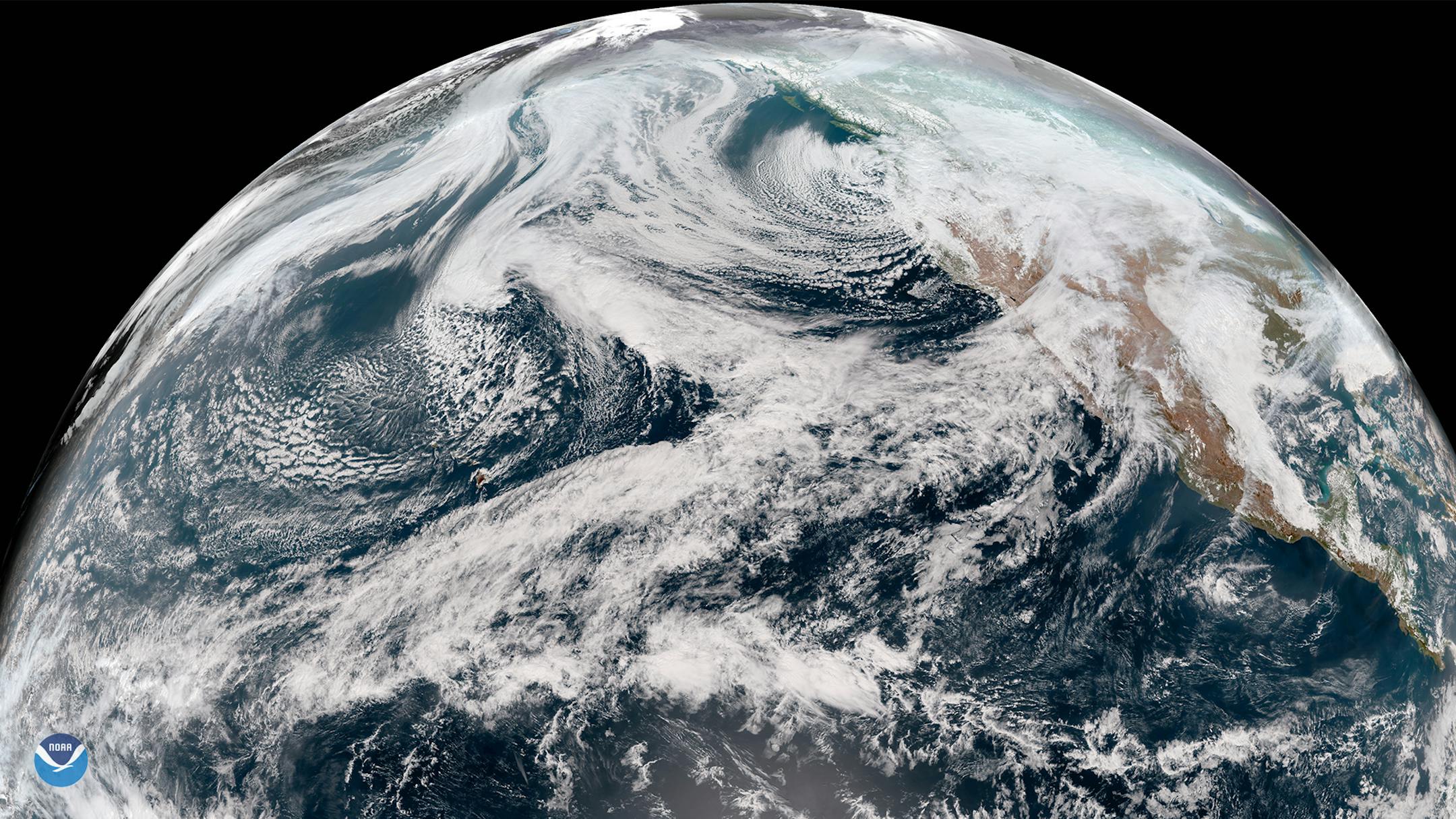
Climate Stories

(NOAA/The Minnesota Star Tribune)

"How cloud seeding is giving a boost to Nevada's water supply"

"In mountain peaks across the West, it's their job to make it snow. No, they're not wizards, even if the work they do seems like magic. For scientists at Nevada's Desert Research Institute, using cloud seeding to increase snowfall has been part of the job for more than half a century, dating back to the early 1960s. It's a practice that research has shown can add more than a little extra snow to the winter totals. And as states like Nevada grapple with dwindling water supplies along the Colorado River, which supplies 90 percent of the water in the Las Vegas Valley, it's one the Silver State is investing in. "This is inexpensive. It works. It's pretty easy to do. And it's safe," said Frank McDonough, who leads Desert Research Institute's cloud seeding program. "It's kind of a no-brainer."

"Solar Plasma Explosion Hits the Solar Orbiter Spacecraft"

A massive explosion on the far side of the sun that collided with a spacecraft was so large that if it hit the Earth, it could have triggered powerful geomagnetic storms. The coronal mass ejection, or CME, was detected after it burst out of the sun's surface on July 24 by Europe's Solar Orbiter (SolO) spacecraft, which was on the other side of the sun at the time it collided, 32 hours later. Typically, CMEs would take two to three days to reach the SolO craft, meaning that this CME was a powerful and fast-moving one. Imagery from the Solar and Heliospheric Observatory (SOHO) satellite around Earth also spotted the halo of the CME as it spread out around the sun, measuring it as traveling at around 3.4 million mph.

"Increasing levels of humidity are here to make heat waves even worse"

"Because you're a smooth-skinned mammal, no weather feels quite as oppressive as a humid heat wave. The more water vapor in the air, the less efficiently your sweat can evaporate and carry excess heat away from your skin. That's why 90° Fahrenheit in humid Miami can feel as bad as 110° in arid Phoenix. Climate change has supercharged this summer's exceptionally brutal heat all around the world—heat waves are generally getting more frequent, more intense, and longer. But they are also getting more humid in some regions, which helps extend high temperatures through daytime peaks and into the night. Such relentless, sticky heat is not just uncomfortable, but sometimes deadly, especially for folks with health conditions like cardiovascular disease."

Thanks for checking in and don't forget to follow me on Twitter @TNelsonWX

@TNelsonWX (The Minnesota Star Tribune)
about the writer

about the writer

Todd Nelson

See Moreicon
Advertisement