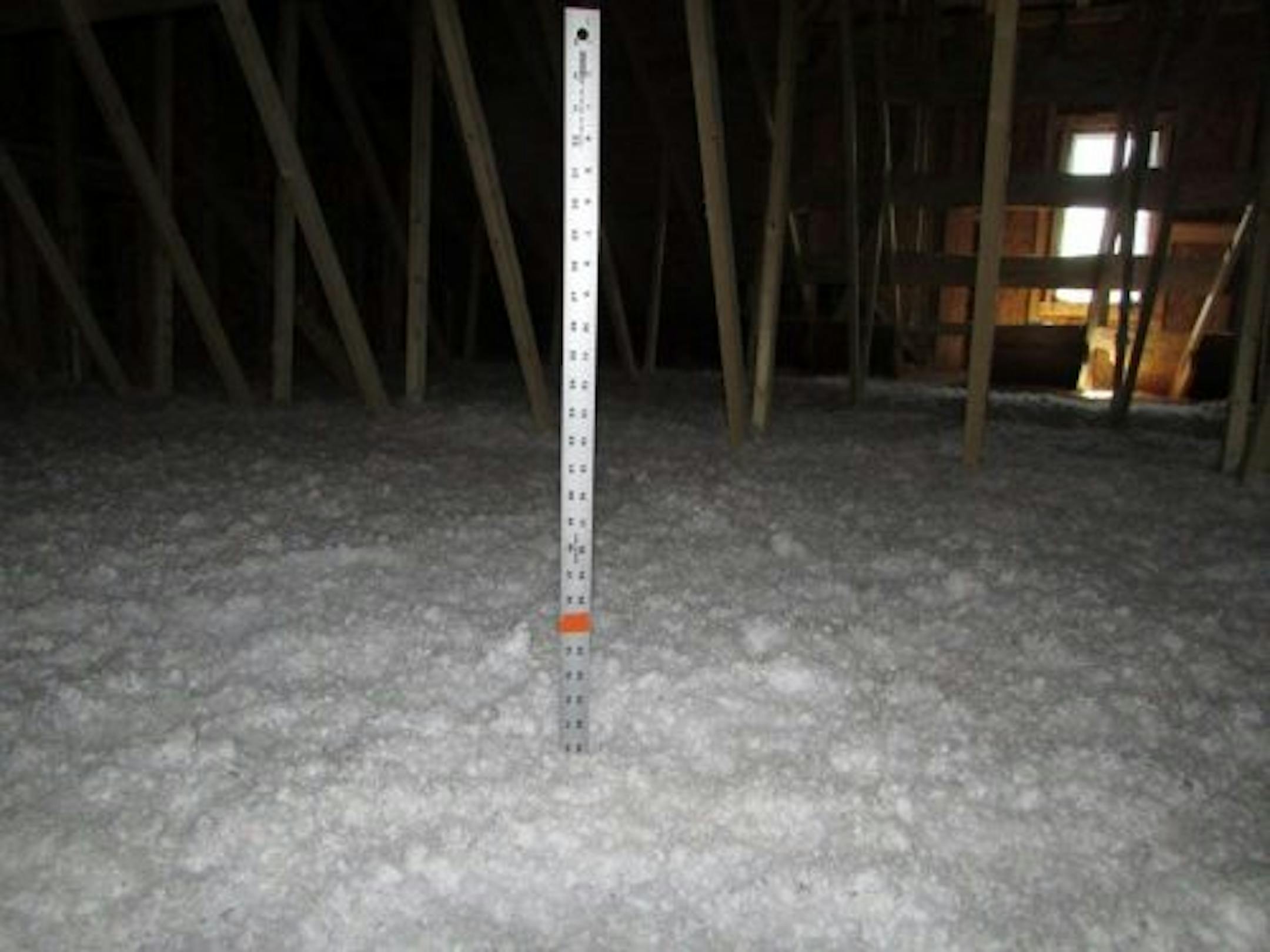
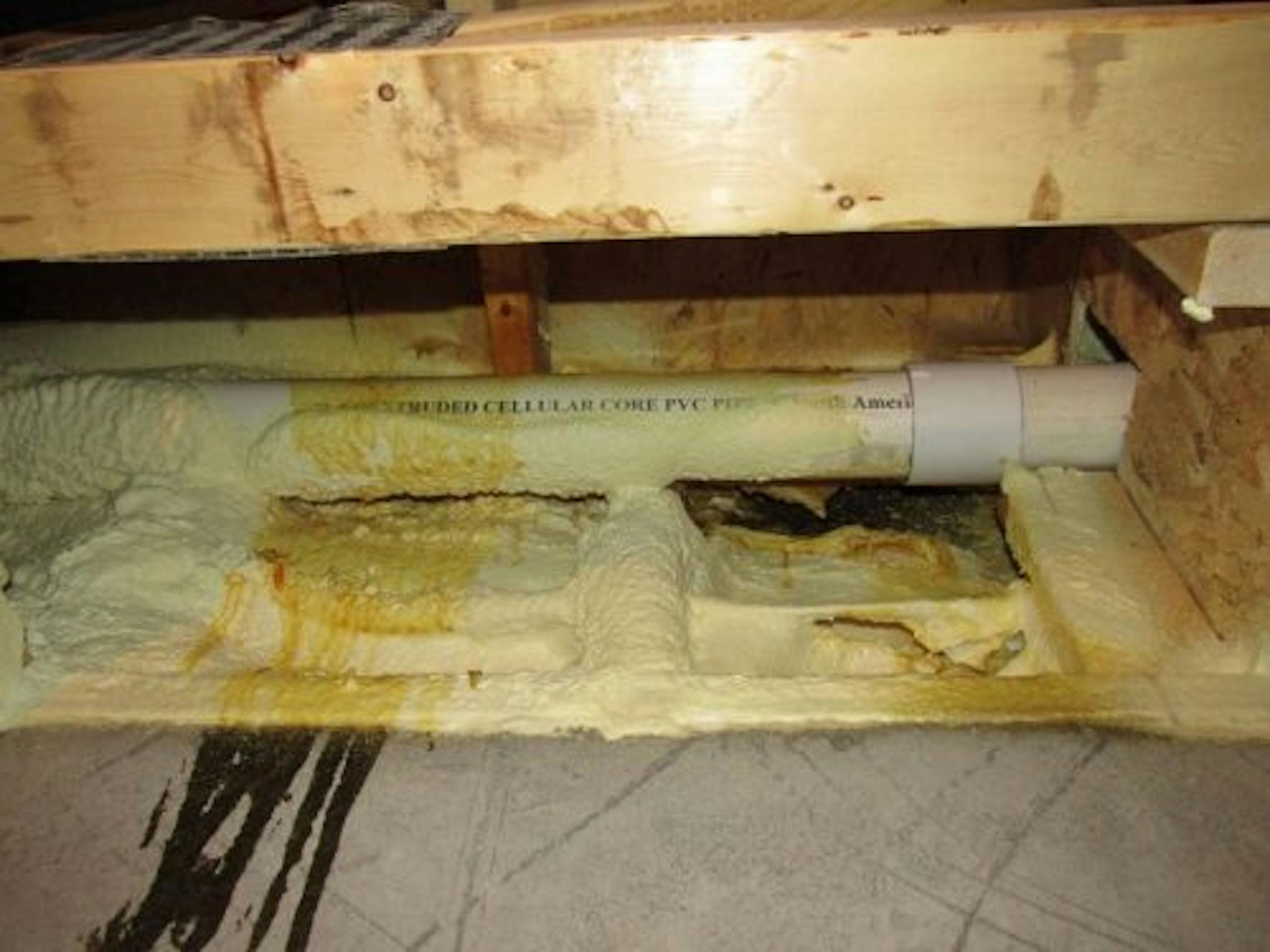
What's the best attic insulation? That depends on your definition of "best". What's going to perform the best is definitely not the most cost-effective way to insulate an attic. But surely, you already knew that.
And I didn't call you Shirley.
First, let's discuss the most common types of insulation available for attics; spray foam, loose-fill fiberglass, cellulose, and fiberglass batts. Those aren't the only types available, but they make up the vast majority of what's used in Minnesota attics. For the listed R-values below, this refers to the material's ability to resist the transfer of heat and is all per-inch. The higher the number, the better. The minimum R-value for a new Minnesota attic is R-49.
Fiberglass Batts
Unfortunately, the easiest way to add insulation to just about any place in your home is to install fiberglass batts. Fiberglass batts are typically the worst insulation for any job, but they're easy to pick up in the store and easy to roll out, so people use them. The image below shows an atrocious installation at a two-year-old home in an upscale neighborhood of an inner-ring suburb of the Twin Cities. Yep, this passed the city inspection.
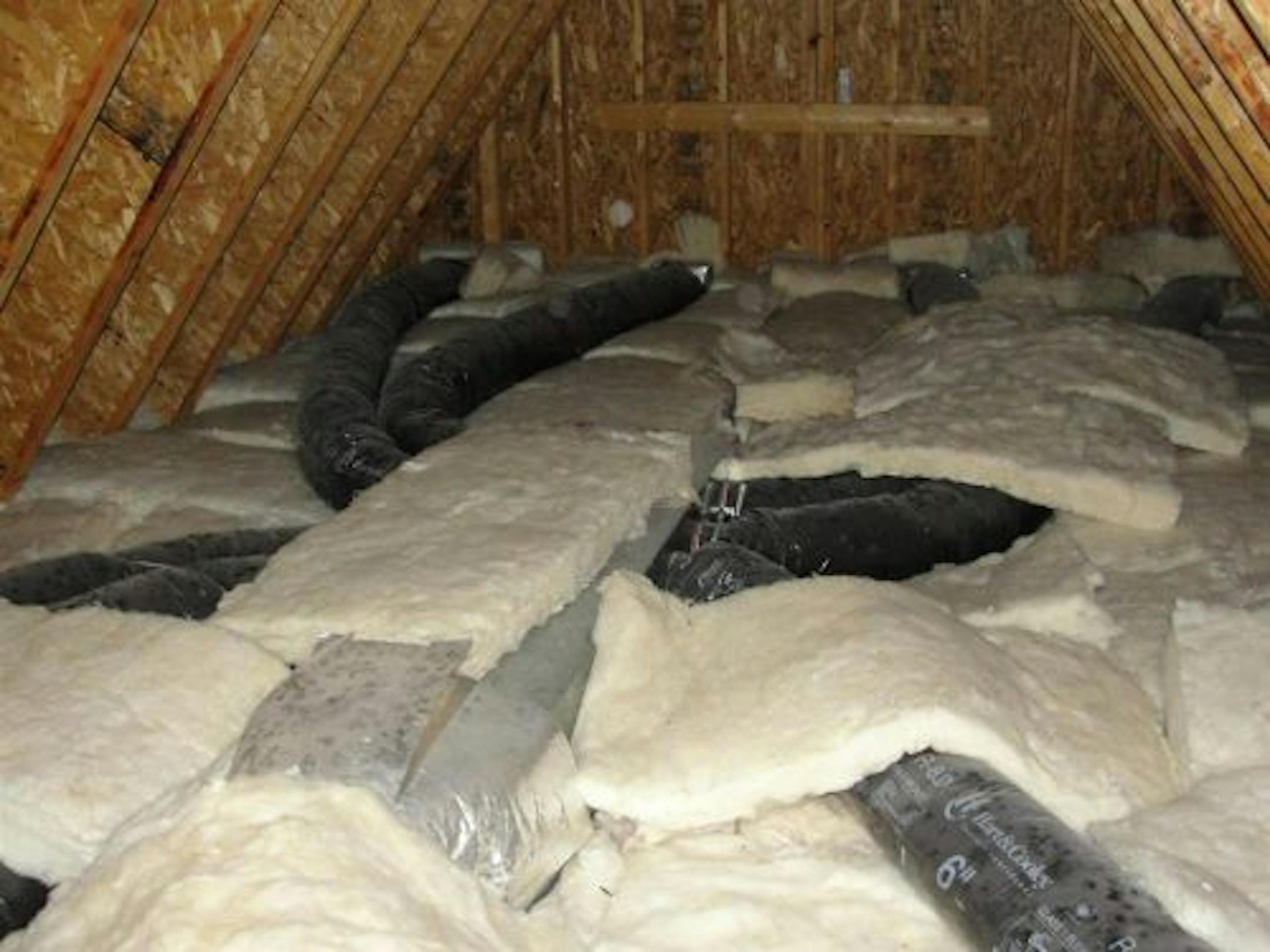
I won't even discuss R-value because fiberglass batts have no place in an attic. Just don't go there.
Cellulose
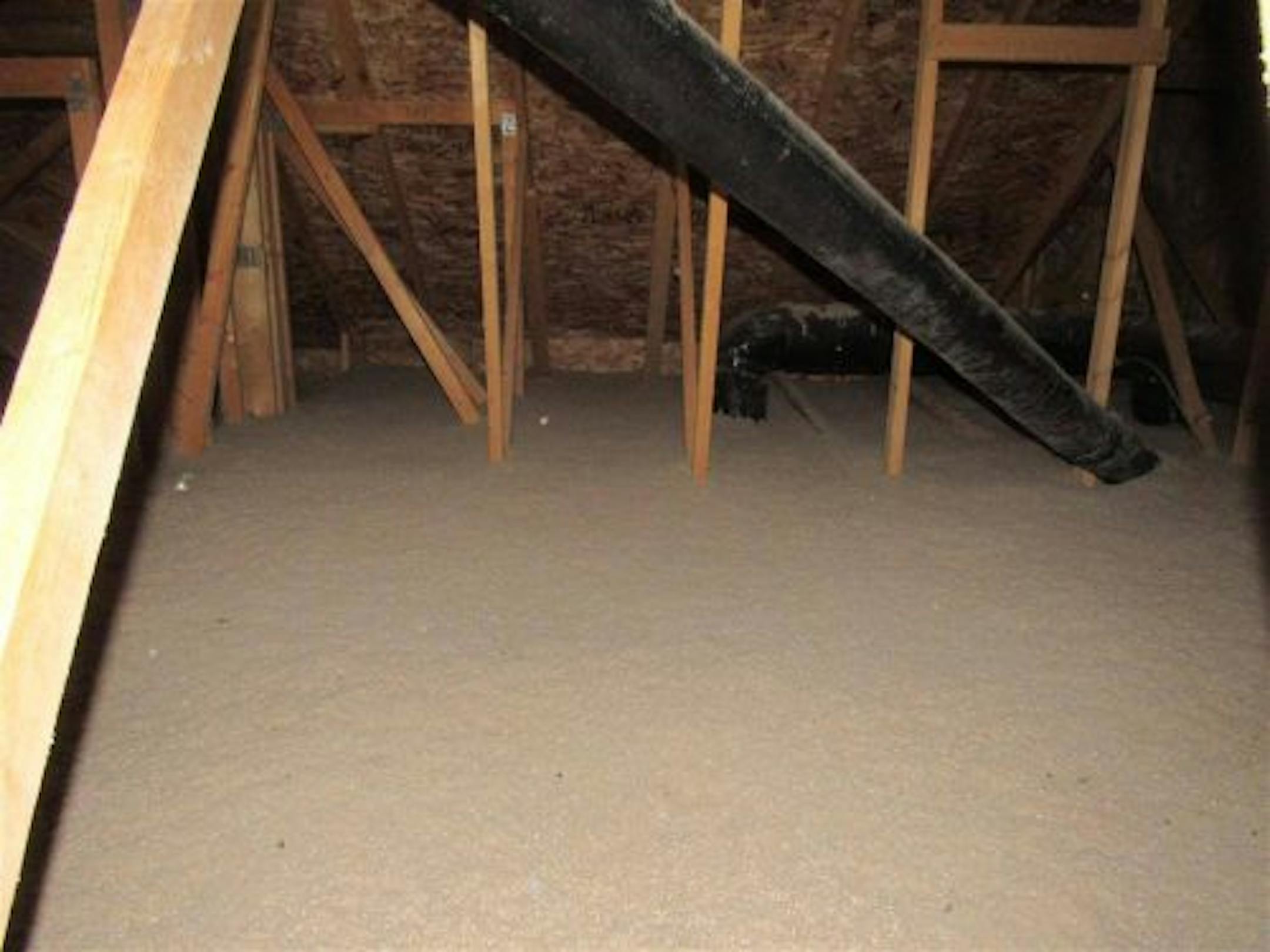
Cellulose is made from recycled, ground-up paper with boric acid added for insect control and fire resistance. If you choose to install cellulose yourself, you can buy the insulation in bags from your local home improvement store. If you buy enough, they'll probably let you use an insulation blower for free. Don't try to buy a single bag and spread it out by hand for spot-insulation; it's way too densely packed (ask me how I know). The DIY cellulose insulation method is very dusty, but it'll get the job done. If you hire a pro, they'll use wet-spray cellulose, which adds a small amount of water to the cellulose to help control the dust and to slightly increase the insulation value per inch.
Cellulose has an R-value of approximately 3.5 per inch. The part that I love about cellulose is its ability to control air movement. While it doesn't actually create an air barrier, it's dense enough to stop most air movement to help control frost in attics. Not completely, of course, but it does a pretty good job. The same cannot be said for fiberglass.
If you check with the Cellulose Insulation Manufacturers Association, they'll assure you that cellulose is definitely your best choice for insulation.