Sticks and stones may break your bones, but words will never hurt you. Or so we were told by our mothers. But events on both sides of continent in recent weeks seem to belie that old adage. A new generation of protesters has come to the conclusion that words do hurt — and that therefore, extreme measures, up to and including physical force, are justified to keep them from being spoken.
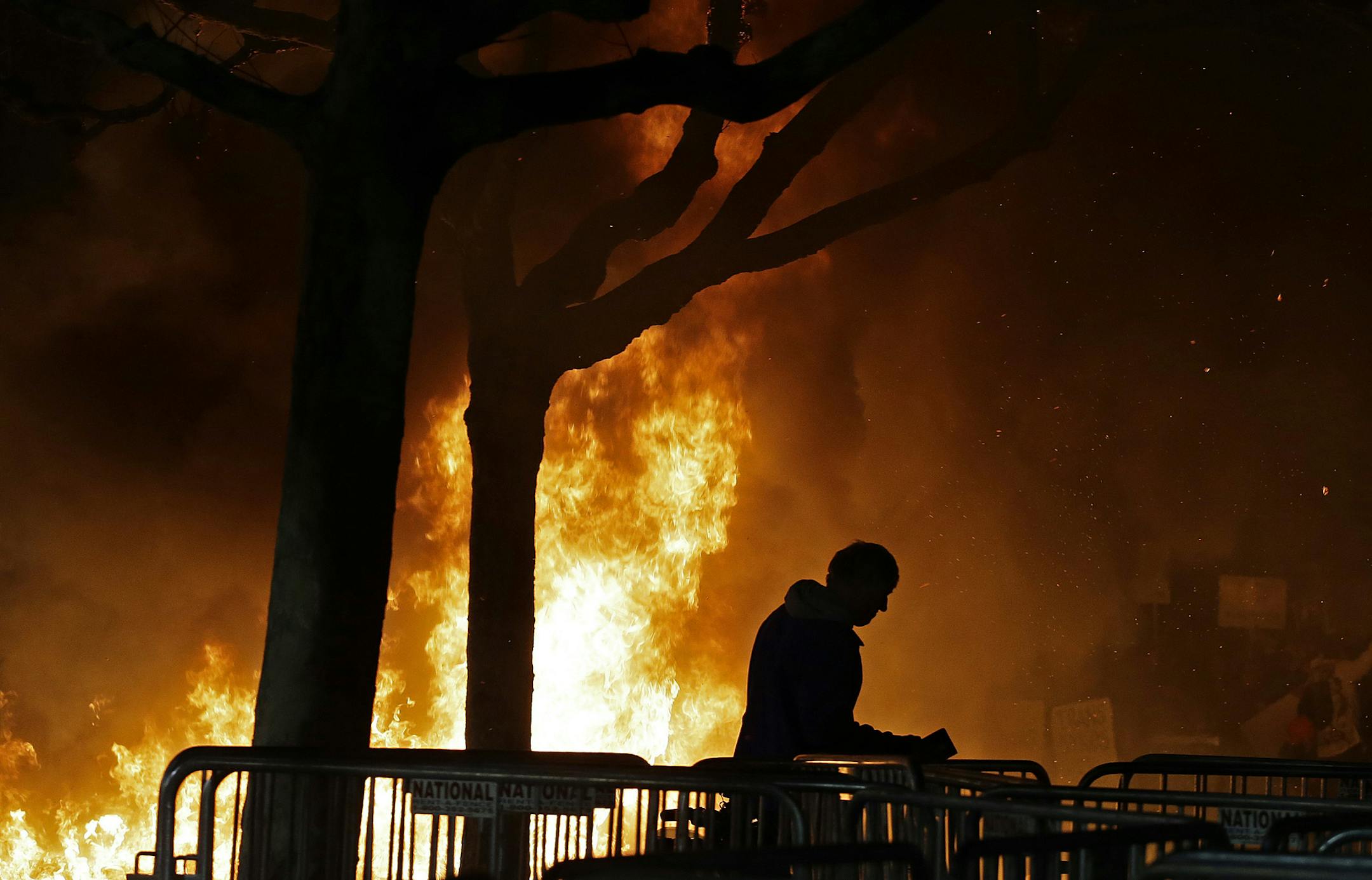
At Berkeley last month, a riot broke out over a speech planned by Milo Yiannopoulos, a sort of professional conservative troll who worked for Breitbart until a scandal over some remarks on pedophilia cost him his job and his book contract. This was not simply setting things on fire or breaking a few windows (though those would have been quite bad enough); multiple people seem to have been beaten by the "antifas" (anti-fascists). In the videos that have been released so far, the anti-fascists look a lot closer Nazi brownshirts than the people they're trying to stop. There was further violence over the weekend in Berkeley at a pro-Trump march.
Then a few days ago, a speech by Charles Murray at Middlebury College in Vermont also turned violent, and a professor was injured as she walked with Murray after his speech. Murray has given his own personal account of what occurred, and a lengthy video of the proceedings is available on the web. They are not as frightening as what happened at Berkeley, but they are plenty horrifying enough: They shouted him down, refusing to allow him to speak, then banged on the building and pulled fire alarms when he was transferred to a private room to do a streaming talk they were unable to disrupt. Finally, they tried to physically prevent him from leaving.
The fact that two different speeches triggered violence at two different campuses within the space of a month suggests that we may be entering into a new and more dangerous phase of the anti-free-speech movement. Free-speech advocates, particularly the Foundation for Individual Rights in Education, have done a great job pushing back against overweening college administrations that try to curtail the speech of students and professors. But these are actions coming from the students. Who do you sue to keep a mob of students from resorting to the heckler's veto, or their fists, to combat ideas they don't like?
I asked that of my friend Greg Lukianoff, the president of FIRE, who agrees that while it's early to call this a trend, there are definitely some warning signs. Hitting people with sticks and starting fires "does seem to us to be a new and scary thing," he says.
Why is it happening? He points to one possible contributing factor. "One thing we really noticed that things had changed was the progression of 'safety' into meaning 'perfectly comfortable,' " he said. Once you've defined words as being equivalent to assault, then you're plausibly justified in using violence to repel the threat.
That's basically the logic of the editorials that the Berkeley student newspaper published in defense of the rioters. "A peaceful protest was not going to cancel that event," wrote student Juan Prieto, "just like numerous letters from faculty, staff, Free Speech Movement veterans and even donors did not cancel the event. Only the destruction of glass and shooting of fireworks did that. The so-called 'violence' against private property that the media seems so concerned with stopped white supremacy from organizing itself against my community."
The implicit assumption here is that their protest movement is not merely entitled to be heard, but to win — win with a victory so total that no voice is ever even raised in opposition. And if they cannot win by raising their voices, then they must move on to more aggressive means. This makes sense only if, as Lukianoff says, you define Yiannopoulos's outrageous statements as equivalent to violence, or worse than violence.