
Attacks kill at least 67 suspected militants in Pakistan

In first executions since 2008, Pakistan hanged two terrorists.

The Washington Post
December 20, 2014 at 12:07AM
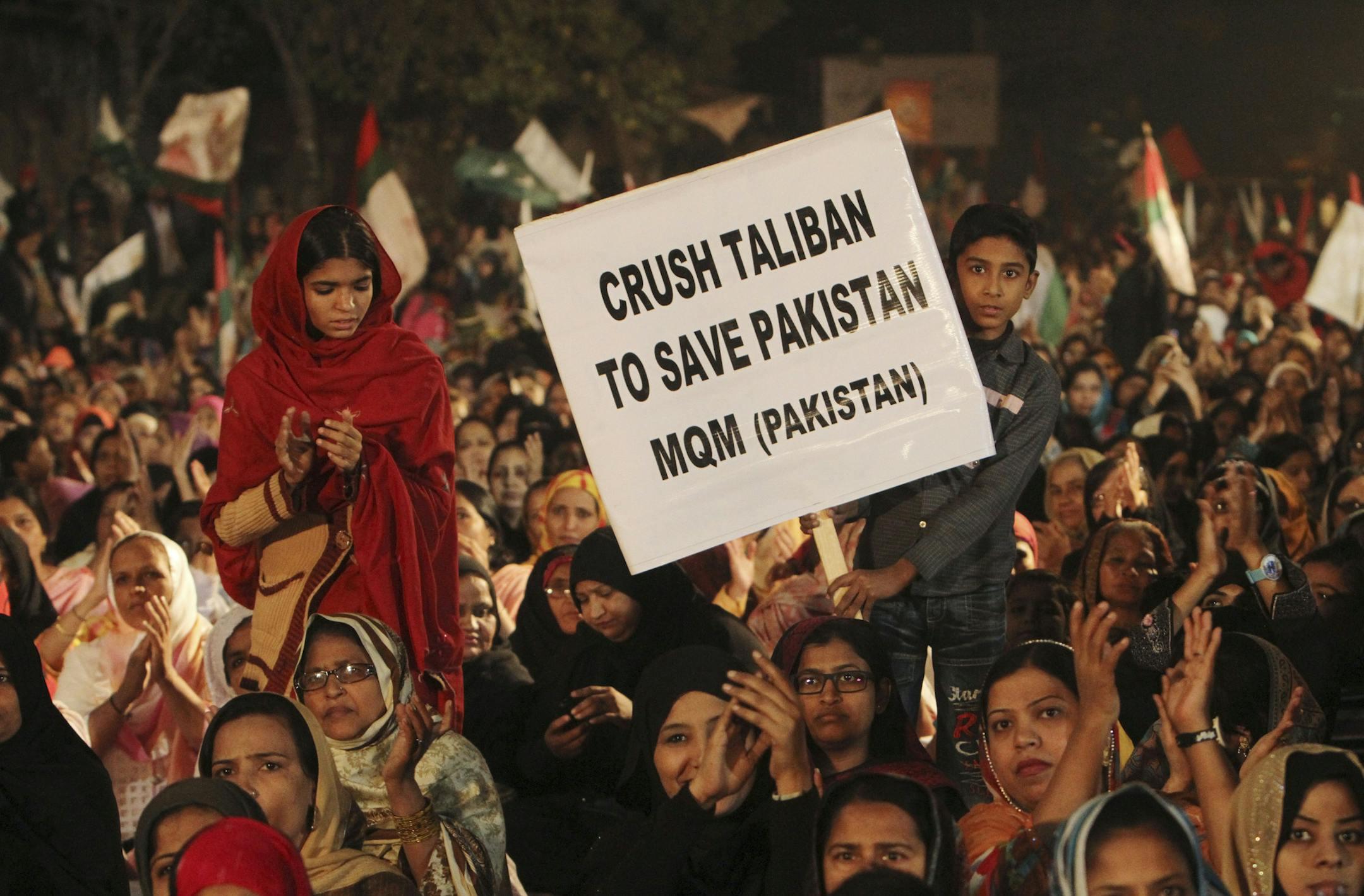
Supporters of Pakistan's political party Muttahida Qaumi Movement express solidarity with families of the students killed in Tuesday's Taliban attack on a military-run school in Peshawar, as they rally in Karachi, Pakistan, Friday, Dec. 19, 2014. Pakistani warplanes and ground forces killed at least 77 militants in a northwestern tribal region near the Afghan border, officials said Friday, days after Taliban fighters killed 148 people - most of them children - in a school massacre. (AP Photo/Far
Supporters of Pakistan’s political party Muttahida Qaumi Movement rallied in support of families of students killed in Tuesday’s school massacre. (The Minnesota Star Tribune)

ISLAMABAD – A series of airstrikes and ground offensives killed at least 67 suspected militants in Pakistan's northwestern tribal areas, officials said Friday in an apparent sign of intensified military action after this week's Taliban school massacre.

In another display of toughening policies, two prisoners convicted of previous terrorists acts were hanged in the country's first executions since 2008, military officials said.

Although Pakistani leaders have suggested they could take the fight across the border into Afghanistan, the latest strikes remained in Pakistani territory.

But in a possibly coordinated mission, a U.S. drone strike late Thursday killed five suspected militants near Nazyan in Afghanistan's Nangahar Province, the U.S. military said. The area is where many Pakistan Taliban leaders, including chief commander Maulana Fazullah, are believed to reside.

In all, more than 100 suspected militants have been killed by the Pakistani air force and army since Tuesday's slaughter at the Army School and College in Peshawar, which claimed 148 lives.

Meanwhile, a key suspect in the 2008 Mumbai terror attacks was ordered held in custody by Pakistani authorities a day after a Pakistani judge granted bail, which sparked outrage in India.

The decision to block the bail order for alleged militant commander Zaki-ur-Rehman Lakhvi was widely viewed as an olive branch to India as well as an effort to keep international support for sustained action against extremists.

Lakhvi has been detained in Pakistan since 2009 for his alleged role in plotting the November 2008 siege at Mumbai's landmark Taj Mahal Palace & Tower hotel. The attack, carried out by 10 Pakistani Laskhkar-e-Talia militants, killed 166 people.
Citing a lack of evidence, a judge in Islamabad had set a $10,000 bail Lakhvi on Thursday. But a Foreign Ministry official said Lakhvi was being kept in detention under a statue allowing for the "maintenance of public order." The government also plans to appeal the bail decision to the country's supreme court.

Pakistan's military said ground forces and airstrikes killed at least 17 suspected militants late Thursday. At least 50 more were killed during ground battles Friday, including an ambush assault on militants, the military statements said.

A statement by the spokesman for the Pakistan-based Taliban, Muhammad Khurasani, gave further details of the school attack. Khurasani said new "special-trained" militants were dispatched to the school's auditorium after learning students would be trained in military first aid.

The Taliban leadership issued "clear instructions to the attackers to spare the primary section [of the school] and small kids in the other part of the school and only shoot the targeted students," Khurasani said. "The children of army people were killed after identification. Hundreds of other innocent students were let free."

Pakistani military leaders said, however, the vast majority of the slain students were the children of civilians.

"How can I forgive those animals who destroyed the beautiful face of my innocent son?" said Palwasha Khalil, the mother of a 16-year-old killed in the school.

With calls for revenge growing across Pakistan, the country's leaders are also accelerating plans to start executing prisoners convicted of taking part in major terrorist attacks.

Prime Minister Nawaz Sharif lifted a moratorium on executions this week, and the country's powerful army chief signed death warrants Thursday for six alleged "hard-core terrorists."

A senior military official who spoke on condition of anonymity said the two hanged Friday were Mohammad Aqeel, a Taliban militant involved in a 2009 attack on Pakistani military headquarters in Rawalpindi, and Arshad Meherban, who was convicted of attempting to assassinate former Pakistani President Pervez Musharaff in 2003.


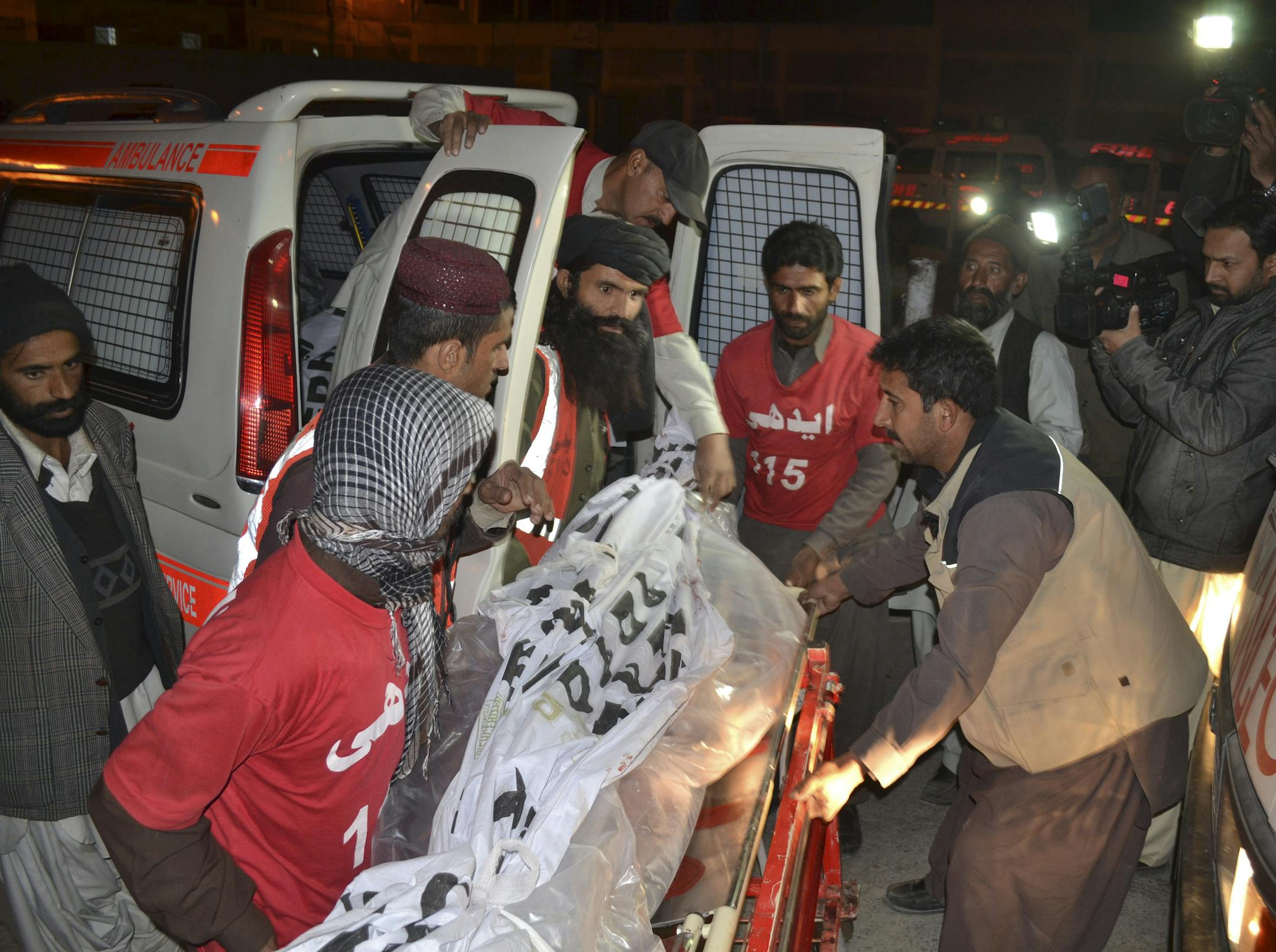
Pakistani volunteers carry the body of a militant killed during a crackdown operation by security forces, in Quetta, Pakistan, Friday, Dec. 19, 2014. Pakistani fighter jets and ground forces bombarded targets in a northwest region bordering Afghanistan, killing 77 Islamic militants, officials said Friday, as the Pakistani army chief late Thursday signed the death warrants of six "hard core terrorists" convicted and sentenced to death by military courts, the army said. (AP Photo/Arshad Butt)
Pakistani volunteers carried the body of a militant killed during a crackdown operation by Pakistani security forces in Quetta, Pakistan, on Friday. (The Minnesota Star Tribune)
about the writers

about the writers

Tim Craig

Shaiq Hussain

More from No Section

See More
FILE -- A rent deposit slot at an apartment complex in Tucker, Ga., on July 21, 2020. As an eviction crisis has seemed increasingly likely this summer, everyone in the housing market has made the same plea to Washington: Send money — lots of it — that would keep renters in their homes and landlords afloat. (Melissa Golden/The New York Times) ORG XMIT: XNYT58
Melissa Golden/The New York Times

It’s too soon to tell how much the immigration crackdown is to blame.