

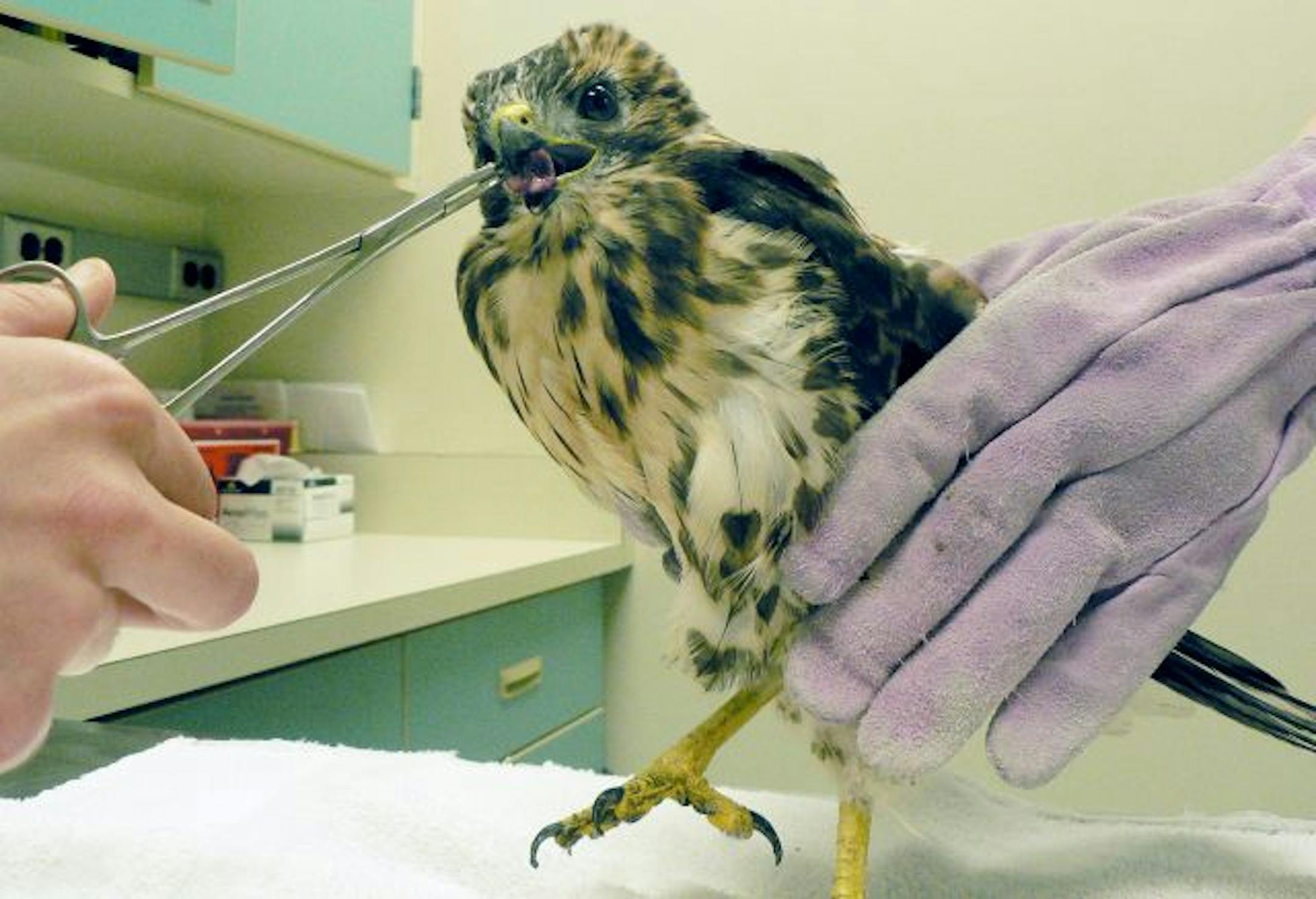
Two hawks that had attacked residents in a Burnsville neighborhood should not have been shot, the executive director of the Raptor Center at the University of Minnesota said Tuesday.
Dr. Julie Ponder and others affiliated with the center said there was no credible attempt by the enforcement division of the Minnesota Department of Natural Resources to get help from the Raptor Center in trapping the broad-winged hawks before they were killed last Wednesday in the north Burnsville neighborhood.
"It would have been possible to trap these birds," Ponder said.
DNR conservation officer Tony Salzer said he shot the hawks after they had swooped down on residents for nearly two months, injuring people on at least two occasions. The hawks even dove at him when he went to the neighborhood just south of Hwy. 13, Salzer said.
"We regret that this resulted in the death of the hawks," said Colleen Coyne, a DNR spokeswoman. "The shooting of the hawks was our last-ditch effort to solve the public safety problems."
Ponder said she is frustrated, especially because her center was not told the hawks might be killed. She said that nobody had talked to center about the problem and that while there was a need to intervene, there is also a need to learn to coexist.
As their habitats are lost to development, Ponder said, raptors are becoming more urban, and conflicts between them and humans are becoming more prevalent. Solutions must be found, Ponder said.
Killing raptors, she said, should be the last option.


