

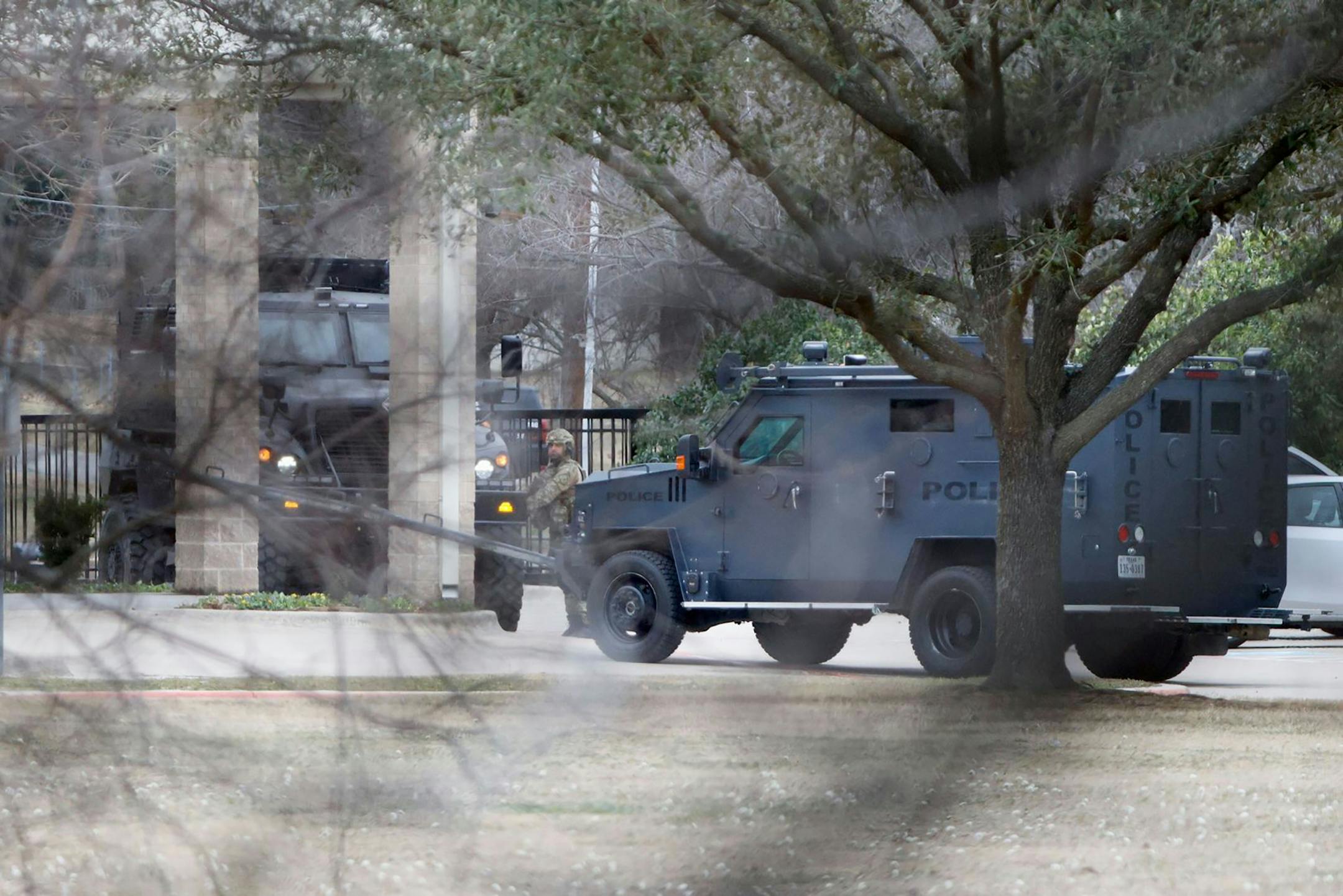
Living their faith, worshipers at Congregation Beth Israel in Colleyville, Texas, invited an unknown, unkempt (by his own admission he "didn't look nice") man into their synagogue after he asked if it was a night shelter. They gave him comfort — and a cup of tea.
But Malik Faisal Akram, a 44-year-old from Great Britain, did not return the kindness. In a nearly 11-hour hostage crisis that was captured in part on a Facebook livestream, Akram held three congregants and the synagogue's rabbi, Charlie Cytron-Walker, in a harrowing ordeal that ended with the hostages alive and Akram dead.
While more facts need to be established, it appears that among Akram's demands was the release of Aafia Siddiqui, a Pakistani neuroscientist serving an 86-year sentence in a nearby federal medical center in Fort Worth for trying to kill American military officers while in custody in Afghanistan.
It's unclear why Akram chose Congregation Beth Israel, or any synagogue, for what President Joe Biden rightly referred to as an "act of terror." But tragically, it's part of a pattern in which houses of worship around the world have been turned into houses of horror.
That includes attacks on other synagogues in America — most notably the Tree of Life Congregation in Pittsburgh, where 11 were killed and six wounded in 2018 (including four police officers), and the Chabad of Poway Synagogue in California, where one person was killed and three, including the rabbi, were injured in 2019.
Recalling these and other attacks, Steve Hunegs, executive director of the Jewish Community Relations Council of Minnesota and the Dakotas, told an editorial writer that the Jewish community was "in the pinions of terror from different points on the political spectrum" and that there "is increasing willingness of groups and individuals to use terrorism and political violence to advance political aims in the United States."
The "lowest level of degradation in society," Hunegs said, is attacking people "where they come for pastoral care, where they come for theology, where they come for life-cycle events." All this, he added, "underscores the need for cooperation across religious communities, to protect collectively our house of worship, in coordination with law enforcement."
The JCRC has done just that and been rightfully recognized in congressional testimony by FBI Assistant Director Jill Sanborn. In 2020 she told a U.S. House Subcommittee on Intelligence and Counterterrorism that, "I can tell you from my time in the Upper Midwest, one of our best partners was, and still is, the Jewish Community Relations Council of Minnesota and the Dakotas." The U.S. Attorney's Office, District of Minnesota, concurred, including the JCRC among recipients of its 2020 "Excellence in the Pursuit of Justice" award, which noted the JCRC offering assistance to other faith communities.


