

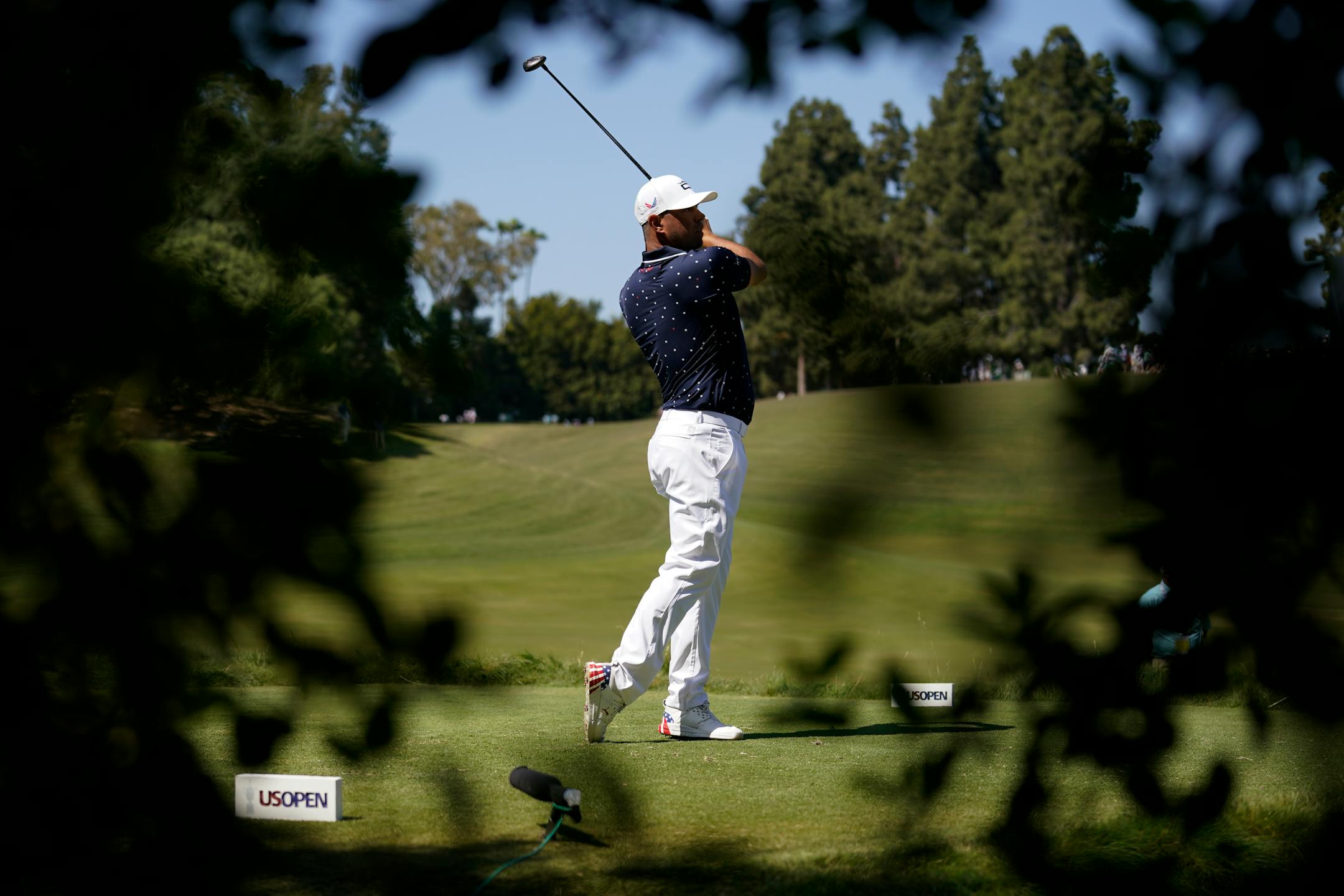
The U.S. Open winner Gary Woodland had lately sensed something different in professional golf.
Players were empowered and emboldened. Executives were listening. The PGA Tour was changing. With the circuit's dominance challenged by LIV Golf, an upstart built with billions of dollars from Saudi Arabia's sovereign wealth fund, the tour felt closer to a cooperative than a dispassionate titan of professional sports.
Then came the tour's surprise announcement on June 6 that, after it had lobbied players to forsake the Saudi money it had associated with human rights abuses, the PGA Tour and the wealth fund would join forces. None of the five players who sit on the tour's board learned of the deal more than a few hours before it became public.
"It was turning toward players being heard over the last year," Woodland, who became a professional golfer in 2007, said at the Los Angeles Country Club, where the U.S. Open will conclude on Sunday. June 6, he said, showed that the voices of tour players had suddenly been "thrown out the door a little bit."
Woodland is not an outlier. In interviews and during news conferences at the Open, top players described a shaken faith in a PGA Tour they believed had recently offered them more meaningful agency and greater influence. The tour's ability to ease the restive atmosphere could influence whether the deal, which is facing significant skepticism inside the tour and in Washington, advances in the coming months.
Compared to other prominent professional sports leagues in the United States, the PGA Tour, a tax-exempt nonprofit, has an unusual structure.
Unlike in, say, the NBA or the NFL, there are no team owners, and there is no labor union. Instead, players are independent contractors who earn eligibility for PGA Tour membership. Tour members do not generally have financial guarantees — they may, however, earn money through assorted sponsorships — but receive tour paychecks tied to their on-course performances. (When Viktor Hovland won the Memorial Tournament this month, he earned $3.6 million of the event's $20 million prize fund. Golfers who did not play well enough to secure places in the final two rounds collected nothing.)
In return for access to tour events and purses, players allow the circuit to negotiate television rights deals on their behalf, among other conditions. Even without a labor union, players theoretically have a say in tour operations: The 11-member board includes five seats for players, and there is a 16-player council that "advises and consults" with board members and the tour's commissioner, Jay Monahan.

