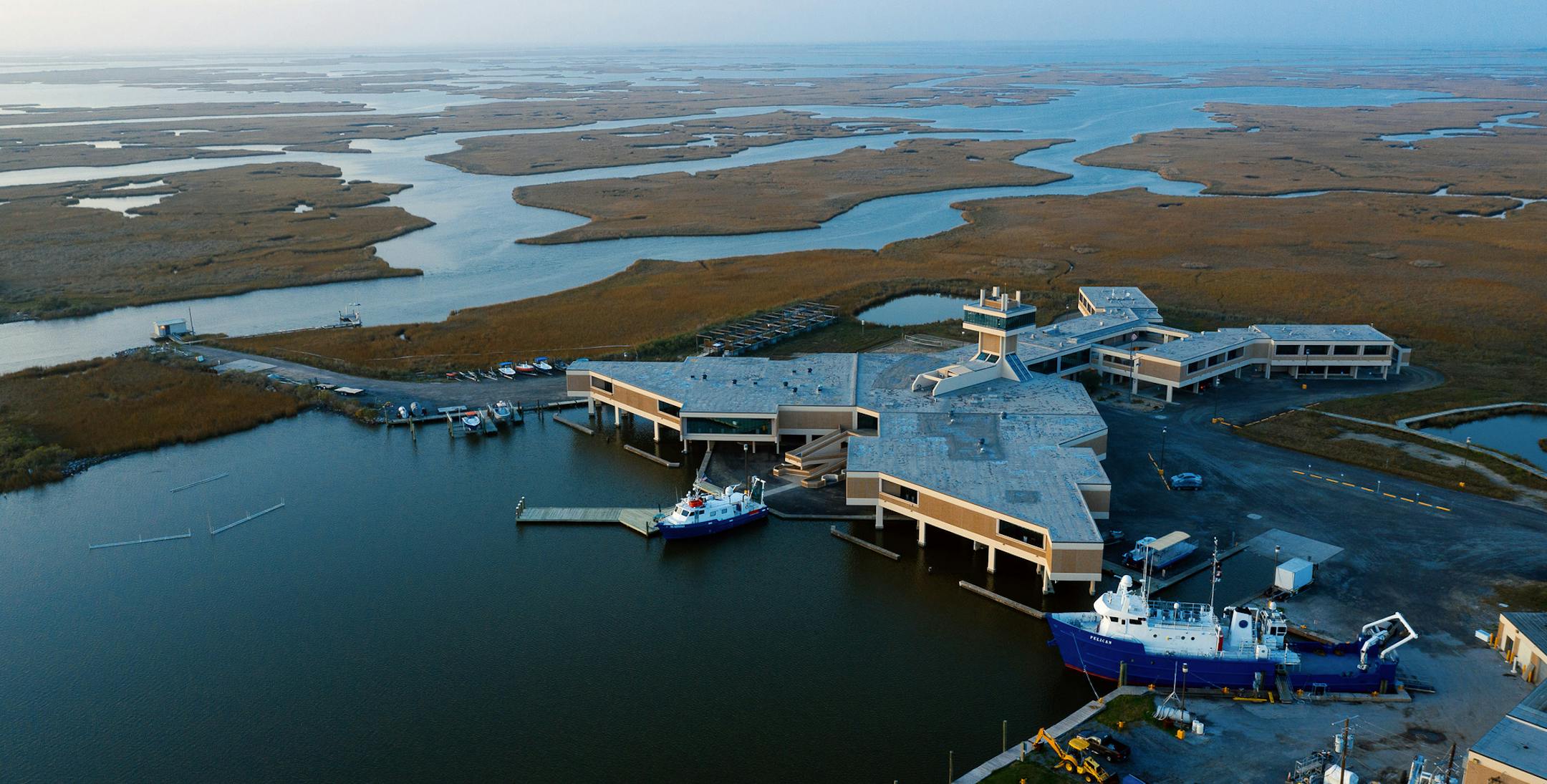
COCODRIE, La. – A marine laboratory 85 miles southwest of New Orleans was designed to be a fortress against extreme weather. But it might be defeated by climate change.
Sitting at the end of Louisiana State Highway 56, where dirt dissolves into wetlands and then the Gulf of Mexico, the laboratory, the W.J. DeFelice Marine Center, has weathered many hurricanes since it opened in 1986. It stands 18 feet above the ground on pillars with pilings that extend more than 100 feet underground. Its walls can withstand winds of up to 250 mph.
But the water is coming.
From New Jersey to Massachusetts, Virginia to Oregon, education centers and marine laboratories are bracing against rising seas and a changing climate. The assault from climate change is slower but more relentless than any storm, and will ultimately do more damage. It threatens researchers' ability to study marine environments up close at a time when it's more vital than ever to understand them.
Bob Cowen, head of the National Association of Marine Laboratories, sees climate change as a challenge, but also a scientific opportunity. "We're feeling it, and we're also studying it at the same time as best we can," he said.
If labs like this one have to shut down, decades of on-site measurements could be disrupted — and, researchers say, academic budgets might not allow replacements to be built, or built on a comparable scale.
The parking lot at the DeFelice Center, the heart of the Louisiana Universities Marine Consortium of some two dozen institutions, was once high and dry. It now floods several dozen times a year, occasionally causing the facility to close because of the difficulty of getting into the building.
'I've heard it described as carnage'
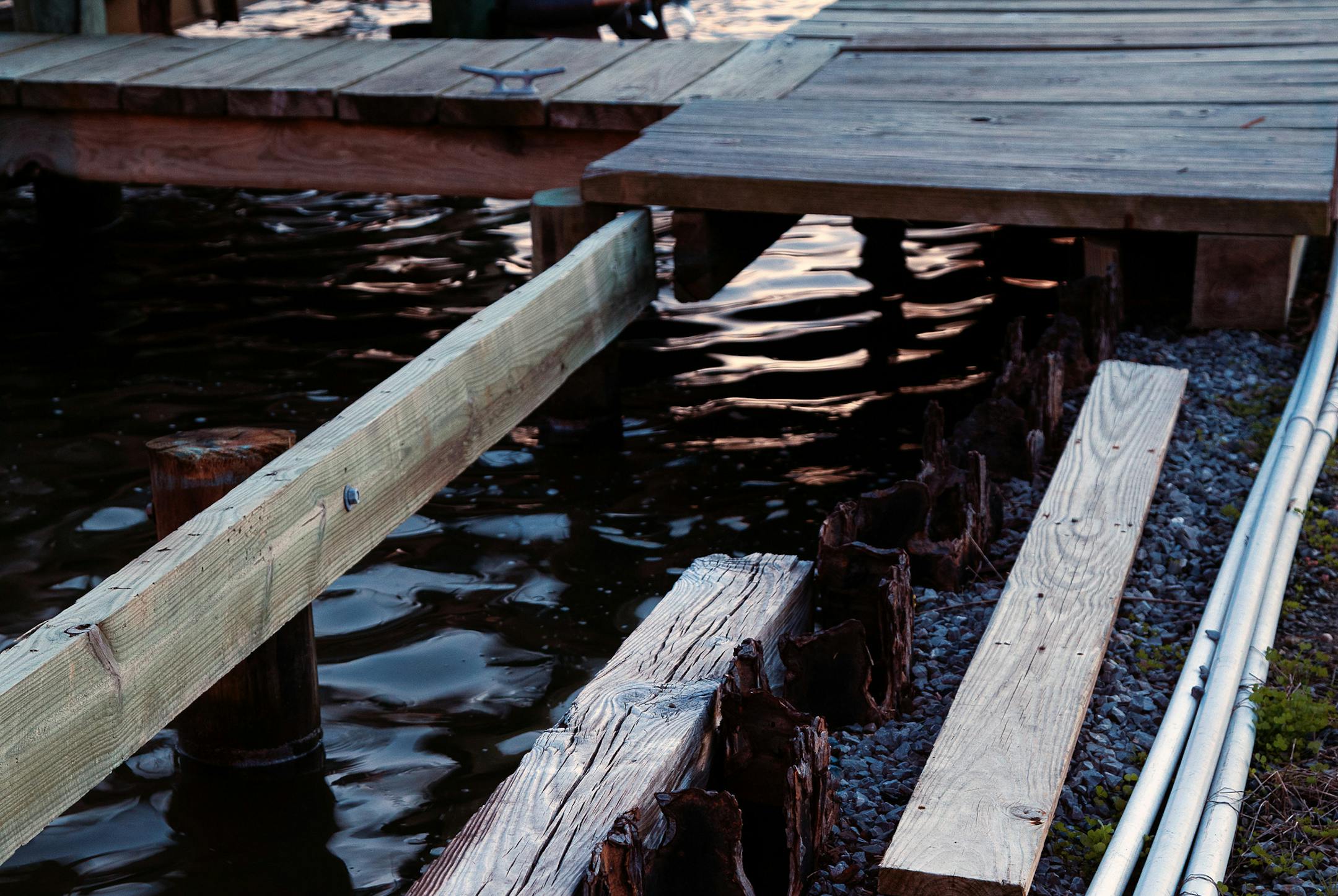
Officials predict that, without action, the lab might need to shut down several dozen days each year within the next 10 to 15 years. The corrosive saltwater attacks the structure and has risen through the soil into buried electrical cables, at one point causing a blackout. Some floods are accompanied by droves of fiddler crabs that can find their way into the elevators.