Republicans may have a card up their sleeve in the coming budget showdown at the Capitol: gambling.
Despite a party platform that opposes expanded gambling in Minnesota, high-level Republicans are leading on gambling bills that would raise revenue without raising taxes.
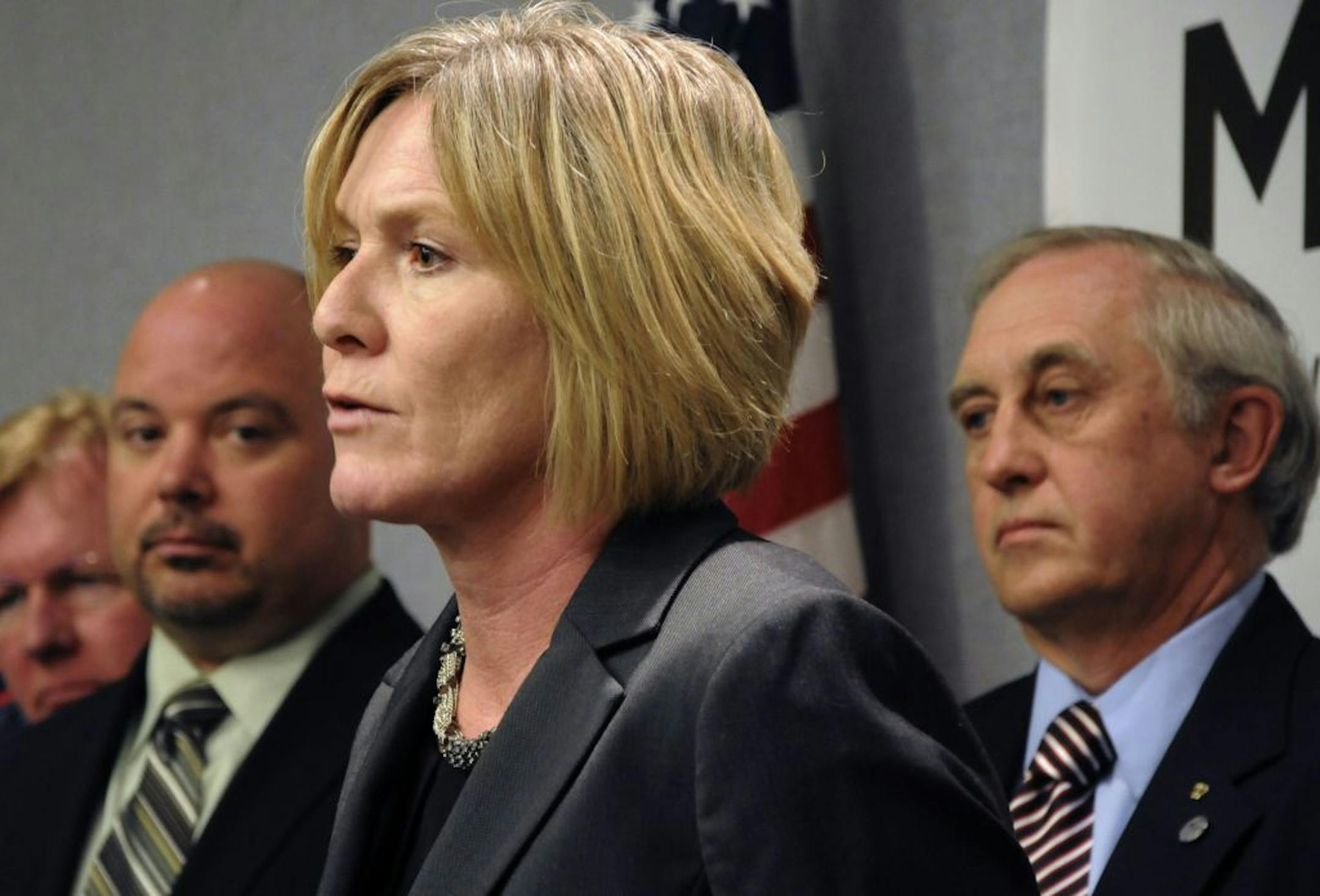
On Tuesday, Senate President Michelle Fischbach, R-Paynesville, promoted her bill to allow video gambling terminals in bars and restaurants. Backed by a coalition of nearly 5,000 bars and restaurants, supporters touted the bill as one that would generate thousands of jobs and millions of dollars for the state. Meanwhile, House Speaker Kurt Zellers, R-Maple Grove, is co-sponsoring a bill to allow e-bingo and e-pulltabs in bars. Pat Anderson, recently elected Republican National Committeewoman in Minnesota, is lobbying for Canterbury Park as it works for casino-style video gambling at racetracks.
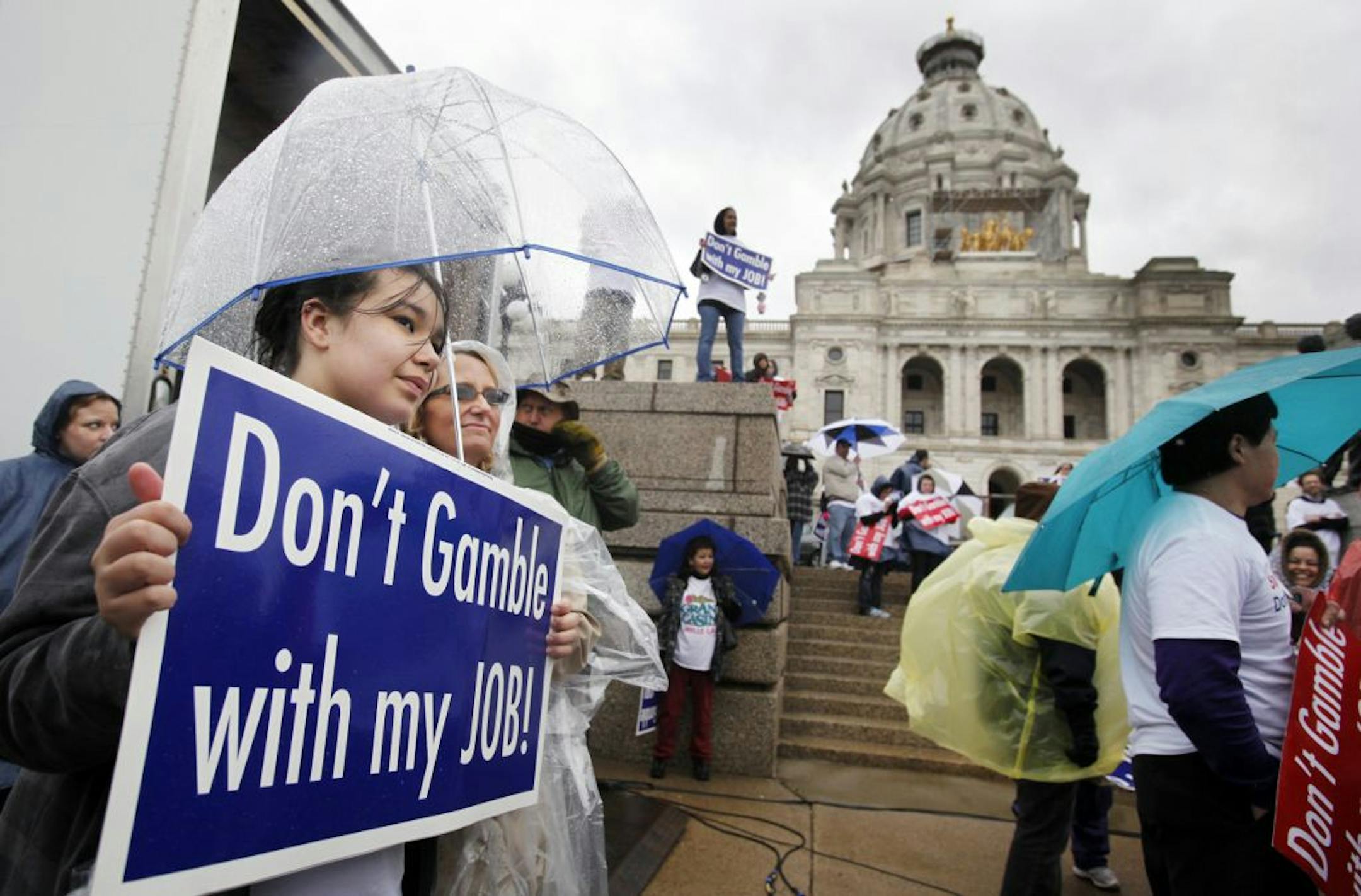
Outside the Capitol on Tuesday, signs of what could be a fierce political battle over gambling in the weeks ahead were also apparent as more than a thousand casino workers, tribal members and others rallied in a cold downpour to oppose any form of expanded gambling.
"They want to toss away hundreds of good paying jobs that are already in our communities," House Minority Leader Paul Thissen, DFL-Minneapolis, told the crowd.
Inside, forces appeared to be aligning for a budget solution built at least in part around gambling.
"I don't see any way out of this where there isn't going to be possibly some type of gaming revenue entering into this," said Rep. Tom Rukavina, DFL-Virginia, a co-sponsor of the slots in bars bill.
At a news conference, Gov. Mark Dayton said he's uncomfortable with widespread video gambling in bars because "alcohol and gambling really are a bad combination," but he expressed some support for racinos if the state's share could go to job development and education. Dayton and the majority Republicans are grappling over how to resolve a projected $5 billion budget deficit as a May 23 adjournment deadline ticks nearer.